No current plans to designate Tagore forest as a nature reserve: Chee Hong Tat
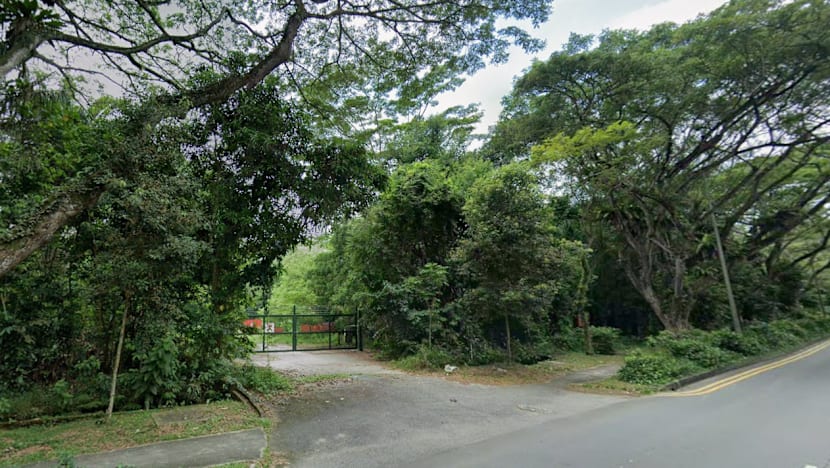
SINGAPORE: The government currently has no plans to designate Tagore forest as a nature reserve, Minister for National Development Chee Hong Tat said on Tuesday (Sep 8).
Mr Chee was responding to questions from Members of Parliament (MPs) on land planning assessment and decision-making for ecologically significant sites.
MP Kenneth Tiong (WP-Aljunied) asked about nature reserves gazetted under the Parks and Trees Act, and whether the government will consider designating Tagore forest as a nature reserve.
The forest, located southeast of the intersection between Seletar Expressway and Upper Thomson Road, is currently zoned for residential use under the Urban Redevelopment Authority’s (URA) masterplan.
In 2024, over 40 scientists and conservationists proposed studying the protection of the forest as a nature park in a document called the Singapore Terrestrial Conservation Plan. The forest represents a buffer zone surrounding the Central Catchment Nature Reserve that is a refuge for rare wildlife such as the Raffles' banded langur.
Mr Chee said in his written parliamentary answer that the government adopts a “science-based” approach to prioritising what and how they conserve.
In deciding to designate an area as a nature reserve, the government considers its biodiversity and ecological value, and its importance to Singapore’s native biodiversity.
These considerations are weighed alongside Singapore’s other land-use needs, he said.
Singapore has four nature reserves protected and conserved under the Park and Trees Act. Bukit Timah Nature Reserve and Central Catchment Nature Reserve were gazetted in 1990, while Labrador Nature Reserve and Sungei Buloh Wetland Reserve were gazetted in 2002.
“These are assessed to be the most biodiverse areas in Singapore and are representative of Singapore’s native landscapes. They also safeguard a range of habitats and serve as strongholds for various endemic and threatened species,” Mr Chee said.
Mr Chee said URA works closely with the National Parks Board (NParks) to consider ecology and biodiversity in the Long-Term Plan and Master Plan, and integrates development and conservation upstream in their land use planning processes.
He noted that more than 7,800ha of green spaces have been set aside in Singapore, which would increase to 8,800ha by 2035.
The minister said the government has designated nature areas and nature parks as buffers to nature reserves, and set aside parks and other green spaces that serve both ecological and recreational functions.
NParks’ island-wide Ecological Profiling Exercise helps agencies identify key ecological corridors that support connectivity between core habitats, and locate critical wildlife corridors that require monitoring, such as EcoLink@BKE, he said.
"This enables us to integrate nature into our urban environment and everyday lives," he added.
MEETING HOUSING SUPPLY
On planning new housing supply, Mr Chee said the agencies take into account demographic and socioeconomic trends, prevailing market conditions, and the supply of resale flats on the open market to meet Singaporeans’ needs across different locations and time periods.
This includes providing housing near existing estates as many Singaporeans, including young families, seniors and singles, want to continue living near their families for mutual care and support, he said.
“It is not possible to predict future housing demand with 100 per cent accuracy as the key demand drivers have varying degrees of uncertainty. Nevertheless, we expect housing demand to remain strong in the near to medium term, due to strong household formation rates and decreasing household sizes,” he said.
MP Dennis Tan (WP-Hougang) asked whether the government would consider intensifying existing or planned low-density residential areas, including good class bungalow areas and developments near MRT stations.
Mr Chee said that where feasible, the government will intensify land usage, co-locate facilities and make better use of under-utilised spaces. This includes suitable brownfield sites in the area “as far as possible”, if they are available within the required timeframe, before activating sites with greenery or heritage.
The government will also intensify low-density residential areas where possible, by injecting high-density public housing into predominantly landed areas, such as Turf City, he said.
“However, it is not practical to assume that we can meet the bulk of public housing supply through redevelopment of landed residential areas as this will require extensive acquisition of existing landed properties, as well as significant upgrading of transport and other essential infrastructure to support higher housing densities,” he added.
MP Pritam Singh (WP-Aljunied) asked whether public housing supply could be met through additional Selective En bloc Redevelopment Scheme (SERS) projects at older HDB estates with large surface car parks, to retain “as many secondary forests across Singapore as possible”.
In response, Mr Chee said that SERS can only apply to a small proportion of sites in certain parts of Singapore.
“We also need to be mindful of the disruption to residents who have to relocate when their flats undergo SERS. Hence, doing SERS alone will not be enough to meet our overall housing demand,” he said.
MP Nadia Ahmad Samdin (PAP-Ang Mo Kio) asked what ecological criteria and thresholds determine whether a site should be avoided for development, and how they support Singapore’s long-term city in nature vision.
In cases where development does proceed on sites where there is “potentially significant environmental impact”, Mr Chee said an Environmental Impact Assessment (EIA) study will be conducted to assess the nature and magnitude of the impact and develop mitigation measures.
During the EIA process, agencies carefully consider the potential impact and adequacy of the proposed mitigation measures.
They also consult with nature and community stakeholders to minimise impacts, retain areas of higher ecological value, strengthen ecological connectivity, and integrate greenery into the built environment.
The agencies will also implement Environmental Management and Monitoring Plans to monitor the effectiveness of mitigation measures, he said.
“Today, Singapore is both a thriving global city and one of the greenest cities in the world. We got here by planning for development and nature together,” said Mr Chee.
“The government will continue to integrate development and conservation holistically within our broader planning framework, underpinned by science, so that our people and the environment can thrive together in our City in Nature.”
KioskNews shows a cleaned-up reading view extracted from the publisher’s page — the original always lives on their site, not ours.