Uttam Kumar at 100: How a matinee idol became a cultural emblem of Bengal
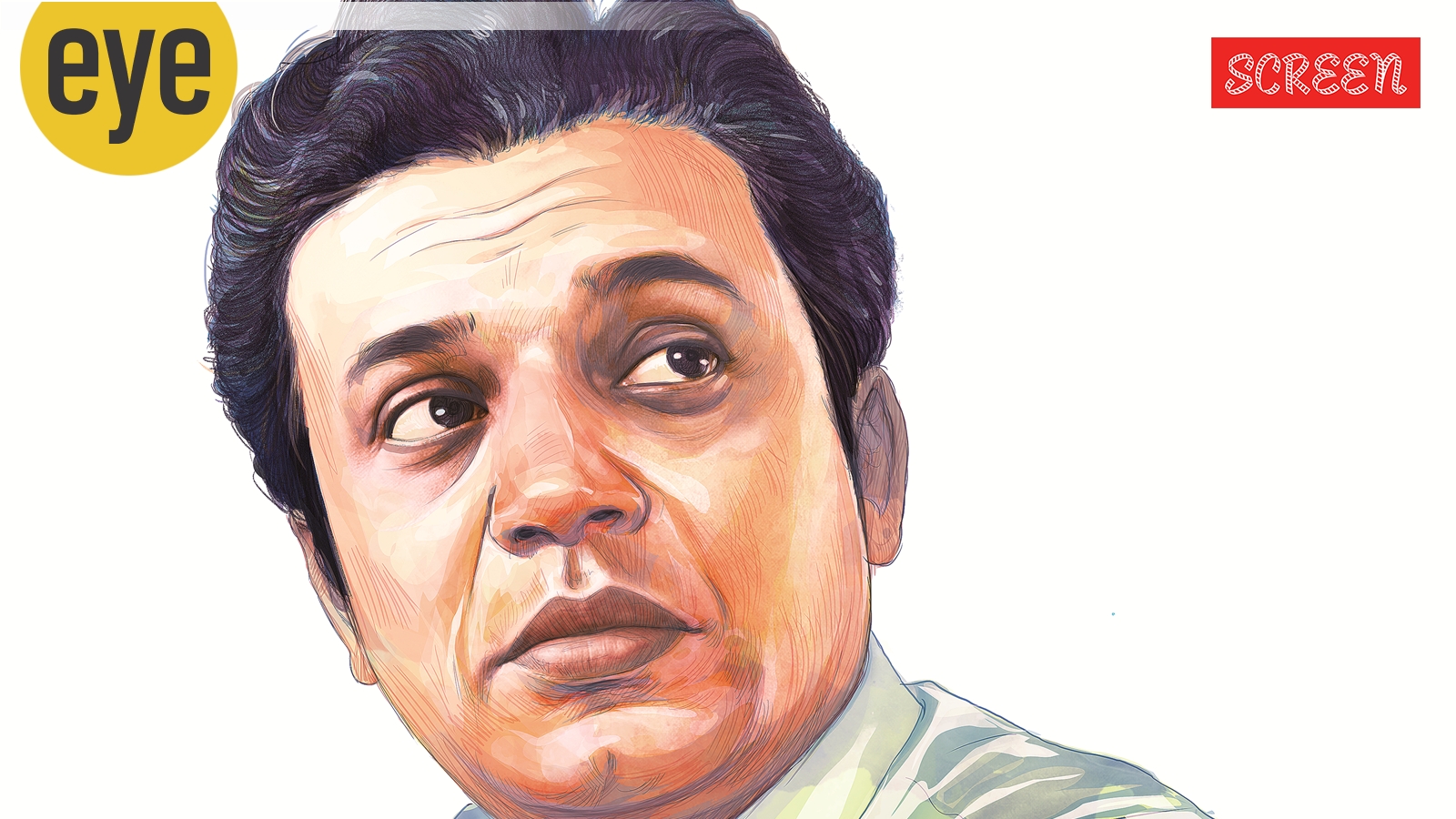
The Uttam Kumar centenary celebrations in Kolkata often felt more like an Uttam Kumar carnival. There were not just film screenings, panel discussions and exhibitions, the usual fare for such occasions but Nandan, the West Bengal government’s film complex, also had a booth where you could bellow “I love Uttam Kumar” and see if the decibel-level of your love was worthy of an Uttam Kumar badge. There were Mahanayak-Mahanayika lookalike contests where couples were encouraged to come dressed as the great hero and his heroines. One of Kolkata’s current leading actresses flaunted an Uttam Kumar print sari. A man in a thin aaddi cotton kurta and dhoti posed as a “living statue” of Uttam Kumar. He didn’t really look like the Mahanayak but that did not deter selfie-seekers. “Anyway no one can look like Uttam Kumar,” a friend reasoned. “That’s why Uttam Kumar is Uttam Kumar.”
Uttam Kumar is the greatest film star Bengal has ever produced but director Srijit Mukherji said at the Kolkata Literary Meet this year that he has long ceased to be a “matinee idol and romantic hero” and become instead a “cultural emblem of Bengaliness”. “I think he has become a bit like the Howrah Bridge,” quipped Mukherjee, “Or the rasagolla.”
Mukherji himself made a film called Oti Uttam (2024), a fantasy tribute to the megastar where a researcher tries to resurrect Uttam Kumar via planchette.
 Uttam Kumar with Sharmila Tagore in Anand Ashram. (Express Archive)
But it still begs the question whether the euphoria about Uttam Kumar is just eternal Bengali nostalgia about lost Bengali exceptionalism. Or perhaps it’s the newly elected BJP government in West Bengal trying to establish their Bengali bona fides through the charisma of a man whose death in 1980 brought Kolkata to a standstill. There is probably some truth to both but neither explains fully the allure of the man. Even my mother braved surging crowds to watch his funeral cortege go past.
Uttam Kumar was in some ways an unlikely superstar. His early films flopped so resoundingly he was dubbed Flop Master General. When the romantic pairing with Suchitra Sen clicked, he became a star but the adulation didn’t necessarily mean respect. Satyajit Ray, India’s most internationally renowned director, favoured Soumitra Chatterjee for his films. “Uttam was certainly a star in the true Hollywood sense of the term,” Ray wrote in his obituary. “The question was: was he also an actor?” When he cast Uttam Kumar after his own film Kapurush-o-Mahapurush (1965) failed at the box office, he said fellow director Mrinal Sen scoffed “Now he has sunk to the level of using a matinee idol!”
Uttam Kumar’s own forays outside Bengal were decidedly mixed. The bilingual Amanush (1975) was a hit but the much touted Chhoti Si Mulaqat (1967) produced by Uttam Kumar himself flopped. His role in Manmohan Desai’s Desh Premee (1982) was hardly a star turn. He died during the making of the film and lore has it Amitabh Bachchan’s hairdresser had to fill in for him. Diehard fans claimed Mumbai’s big shots sabotaged his Hindi films but it also makes one wonder if unlike the rasagolla Uttam Kumar did not really translate across borders.
Film studies scholar Sanjoy Mukhopadhyay argued at the Kolkata Literary Meet that history helped create Uttam Kumar. In 1952 India had its first general election. That was also the year Uttam Kumar had his first hit with Basu Paribar. “For the first time in Bangla cinema we discovered a commoner, a Ram, Shyam, Jadu or Uttam, a next-door neighbour who could solve anything,”said Mukhopadhyay. He was the ultimate feel-good story, a man from humble beginnings with a Port Trust job (one can still see his cashier’s office receipt at the Port Trust museum) who proved a commoner could succeed in both life and love. A generation holding out for a hero had finally found one.
Story continues below this ad
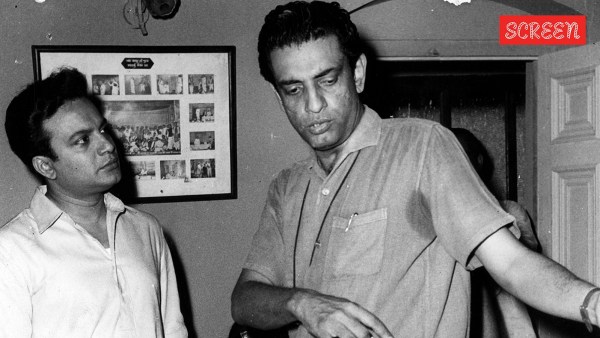 Uttam Kumar with Satyajit Ray. (Express Archive)
It certainly helped that he had a billion-watt smile that lit up his eyes. A smile that made you forget the world, his fans said. That world was in turmoil. Bengal was struggling with refugees, uprisings against food shortages and striking teachers demanding better pay. But Uttam Kumar and Suchitra Sen could reassure their audiences: “Neer chhoto kshati nei akashta toh boro” (The nest is small, but it doesn’t matter, the sky is vast).
This is not to say he wasn’t a consummate actor. Even Ray admitted he had the “rare virtues of grace, spontaneity and confidence”, a combination not easy to come by. Famously while filming Ray’s Nayak (1966), Uttam Kumar, playing a version of himself, prepared to sign an autograph. Then he realised the ink had dried in the pen. Ray was about to call ‘cut’ but Uttam casually shook the pen, dipped it in a glass of water, and continued signing, never breaking from his dialogue. That impressed Ray no end.
When one watches an Uttam Kumar film now, one cannot but marvel at what he does even when he is not the one delivering the dialogue. As Suchitra Sen sings Tumi je amaar in Harano Sur (1957), he lies perfectly still, head on her lap, almost unblinking in his gaze. He cedes her the entire spotlight but his own stillness renders the song hypnotic. Soumitra Chatterjee, as quoted in Sanghamitra Chakraborty’s biography Soumitra Chatterjee and His World (Penguin, 2025), said while their acting styles were different he learned many “small elements of craft (from him), such as how to hold a pause.” “Can you think of Bengali films without Uttam Kumar?” wondered Chatterjee.
Now almost 50 years after his death, we live in a world of Uttam Kumar what-ifs. Would an older Uttam Kumar have felt freer to deglamorise himself? Could his star power have stalled the decline of the Bengali film industry in the 1990s and 2000s? What if he had acted with Soumitra Chatterjee in a Bengali stage version of Laurence Olivier and Michael Caine’s Sleuth (1972)? Or Satyajit Ray had been able to make Ghare Baire (1984) with the dream cast of Uttam Kumar, Soumitra Chatterjee and Suchitra Sen? If Uttam Kumar had accepted Raj Kapoor’s offer to act in Sangam (1964), could he have become a pan-Indian Mahanayak? We will never know the answers. But my mother would console herself by repeating the story of how Rajesh Khanna apparently saw Uttam Kumar in Nishipadma (1970) umpteen times but admitted he couldn’t match up to his performance when he took on that role of a Bengali babu in its Hindi version Amar Prem (1972).
Story continues below this ad
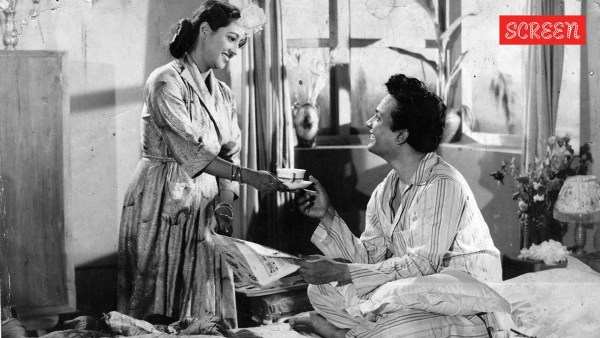 Uttam Kumar with Suchitra Sen in Harano Sur. (Express Archive)
Perhaps the enduring appeal of Uttam Kumar was that in a state that often felt it was out of step with the rest of the country, whose capital had been dismissed as a “dying city”, he remained a reassuring talisman of good taste, a consummate bhadralok even when playing a murderer.
It’s a quality he still possesses. Some of his films may have aged but he has not. At the centennial celebrations, today’s stars tried to recreate his magical moments through song and dance. Devoid of his easy charm, they seemed more like cardboard cutouts than the actual cutouts of Uttam Kumar outside. Because when you looked at those, I swear, the man, hands akimbo, seemed to be looking at you and smiling. And for a moment you could still forget the world.
Sandip Roy is the author of Chapal Rani, the Last Queen of Bengal and Don’t Let Him Know
KioskNews shows a cleaned-up reading view extracted from the publisher’s page — the original always lives on their site, not ours.