[Rappler’s Best] A Barzaga wins again — and there’s the rub

Already have Rappler+?
to listen to groundbreaking journalism.
![[Rappler’s Best] A Barzaga wins again — and there’s the rub](https://www.rappler.com/tachyon/2026/08/jenny-7.jpeg)
JENNY BARZAGA CAMPAIGN. Then-candidate Jenny Barzaga campaigns on a float through Barangay Salawag in Dasmariñas, Cavite, in August 2026, ahead of the special congressional election on August 29, 2026.
Jenny Barzaga Facebook page
Surveys show that a big majority of Filipinos support the passage of an anti-dynasty law. Yet, why do we keep on electing families?
AT A GLANCE
- A disaster in Nepal and Tibet caused by a glacier collapse has left around 3,000 people missing, including a Filipino doctor, while rescue efforts are ongoing amidst dangerous conditions.
- In the Philippines, political dynasties continue to dominate local elections, exemplified by Jenny Barzaga's recent victory in a special congressional election, highlighting the persistence of family political networks.
- The Senate is currently involved in the impeachment trial of Vice President Sara Duterte, with a gag order issued to maintain courtroom integrity, amidst public interest and criticism regarding the trial's transparency.
This is AI-generated. Read the article for full context. Report any errors.
Our hearts go out to Nepal and Tibet, and to the families of those who have died or remained missing following the rampaging waters on the Himalayan river systems that swallowed villages and knocked down infrastructure on Thursday, August 27.
A Filipino doctor is among the estimated 3,000 missing in the disaster that was triggered by a glacier collapse. Rescue efforts continue at great risk to individuals and organizations that have been mobilized to assist. Reuters reported that before the catastrophe, Nepal asked China for early warnings.
Back home, floods in Metro Manila and neighboring provinces persisted as incessant rain dampened all of August and threatens to extend to September. Tropical Depression Pilandok intensified early Monday, August 31.
Despite the inclement weather, nearly 60% of registered voters of Dasmariñas, Cavite, turned out for the special congressional election on Saturday, August 29. This was for the seat previously occupied by the shitposting Kiko Barzaga, who was expelled in June by the House of Representatives for disorderly behavior and conduct unbecoming of a member.
- His mother Jenny ran against four rivals, won, and was officially proclaimed early hours of Sunday, August 30.
- When she decided to run, Jenny Barzaga was serving her last term as mayor. It wasn’t a tough call to make; her other son, Vice Mayor Thirdy Barzaga, was going to take over her post, anyway.
- The Barzagas, after all, are like many political families in the country: they have been in control of the seats of power in their localities and won fresh terms in last year’s midterm polls.
- In fact, Jenny had been congresswoman before, as she swapped posts with her husband, the late Elpidio Barzaga Jr., each time they reached their term limits as mayor and district representative. The Barzaga patriarch died in 2024, prompting his son Kiko to run for his congressional post in the elections that came a year after.
Sounds familiar? Naturally.
We started our series on political dynasties last week, while we map family connections among elected officials to prepare for a robust coverage of the 2028 elections. The series focuses on families that have been in power for generations, their political networks and business interests, and the roles they have played in the local and national governments.
- We begin with the Dutertes and their 38-year reign. Raizza Bello introduces us to them once again in this story.
- North of Manila, we profile the enduring Pinedas, whose entrenched power in Pampanga began in 1992, when Lilia “Baby” Pineda first ran for mayor of Lubao. Here’s their story.
Rappler will profile two families each week leading up to the 35th anniversary of the Local Government Code of the Philippines on October 10.
A Pulse Asia survey early this year showed that a big majority of Filipinos support the passage of an anti-dynasty law. Yet, why do we keep on electing families?
Recall that it was dynasties that delivered for President Ferdinand Marcos Jr. when he ran for president in 2022. Watch our explainer here.
- His congressional allies — led no less than by his son, Deputy House Speaker Sandro Marcos — approved an anti-dynasty bill in the last Congress. But it’s a weak one. (The Marcoses control Ilocos Norte’s critical posts.)
- Even business groups have come out to push for a “genuine” anti-dynasty law, saying this would help prevent the perpetuation of corruption and inequality.
The Senate, which has been convened into an impeachment court in the trial of Vice President Sara Duterte, has a record number of siblings — the Cayetanos, Estradas, Tulfos, and Villars.
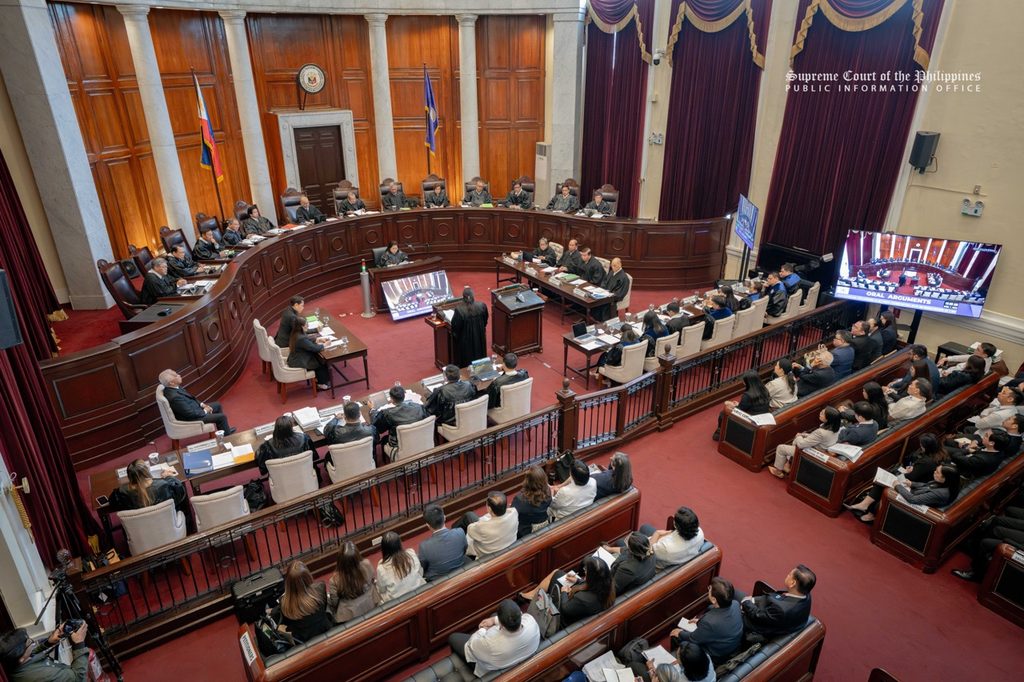
Speaking of the trial, presiding officer Senator Chiz Escudero last week issued a gag order against senator-judges, prosecutors, and defense counsels who would discuss the merits of the case outside the courtroom. This was triggered by opinions dished out by all sides (including the Vice President herself) — whether in interviews, statements, or social media posts — regarding her guilt or innocence vis-a-vis evidence that has been presented so far.
- Whose soundbites did Escudero flag? Check them here.
- Can the order stop the Vice President from talking about her trial? Read more.
- Heeding Escudero, prosecutors stopped granting interviews last week. Defense counsel Michael Poa may now have to also relinquish his post as spokesperson for the defense.
Some have criticized Escudero’s move as unwarranted, saying that the trial is imbued with public interest and is a political process.
But IMHO, what a relief! Some characters from both sides have fallen in love with their own predictable spins and bland soundbites. They forget that the most compelling stories emanate from the impeachment court itself — a lawyer’s elegant presentation of evidence, a witness’ wit, a judge’s incisive question, one’s ability to connect the dots.
The challenge is not to translate this in post-trial ambush interviews or press conferences, but to highlight them in story and narrative formats that are most accessible and palatable to the public. Which neither side has done.
Need the latest proof? Watch the prosecution spokespersons’ press conference on Friday, August 28. I did; it was downhill after the first question. Back to the drawing boards, ladies and gentlemen?
Here are some of Rappler’s bests that you shouldn’t miss:
Jelo Mantaring walks us through alternatives to active shooter drills for schools seeking to prevent violence in their premises. Kevin Hapal tells us why child safety online is a platform failure, not a parenting problem.
In this data visualization, Lance Spencer Yu shows us where Filipino families earn the least, and most. He explains in a separate story that beyond income, 12.8% of Filipinos are poor across multiple dimensions. JC Punongbayan raises important questions about the government’s claim that only 10% of Filipinos were poor in 2025.
Bea Cupin joined the Philippine Navy’s drills with Australia to practice refueling at sea. Bea witnessed how the Philippines’ BRP Diego Silang challenged China’s navy ships in the West Philippine Sea.
Patrick Cruz tells us that the two companies behind the petition to freeze the P85 wage hike in Metro Manila bagged billions’ worth of public works contracts.



– Rappler.com
Rappler’s Best is a weekly Rappler+ exclusive newsletter of our top picks delivered straight to your inbox every Monday. Visit rappler.com/newsletters to subscribe.
The views expressed by the writer are his/her own and do not necessarily reflect the views or positions of Rappler.
KioskNews shows a cleaned-up reading view extracted from the publisher’s page — the original always lives on their site, not ours.