Will write to Modi, seek Ninth Schedule cover for enhanced SC, ST quotas: DK Shivakumar
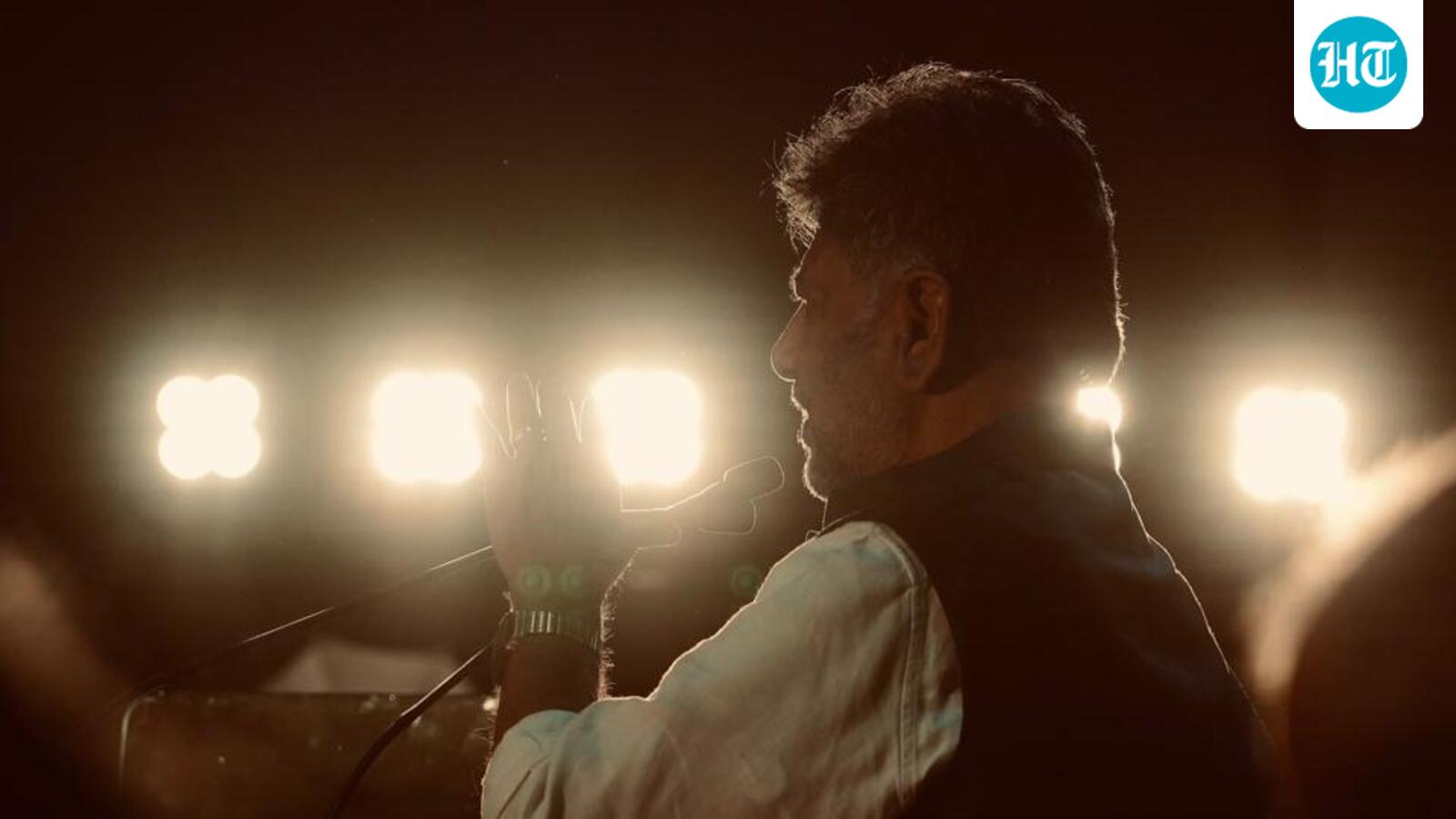
A day after filing an appeal against the verdict striking down provisions of a 2022 law to raise reservations for Scheduled Castes (SCs) and Scheduled Tribes (STs), Karnataka chief minister DK Shivakumar on Thursday said his government will approach Prime Minister Narendra Modi to seek protection for the enhanced reservation for education and jobs under the Constitution’s Ninth Schedule.
Shivakumar said the government was confident it would get relief from the Supreme Court.
On October 12, the Karnataka High Court struck down provisions of the law that raised reservations for SC from 15% to 17% and the ST share from 3% to 7%. A division bench of the high court set aside the enhanced quotas introduced by the Bharatiya Janata Party (BJP) government, led by former chief minister Basavaraj Bommai, in 2022, ruling that the enhanced quotas raised the state’s overall reservation to 56%, breaching the 50% limit established by the top court in the 1992 Indra Sawhney judgment
Shivakumar said senior ministers G Parameshwara, HC Muniyappa, and Satish Jarkiholi have been tasked with overseeing the appeal filed in the Supreme Court and coordinating the state’s legal response.
The chief minister cited Tamil Nadu’s law, which introduced 69% reservation but survived legal challenges because it was included in the Constitution’s Ninth Schedule. Enactments placed under the Ninth Schedule are protected from judicial review.
The high court ruling also pointed to issues in the way the 2022 law was enacted without consultations with constitutional bodies for SCs and STs as mandated under the Constitution.
“There is no point in blaming those who were in power earlier on this issue. Decisions have been made on this in a few other states, and Tamil Nadu has 69% reservation. We are only requesting a six-percentage-point extension beyond the 50% reservation limit,” Shivakumar said after a meeting of the State Scheduled Castes and Scheduled Tribes Development Council at Vikasa Soudha, which reviewed the implementation of the Scheduled Caste Sub-Plan (SCSP) and Tribal Sub-Plan (TSP).
He said the government will separately write to the Union government seeking the release of ₹1,937 crore in pending central assistance under Centrally Sponsored Schemes for 2025-26. Shivakumar has directed the Finance Department to release Karnataka’s share of the funding even if the Centre does not provide its contribution.
Of the ₹3,497 crore allocated as the Centre’s share under SCSP/TSP programmes for 2025-26, the state had received only ₹1,560 crore. The remaining ₹1,937 crore was yet to be released. Karnataka had earmarked ₹6,514 crore as its contribution, of which ₹5,628 crore had been released and ₹5,611 crore spent, he said.
The council also decided to commission an independent social audit to examine the impact of SCSP/TSP spending over the years. Shivakumar said legislators had identified overlapping welfare programmes and that reputed institutions would be engaged to assess whether the allocations had delivered the intended benefits.
KioskNews shows a cleaned-up reading view extracted from the publisher’s page — the original always lives on their site, not ours.