Burnham Lake 2.0: Baguio reopens its old heart, looks ahead to 2043

BAGUIO CITY, Philippines — In the morning fog of Baguio Day, the boats were back on Burnham Lake.
After nearly 11 months behind construction barriers, one of the city’s most familiar landmarks reopened on Tuesday, September 1, bringing residents and visitors back to the water on Baguio’s 117th Charter Anniversary.
Mayor Benjamin Magalong, Baguio Representative Mauricio Domogan, Vice Mayor Faustino Olowan, Tourism Infrastructure and Enterprise Zone Authority (TIEZA) chief Mark Lapid, and other officials led the reopening of the lake, the first completed portion of a broader TIEZA-backed rehabilitation of Burnham Park.

The lake had been closed since October 2025. The rehabilitation included improvements to the docking area, retaining structures, walkways, and other facilities, while the city also tightened safety requirements for returning boat operators.
TIEZA has committed P400 million for the wider rehabilitation of Burnham Park, with the Children’s Park, Rose Garden, skating rink, and surrounding areas lined up for succeeding phases.
It was a fitting start to a celebration carrying the theme, “Everlasting Baguio: Cultivating Circularity.”
Hours later at the Baguio Convention and Cultural Center, the celebration shifted from restoring an old landmark to a harder question: What kind of Baguio will this generation leave behind?
A childhood memory rebuilt
Lapid, the guest of honor and speaker, called Burnham Park the “heart of Baguio” and recalled visiting it as a child in the 1980s while his father, actor and now Senator Lito Lapid, was filming in the city.
He remembered riding boats and bicycles and visiting other familiar Baguio attractions. Decades later, he said, those memories became part of his reason for helping revive the park rehabilitation.
The project had been planned before the pandemic, but Lapid said the funds were later redirected to the government’s COVID-19 response. When tourism began recovering, he and Magalong resumed discussions on pursuing the rehabilitation in phases rather than waiting for the entire redevelopment to be funded at once.
TIEZA released an initial P100 million for Burnham Park in 2025 before making the remaining P300 million of its P400-million commitment available this year.
Lapid described the work as something being done “for the next generation.”
He said the rehabilitation would continue beyond the lake, including the Children’s Park and Rose Garden, and cited other TIEZA-supported projects being lined up for Baguio.
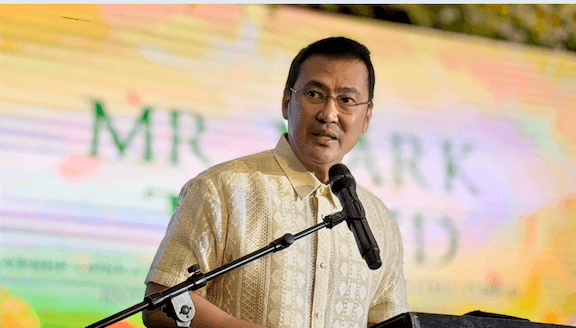
Magalong clarified during the program that one of those projects involves the city’s aging sewerage system, including filtration facilities. He also said around P130 million has been approved for the rehabilitation of Session Road, including drainage improvements.
Celebration, then silence
Before delivering his State of the City Address, Magalong asked the Convention Center audience to pause for the 10 people killed in the August 9 Guisad Surong landslide.
The room fell silent.
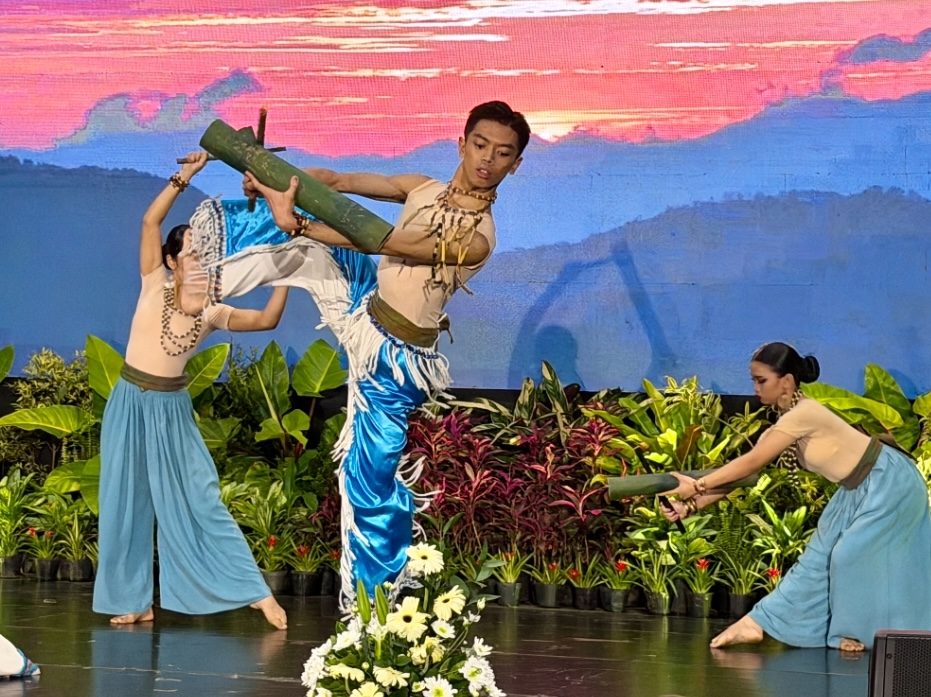
It was a sobering turn in a Charter Day program filled with music, performances, recognition ceremonies, and the conferment of awards to Baguio’s outstanding citizens.
Magalong then framed his address around the final two years of his administration.
“As we are in the final two years of this administration, I believe this is the right time to look beyond our accomplishments and focus on what we will leave behind,” he said.
His argument was simple: projects and reforms should outlast the politicians who started them.
“What must persist are institutionalized programs and projects that are not associated with any political figure, but interwoven with Baguio’s DNA,” he said.
At the center of that pitch is Baguio 2043, the city’s long-term vision of becoming a “livable, inclusive and creative city.”
That vision has to contend with the pressures already weighing on the mountain city: congestion, waste, housing, water shortages, disaster risk, and the environmental costs of continued growth.
Baguio’s economy grew by 5.8% in 2024 to P178.8 billion, accounting for nearly half of the Cordillera economy.
Growth, however, also puts more pressure on limited land, water, roads, and public services.
Water, waste, housing
Magalong spent much of his address on problems that cannot be solved within a single political term.
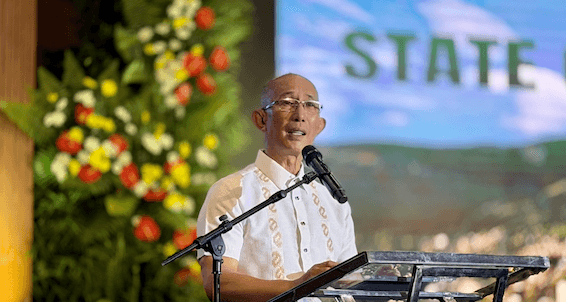
One is water.
He said a long-term water supply study funded through a roughly £2-million technical assistance grant from the United Kingdom had been completed and turned over to the city. According to Magalong, the study projects that Baguio could face a supply gap of at least 107 million liters a day by 2055 and assessed eight possible water sources.
The city is also working with the Philippine Disaster Resilience Foundation, with support from Canada, on watershed protection and integrated water-resource management.
Waste is another pressure point.
Baguio has adopted a circular economy framework and is setting up material recovery systems in pilot barangays, while a mechanized waste-processing facility is under construction.
Magalong said the long-term target is to reduce waste generation by 20%, moving away from simply hauling garbage out of Baguio and toward recovering and reusing more materials locally.
Housing projects are also being pursued at six identified sites, he said, with government housing agencies and private developers involved.
The broader approach, Magalong said, is resilience.
Baguio was designated a Resilience Hub by the United Nations Office for Disaster Risk Reduction in March, making it the second Philippine local government to receive the designation.
Government after the mayor
The latter part of Magalong’s address moved from infrastructure to institutions.
He cited digital platforms for tracking government projects, open-data initiatives, barangay consultations, ISO quality-management certification, an anti-bribery management roadmap, and a program for training future City Hall leaders.
He also returned to a practice he has repeatedly emphasized: reducing the mayor’s role in personnel selection.
“You earn your position based on merit. You do not owe it to the mayor,” Magalong said.
He described that change in mindset as among the legacies his administration hopes to leave.
Magalong also acknowledged that his administration had made mistakes.
“We do not claim to be perfect,” he said. “There are things we could have done better. We learn our lessons.”
Domogan, who also addressed the gathering, picked up the same theme of stewardship.
He traced Baguio’s history through its Indigenous communities, early builders, disasters, and periods of rebuilding, then asked what the present generation would return to the city it inherited.
Progress, he said, should not erase the environment, heritage, and character that made Baguio worth developing in the first place.
He also reported on pending measures in Congress involving land issues, barangay boundaries, and other long-standing concerns of the city.
By the end of the program, the contrast with the morning was clear.
Burnham Lake had reopened after months of reconstruction, restoring something generations of Baguio residents already knew and loved.

The work discussed inside the Convention Center has no ribbon-cutting date.
It is the harder task of making sure Baguio still has enough water, housing, clean surroundings, functioning institutions, and room to breathe decades from now.
At 117, the city celebrated what endured.
Its leaders spent much of the day talking about what must endure next. – Rappler.com
KioskNews shows a cleaned-up reading view extracted from the publisher’s page — the original always lives on their site, not ours.