Chinatown to get new cinema, while mall near MRT station may soon make way for hotel
SINGAPORE – After a decade’s absence, a cinema is set to return to Chinatown on the site of the former Oriental Theatre.
Farther along New Bridge Road, Lucky Chinatown, a shopping centre near Chinatown MRT station, may soon be replaced by a hotel.
The cinema will be located at Oriental Plaza, which is in the final stages of refurbishment. It will reopen as Shaw Oriental, according to the website of property firm CBRE.
Oriental Plaza, owned by Shaw Organisation, and Lucky Chinatown, owned by Far East Organization, were built in the early 1990s and sit on freehold sites.
Shaw Organisation declined to comment on Shaw Oriental.
CBRE, which is marketing commercial units for the property, said on its website that refurbishment works are expected to be completed in the first quarter of 2027, and that the building will house the only cineplex in Chinatown.
The building will have four storeys of dining, retail and entertainment spaces, as well as basement parking.
Chinatown – once a hub for Mandarin and dialect films – has been without a cinema since Yangtze at Pearls Centre closed in 2016, before the building was demolished to make way for the construction of the Thomson-East Coast Line.
Wong Han Min, a Chinatown resident of four decades and a private collector of film memorabilia, said it would be good to have a cinema back in the area for its residents.
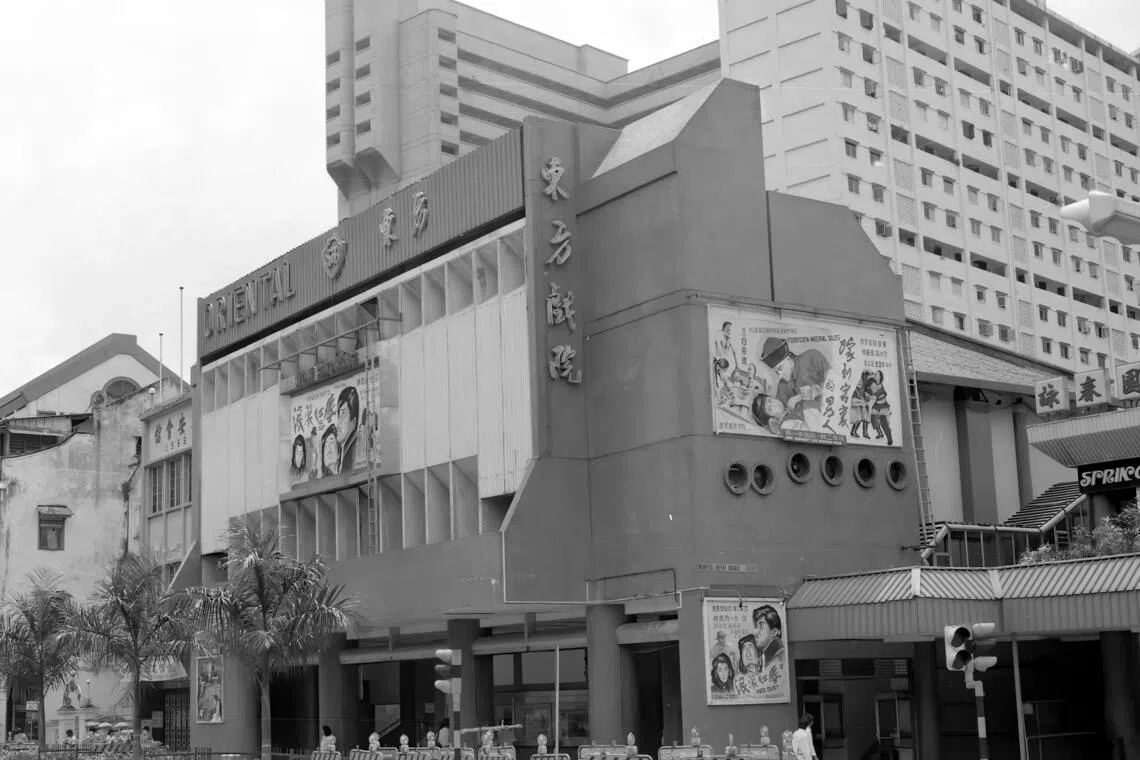
A 1991 photo of Oriental Theatre in New Bridge Road before it made way for Oriental Plaza.
PHOTO: ST FILE
However, he said, the cinema would need to attract moviegoers from beyond Chinatown, noting that the heyday of Chinatown’s cinemas was in the 1950s and 1960s.
During this period, much of Singapore’s population lived in Chinatown, and the area’s large population meant that the three cinemas there – Oriental, Majestic and Metropole – enjoyed high attendance. Each screened unique Mandarin and dialect films as they belonged to different companies.
The redevelopment of Chinatown and the movement of its residents to new housing estates led to a drop in cinema attendance in the area, said Wong. He added that new cinemas were built in these estates and elsewhere on the island.
The site where Shaw Oriental stands was where Palacegay Theatre opened in 1921. It was later renamed Oriental and purchased by Shaw around 1940.
The theatre was redeveloped into Oriental Plaza in the early 1990s, where a two-hall cinema operated from 1993 to 2000.
Wong said that unless the upcoming cinema in Shaw Oriental can distinguish itself – for instance, by screening art-house, dialect or restored Chinese films – it may be no different from other cinemas in central Singapore, such as those at Great World, Funan and Suntec City.
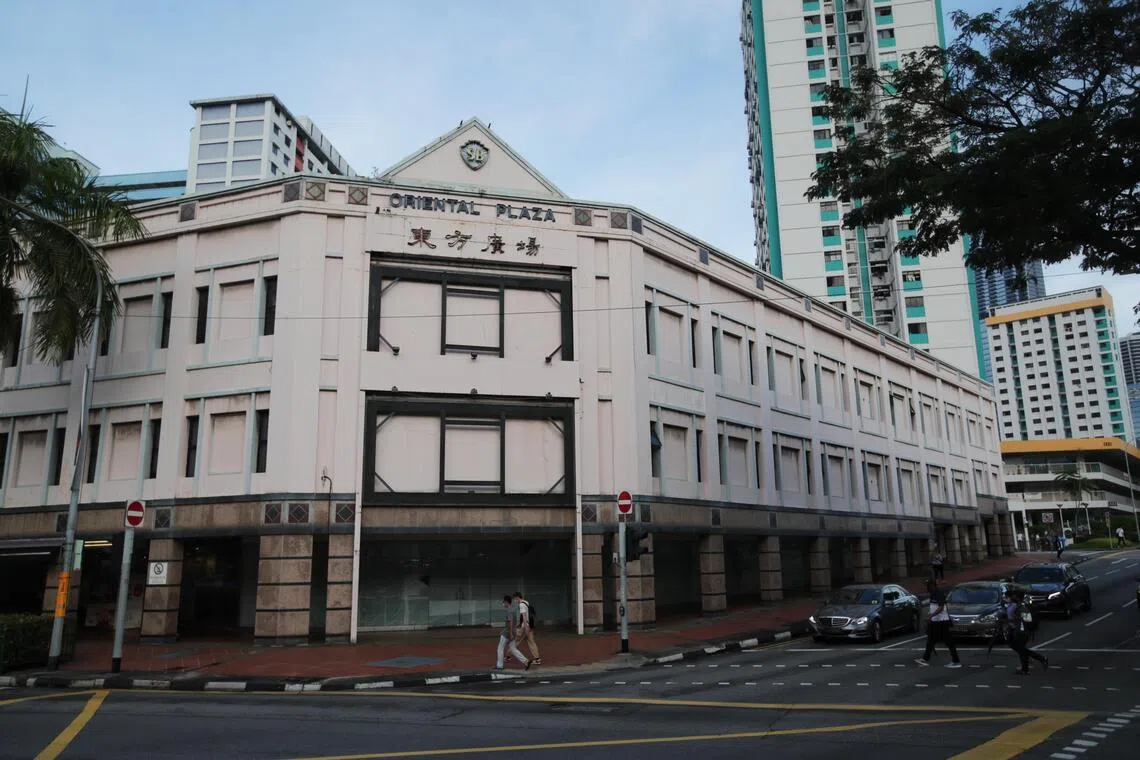
Oriental Plaza, owned by Shaw Organisation, was built in the early 1990s and sits on a freehold site.
ST PHOTO: GIN TAY
Catherine He, Colliers’ head of research for Singapore, said Shaw Oriental could differentiate itself by positioning itself as a modern lifestyle and leisure destination, rather than competing with the area’s heritage-themed and tourist-oriented retail offerings.
“A curated mix of dining, entertainment and everyday services can serve the area’s often-overlooked local catchment,” she said, citing nearby public and private housing, upcoming flats at Pearl’s Hill, workers from the surrounding hospital cluster, office workers and tourists.
“The cinema should be a meaningful footfall driver, particularly in the evenings and on weekends, extending dwell time and generating spillover demand for F&B (food and beverage) within the mall and along New Bridge Road and Eu Tong Sen Street,” said He.
Meanwhile, Marc Boey, executive director for property services at Far East Organization, told The Straits Times that the firm had submitted a development proposal to the Urban Redevelopment Authority (URA) for Lucky Chinatown.
“The proposal is at a preliminary stage, and there is no redevelopment timeline at this point,” he said.
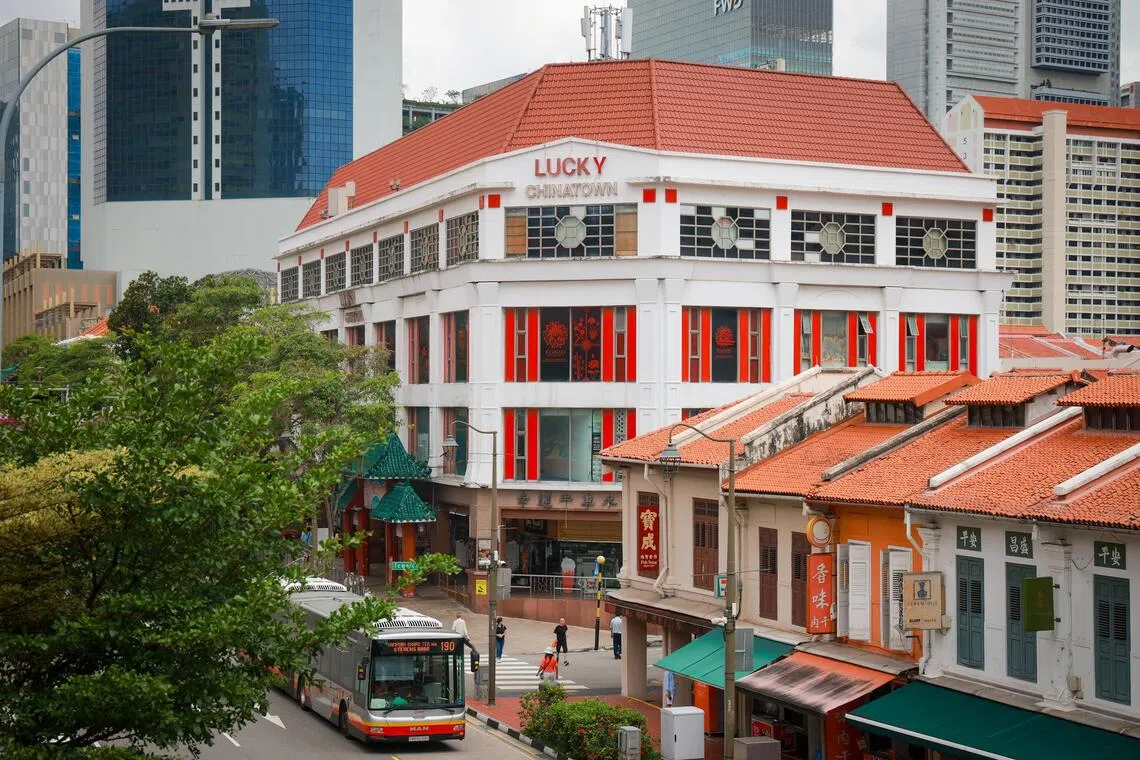
Lucky Chinatown, pictured on Nov 11, may soon make way for a hotel.
ST PHOTO: JASON QUAH
URA had on Oct 30 published a proposed amendment to its masterplan, which primarily involves rezoning the land occupied by Lucky Chinatown from commercial to hotel use, and an adjacent plot from utility to commercial use.
The proposed amendment, URA said, was to “facilitate a development proposal” it had received.
Completed around 1992, Lucky Chinatown has seven retail floors, including three basement floors, and is located next to Chinatown MRT station’s Pagoda Street exit.
Boey said the shopping centre remains open, adding that Far East Organization will engage its tenants early once there is greater clarity on the plans.
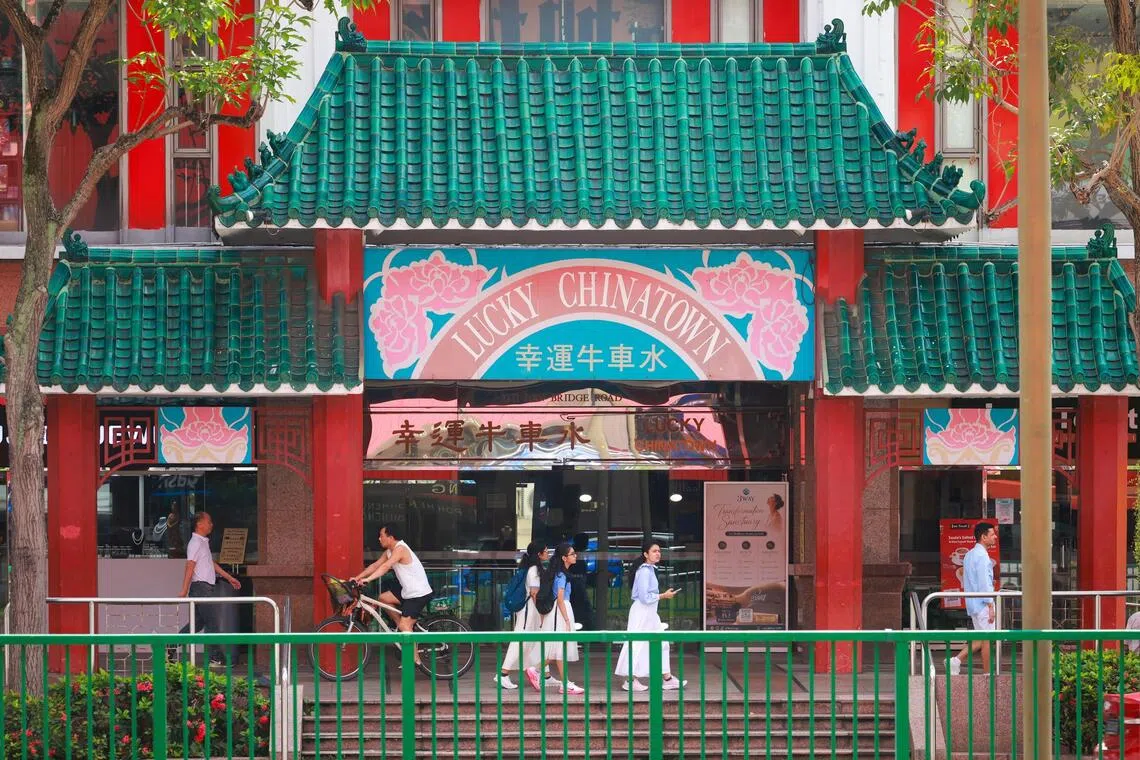
Far East Organization has submitted a preliminary development proposal for Lucky Chinatown to URA.
ST PHOTO: JASON QUAH
Colliers’ He said repositioning Lucky Chinatown as a hotel is sensible, given its location in one of Singapore’s most visited heritage precincts, where value is increasingly driven by tourism, culture and F&B rather than conventional mall shopping.
“Mid-size malls face stiff competition from e-commerce, larger suburban malls and the area’s own shophouse dining scene, while new hotel supply in the city fringe remains limited,” she said.
“A hotel, ideally with active ground-floor retail and F&B offerings, would capture visitor demand directly and generate a more resilient income stream than the existing retail format,” she added.
A substantial redevelopment or major reconfiguration of the building is likely, given the challenges of converting deep retail floor plates into efficient hotel rooms, she said.
“However, a retrofit that keeps the existing structure is still possible as it would be faster, cut embodied carbon and support the push for adaptive reuse.”
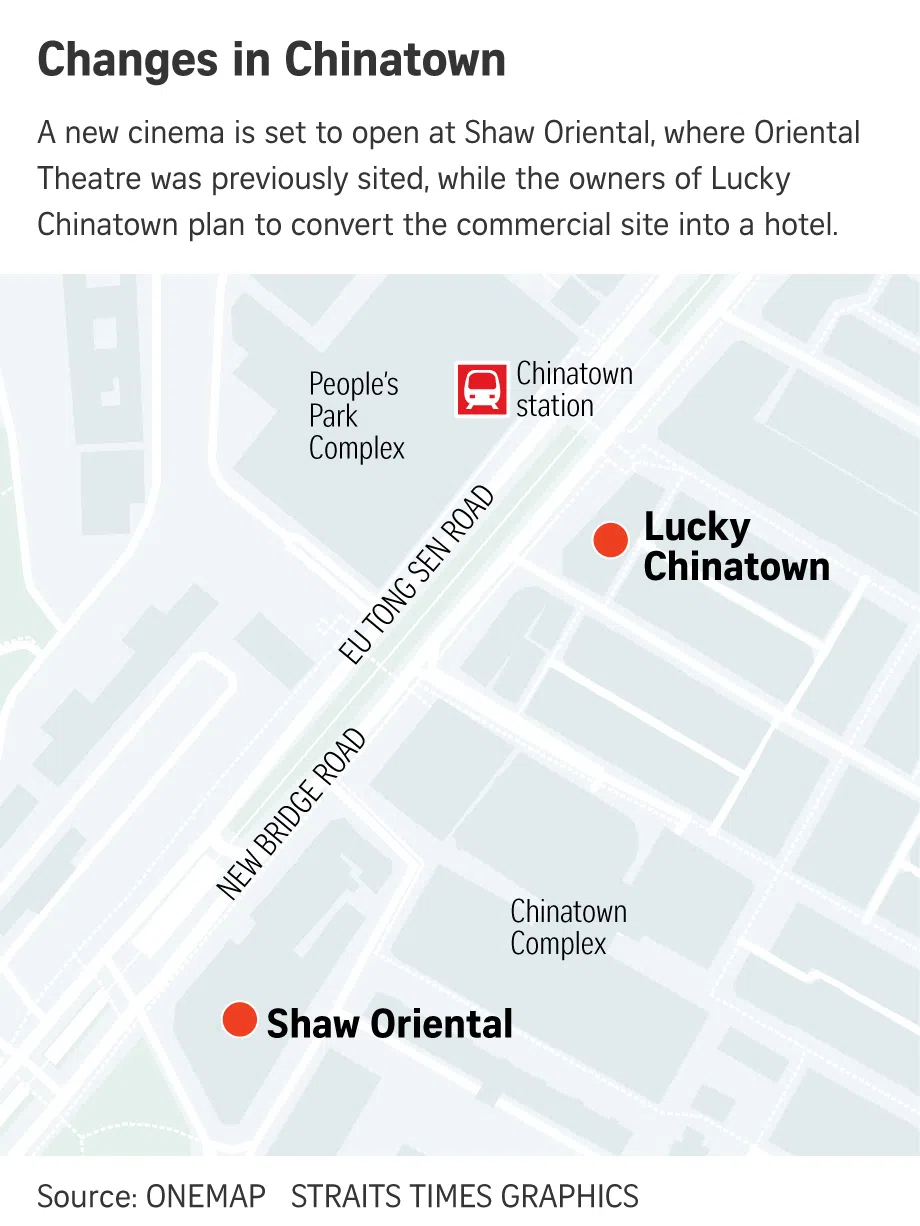
Together, the plans for Lucky Chinatown and Shaw Oriental signal a long-overdue renewal of Chinatown’s ageing commercial stock, complementing rather than competing with its conserved shophouses, He noted.
“The key will be to ensure that the design and tenant curation respect the area’s heritage character and retain space for longstanding local businesses so that rejuvenation strengthens Chinatown’s identity rather than diluting it.”
KioskNews shows a cleaned-up reading view extracted from the publisher’s page — the original always lives on their site, not ours.