Thai raid foils cross-border cable ruse powering Myanmar scam centre

Authorities in Thailand have uncovered an audacious scheme involving hundreds of metres of internet cable sent over the Thai border to keep a suspected Myanmar scam compound online, after finding two ramshackle village homes using enough daily bandwidth to power an entire village.
Officers raided the homes in Nong Lu, a Thai border village in Kanchanaburi province, which is the gateway to the Three Pagodas Pass in Myanmar – now a notorious hub for cyber scammers.
Many scam centre leaders have relocated after crackdowns further north inside Myanmar or in Cambodia.
Thai authorities said they had acted after finding a surge in data use well beyond the needs of a small home on the Thai border.
At one of the suspect properties police found a 48-core fibre optic cable – covered for use in robust environments – strung along pylons and reaching 350 metres (1,100 feet) across the border, supplying an illegal border casino and suspected scam centre.
“They were using about 6 terabytes a day, which should be enough to serve around 300 to 400 people,” Trairat Viriyasirikul, deputy secretary general and acting secretary general of the National Broadcasting and Telecommunications Commission, told reporters after the raid on Thursday.
“When we came in to inspect and we found the equipment … the suspect claimed it was for repair work.”
In video footage the male suspect said he was paid 700 baht (US$20) a day to allow the cable to run through his premises into Myanmar, a tiny sum for the deep-pocketed scam gangs.
Myanmar has become the epicentre of the global scam trade – inheriting the ignominious title from Cambodia which has been forced into a clean-up by the US and China.
The mainly Chinese scam bosses have either abandoned large factory-style scam compounds for small hotels or begun running breakaway units of scammers in condo rooms and villas. Some have also upped sticks entirely to Myanmar and further afield.
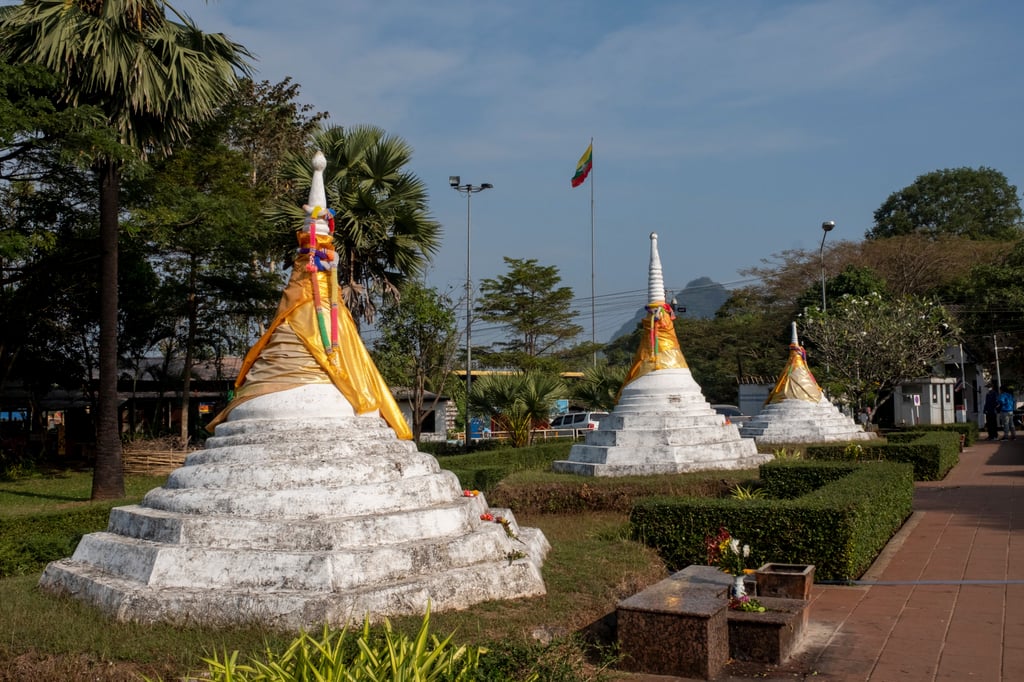
The Three Pagodas Pass area is protected by ethnic armed militias who shelter the criminals for a fee, leaving fugitive scammers busting borders from Cambodia, through Thailand and into Myanmar.
NGOs say hundreds, possibly thousands, of people – some trafficked and forced into scamming – remain trapped in the scam centres just over Thailand’s western border.
The scam centres extend deep into territory disputed by multiple ethnic armed groups, complicating rescues or missions to close them down.
Logistics to Myanmar’s scam centres have theoretically been cut, as they mainly relied on Thailand’s strong infrastructure and supply routes, including for petrol and internet access.
But with bottomless amounts of illicit cash, the scam gangs have proved resilient to crackdowns, bribing officials and securing new supplies of everything from diesel and Starlink satellite boxes to fibre optic cables plugging into neighbouring countries.
The United Nations Office on Drugs and Crime in July estimated that scam-related losses across the Asia-Pacific reached between US$88 billion and US$114 billion in 2025 alone, a sum it said “even at the low end, outstrips the GDP of several countries in the region”.
KioskNews shows a cleaned-up reading view extracted from the publisher’s page — the original always lives on their site, not ours.