6 Best MCU Superhero Costumes Marvel Replaced Way Too Quickly

Simon Gallagher has worked in movie and TV journalism for more than 17 years. He has written more than 6000 articles and reviews, and edited thousands more. He is an expert in the entertainment industry, particularly in the golden age of screen superheroes. Simon is also a Rotten Tomatoes approved critic.
Sign in to your ScreenRant account
The MCU makes too many changes. There, I said it.
While the Marvel Cinematic Universe’s empire was built on the strength of story, wonderful casting decisions, and iconic characters, it was also, in a quieter way, built on merchandising potential. Spider-Man’s addition was obviously great for long-term Marvel fans, but it was even better for the finance guys, given he’s the hottest merch-mover Marvel has. So it’s inevitable that money drives a lot of decisionsl that’s really not rocket science.
One of the biggest decisions it drives is the same justification for a new Batsuit or Batmobile for almost every movie, and updated looks for Disney characters in sequels. Kids want the new version, so why not take the opportunity to debut a new costume and refresh every merch line? That’s how million-dollar empires become billion-dollar ones, and it also means you’re not stuck too long with Joel Schumacher’s Bat-nippled monstrosity for too long. So there are some benefits.
In the MCU, change fatigue isn’t really an issue because everything refreshes. Thor went through a period of having sleeves and not having sleeves every other time he appeared, because nobody seemed to agree whether Chris Hemsworth’s pythons should be on show. Tony Stark, meanwhile, went through 85 iterations of the Iron Man armor, handily explained as his obsession for perfection and self-improvement. It didn’t hurt the sales, either.
With Iron Man, we didn’t get to see all of the armors, but there were some prototypes it would have been nice to see more of. But the wardrobe he unveiled in Iron Man 3 before destroying them served a major narrative purpose, so it’s forgivable. Less acceptable were the iconic MCU costumes that were introduced and then replaced with something inferior, and there are some pretty stark examples in an entirely different way.
6 Scarlet Witch's Final Costume in WandaVision

When Wanda Maximoff finally embraced her destiny as the Scarlet Witch in the emotional climax of WandaVision, the moment was accompanied by her best MCU costume by far. Previous to the miniseries, Wanda had wandered through some interesting but not exactly comics-accurate looks, with a red leather jacket of some sort running through them, because she was very angsty.
But in the final episode of WandaVision, we finally got the real crowned version, as she accepted her destiny. The aesthetic was more traditionally high-fantasy influenced, stripping away the modernization of her earlier costumes to wonderful effect.
From “I Am Iron Man” to “I Am Inevitable” · Eight Questions How Well Do You Know the MCU? “Whatever it takes.”
🤖Phase OneRDJ & the founders, 2008
🛡The AvengersWhedon’s team, 2012
💎Infinity SagaThanos & the stones
⚡EndgameWhatever it takes, 2019
🌏MultiversePhase 4–6, 2021–
01
Iron Man (2008) is, in retrospect, the most consequential casting decision in modern blockbuster history — but at the time Marvel Studios and parent company Paramount were openly hostile to director Jon Favreau’s push for the lead actor he eventually got. Favreau later said he had to fight “tooth and nail” and the actor had to do a paid screen test, a screen-test deal almost unheard of for an A-lister. What was the executive objection to him?
✓ Correct! Robert Downey Jr. had been arrested multiple times between 1996 and 2001 on drug and weapons charges, served roughly a year in California state prison (1999–2000), and was fired from Ally McBeal in 2001 after relapsing. By 2007 he’d been clean for several years, but Marvel/Paramount considered him essentially uninsurable for a $140 million tent-pole. Favreau pushed for him over studio favourites Tom Cruise (who’d had Iron Man development at Fox years earlier) and Sam Rockwell (who’d later play Justin Hammer in Iron Man 2 as a consolation). RDJ took a reported $500,000 base salary — less than Terrence Howard, whose role he then permanently overshadowed.
✗ Wrong. The answer is his arrest history. RDJ had drug-related arrests from 1996–2001, served prison time in 1999–2000, and was fired from Ally McBeal in 2001 — which made him uninsurable in studio terms even though he’d been sober for several years by 2007. Favreau fought for him over Tom Cruise and Sam Rockwell, and RDJ took a reported $500,000 base salary — less than co-star Terrence Howard.
02
The Avengers (2012) — the film that proved the shared-universe model could work, grossed $1.52 billion, and ended Phase One with Loki, Thanos’s mid-credits reveal, and the “swarm shot” of the team rotating in Manhattan — was written and directed by a TV showrunner best known at the time for Buffy the Vampire Slayer and Firefly. Name him.
✓ Correct! Joss Whedon. Marvel hired him in mid-2010 partly on the basis of his uncredited script rewrites and his comfort writing ensemble team dynamics from Buffy/Angel/Firefly. He directed The Avengers (2012) and the follow-up Age of Ultron (2015), then exited the MCU and Marvel handed the next two Avengers films to the Russo brothers. The three other directors named all really did make Phase One films: Favreau directed Iron Man (2008) and Iron Man 2 (2010), Branagh directed Thor (2011), and Joe Johnston directed Captain America: The First Avenger (2011) — which is why this question separates Phase One trivia from Avengers-specific trivia.
✗ Wrong. The answer is Joss Whedon — hired largely on the strength of Buffy, Firefly, and uncredited Hollywood script work. The three wrong options are deliberately all real Phase One MCU directors: Favreau did Iron Man 1 & 2, Branagh did Thor (2011), and Joe Johnston did The First Avenger (2011). Whedon directed Avengers (2012) and Age of Ultron (2015) before exiting the MCU.
03
Marvel co-architect Stan Lee (1922–2018) appeared in every theatrical MCU film from Iron Man (2008) onward, even shooting cameos in advance to outlast him. He died on November 12, 2018. In which film does his final filmed MCU cameo appear — as the long-haired young driver of a 1970 car bearing the bumper sticker “NUFF SAID”?
✓ Correct! Avengers: Endgame (April 2019). Lee appears digitally de-aged behind the wheel of a 1970 Chevy at the New Jersey army base where Tony Stark and Steve Rogers travel back to retrieve the Tesseract; he shouts “hey man, make love, not war!” The cameo was filmed before Lee’s death and confirmed by the Russos as his final filmed MCU appearance, although the next-released film, Spider-Man: Far From Home (July 2019), became the first MCU film with no Stan Lee cameo at all. Captain Marvel (March 2019) has him reading the script for Mallrats on the L.A. train and was the first posthumously-released cameo, but Endgame was the last one he actually shot.
✗ Wrong. The answer is Avengers: Endgame — the de-aged hippie-era driver in the 1970 New Jersey time-heist scene. Captain Marvel (March 2019) was the first cameo to release posthumously, but Endgame (April 2019) was the last one Lee actually filmed. Spider-Man: Far From Home (July 2019) became the first MCU film with no Stan Lee cameo at all.
04
Across Phase One through Three, each Infinity Stone is hidden inside a distinctive container before being claimed for Thanos’s Gauntlet. The blue Space Stone is housed inside a glowing cube that originates with the Asgardians, is recovered by Howard Stark from the wreckage of the Red Skull’s plane, is taken to Asgard by Loki in 2012, and is finally retrieved by Hulk on Sakaar before falling to Thanos. What is that container called?
✓ Correct! The Tesseract — the blue cube that houses the Space Stone — first appears in Captain America: The First Avenger (2011), powers the portal Loki opens over Manhattan in The Avengers (2012), and is destroyed by Thanos in Infinity War (2018) when he crushes it to claim the stone inside. The wrong options are all real Infinity Stone containers from the MCU: the Aether (red liquid form) houses the Reality Stone in Thor: The Dark World, the Orb houses the Power Stone in Guardians of the Galaxy, and the Eye of Agamotto houses the Time Stone in Doctor Strange. So all four answers refer to genuine stone containers — only the Tesseract holds Space.
✗ Wrong. The answer is the Tesseract. The trap is that all four options are real Infinity Stone containers: the Aether holds Reality (Thor: The Dark World), the Orb holds Power (Guardians of the Galaxy), and the Eye of Agamotto holds Time (Doctor Strange). Space — the blue stone shown in Cap’s 1942 plane wreckage and Loki’s 2012 invasion — is the Tesseract.
05
In Avengers: Infinity War (2018), the Soul Stone is hidden on Vormir and guarded by a Stonekeeper — revealed to be a cursed Red Skull. To claim it, the seeker must sacrifice the person they love most by throwing them from a cliff. Thanos arrives on Vormir with one adopted daughter, weeps, and pushes her over the edge. Which character does Thanos sacrifice to obtain the Soul Stone?
✓ Correct! Gamora (Zoe Saldaña). Thanos forces her to lead him to Vormir because Nebula has earlier revealed under torture that Gamora knew the Soul Stone’s location all along. The scene is the emotional pivot of Infinity War: it confirms that Thanos really does love Gamora, which means the sacrifice qualifies. In Endgame (2019), a 2014 version of Gamora returns through time travel with her father — meaning Gamora-of-Infinity-War remains dead at the end of the saga, while a different Gamora wanders the cosmos in Guardians of the Galaxy Vol. 3. Nebula is alive throughout Infinity War; Mantis survives Vormir entirely; Proxima Midnight is one of Thanos’s Black Order children, killed in the Battle of Wakanda.
✗ Wrong. The answer is Gamora. Nebula is alive throughout Infinity War (she’s the one whose torture reveals Gamora knew where the stone was hidden). Mantis isn’t on Vormir. Proxima Midnight is Thanos’s adopted daughter via the Black Order, not via Zen-Whoberi, and is killed during the Battle of Wakanda by Scarlet Witch. Thanos sacrifices Gamora — the only adopted daughter he genuinely loves.
06
In Avengers: Endgame (2019), Steve Rogers travels back in time to return the Infinity Stones, then chooses to remain in the past and live out a life with Peggy Carter. He returns to the present as an old man, sits on a bench by the lake at the Avengers compound, and hands his vibranium shield to a younger Avenger as the symbolic transfer of the Captain America identity. To whom does Steve give the shield?
✓ Correct! Sam Wilson (Anthony Mackie) — the Falcon. The choice deliberately bypasses Bucky, the original comics successor, because the Russos and screenwriters Markus & McFeely wanted the moment to read as a deliberate, racially-charged passing of an American icon rather than the obvious comics-canon handoff. The thread is then picked up directly in The Falcon and the Winter Soldier (Disney+, 2021), in which Sam initially gives the shield to the Smithsonian, sees the government install John Walker as a replacement Cap, and ultimately takes the mantle himself — setting up Captain America: Brave New World (2025) with Mackie as the franchise’s new lead.
✗ Wrong. The answer is Sam Wilson, the Falcon. In the comics Bucky is the classic Cap successor, but the Russos and screenwriters Markus and McFeely deliberately picked Sam instead — a choice the entire Falcon and the Winter Soldier series (Disney+, 2021) then unpacks before Mackie carries it into Captain America: Brave New World (2025).
07
After Endgame, Marvel Studios’ Phase Four launched the MCU on Disney+ with a sitcom-pastiche limited series in which Wanda Maximoff and a resurrected Vision live inside a reality-warping suburban hex. Each episode parodied a different era of US TV sitcom — The Dick Van Dyke Show, Bewitched, Family Ties, Modern Family. The show premiered January 15, 2021 and ran nine episodes. Which series was it — the first MCU project on Disney+?
✓ Correct! WandaVision (January 15 – March 5, 2021), created by Jac Schaeffer and directed by Matt Shakman. It launched Phase Four, earned 23 Emmy nominations, and effectively rebooted Wanda Maximoff as the Scarlet Witch ahead of Doctor Strange in the Multiverse of Madness (2022). The Falcon and the Winter Soldier followed it in March 2021 — not first — and Loki landed in June 2021. Hawkeye is the 2021 Christmas series with Jeremy Renner and Hailee Steinfeld. The original launch order was WandaVision → FATWS → Loki → What If...? → Hawkeye, and WandaVision’s sitcom format remains the boldest swing of the Disney+ era.
✗ Wrong. The answer is WandaVision (January 15, 2021), the first MCU show on Disney+ and the launchpad for Phase Four. The Falcon and the Winter Soldier came in March 2021, Loki in June 2021, and Hawkeye in late 2021. The sitcom-pastiche structure — Dick Van Dyke through Modern Family — is unique to WandaVision.
08
At the closing panel of San Diego Comic-Con on July 27, 2024, Marvel Studios president Kevin Feige brought the Russo brothers back on stage to announce a new title for the next Avengers film — previously labelled “The Kang Dynasty” before Jonathan Majors’s December 2023 conviction forced a pivot — and then unmasked a cast of actors wearing green hoods. The final hood came off Robert Downey Jr. RDJ is returning to the MCU, but not as Tony Stark. As whom?
✓ Correct! Doctor Doom — Victor von Doom, the Latverian dictator and Reed Richards’s lifelong nemesis, generally considered Marvel’s greatest comics villain. The next Avengers film, originally announced as Avengers: The Kang Dynasty, was retitled Avengers: Doomsday after Jonathan Majors was dropped as Kang following his December 2023 assault conviction. Doomsday is scheduled for May 2026, with Avengers: Secret Wars to follow in May 2027 — both directed by Anthony and Joe Russo, returning to the MCU after Endgame. The in-universe explanation for RDJ playing Doom rather than Stark hinges on the multiverse: Doom is being positioned as a variant of Stark from another timeline.
✗ Wrong. The answer is Doctor Doom. The film was retitled from Avengers: The Kang Dynasty to Avengers: Doomsday (May 2026) after Jonathan Majors was dropped, and the Russos returned to direct. RDJ’s casting as Doom — rather than as Tony Stark — is being explained in-universe via the multiverse: Doom as a Stark variant from another timeline.
The Stones Are Cast · Final Scorecard Your Avengers Standing
💎
/ 8
A worthy Avenger — or dusted in the snap?
But then, sadly, when Wanda reappeared in Sam Raimi’s Doctor Strange in the Multiverse of Madness, perhaps as a result of the director simply not watching WandaVision, her whole vibe was off. The newly villainous Wanda was given a darker costume reflective of her Darkhold corruption, with a muted color palette that felt like a betrayal of how long we’d waited for her final form.
5 Steve Rogers' Nomad Costume (Avengers: Infinity War)

Sadly, we didn’t get to see enough of Captain America’s story in the wake of Civil War or his disillusionment with the government, thanks to the Sokovia Accords. The idea of the Secret Avengers operating from the shadows and still helping people, even as their existence was criminalized could have made for a great Captain America 4.
That subplot only exists as a small subplot from the opening of Infinity War, but it did at least introduce us to one of Captain America’s coolest MCU costumes: the so-called “Nomad” suit. In reality, the sleek, black suit was actually a stripped-down version of his Winter Soldier stealth suit, with the star torn off in defiance. The fact that Steve kept the suit but removed the affiliating symbols spoke to his internal conflict, and the visible wear revealed the reality of a soldier on the run.
The tragedy of the "Nomad" suit is that it was quite quickly abandoned once the threat of Thanos escalated. When the surviving Avengers came back together in Endgame, Steve abandoned his principles in the name of becoming a symbol again and put on a new, more traditional Captain America suit. It’s not hard to understand why, but it did mean cutting short a great visual era for Cap.
4 Mantis' Best Costume (Thor: Love & Thunder)

You can criticize Thor: Love & Thunder for many things (though it was all terribly overblown and exhausting), but the divisive sequel had a hell of a costume department. Almost every character got an upgrade, Natalie Portman’s Thor costume was great, and Thor got no less than 3 costume changes (more of which soon).
Even the Guardians of the Galaxy, who appear for a glorified cameo to untangle them from the God of Thunder’s story, all got new looks, with some subtle but superior changes. And the best of them was given to Mantis (Pom Klementieff), who had worn a fairly indistinct green tunic and elbow-length sleeves (while looking nothing like the comics original character). In Thor: Love & Thunder, costume designer Mayes C. Rubeo gave her costume some much-needed detail, a better color palette, and a closer look to her comics costume.
And then, for no reason at all, the Guardians’ costumes were all thrown out for Guardians of the Galaxy Vol 3, as Mantis was given a less warrior-like look, before the whole team adopted their blue-and-red Ravager uniforms. Neither is a particularly bad look, but next to the short-lived Love & Thunder rebrand, Mantis looks drab and uninspired.
3 The Iron Patriot (Iron Man 3)

There are a huge number of variant armors in Iron Man 3, and lots of them deserved more screentime before being self-destructed by Tony Stark, but the biggest injustice was kept for an armor that survived Aldrich Killian’s attacks. Step forward, James Rhodes, War Machine Mk II armor, and specifically, the Iron Patriot refit.
In Iron Man 3, the government co-opted War Machine as their own version of Iron Man, presumably inspired by the success of the Captain America program. That meant repainting the visually bland but impressive War Machine with the red, white, and blue color scheme of the American flag. It’s obviously a loaded exploration of weaponized symbolism, but the Iron Patriot actually looked way better than Rhodey’s original look. He also represented the interesting, underdeveloped idea of corporate-sponsored heroism.
Somewhat inevitably, by the time Avengers: Age of Ultron came back around, the paint had been stripped off, and the War Machine name was back, presumably because of the armor’s role in attempting to assassinate the President. But years later, the Russos would pay homage to the suit again, by bringing back a second, more powerful but far uglier Iron Patriot armor in Endgame, with no real explanation of where it came from or why anyone would have made it.
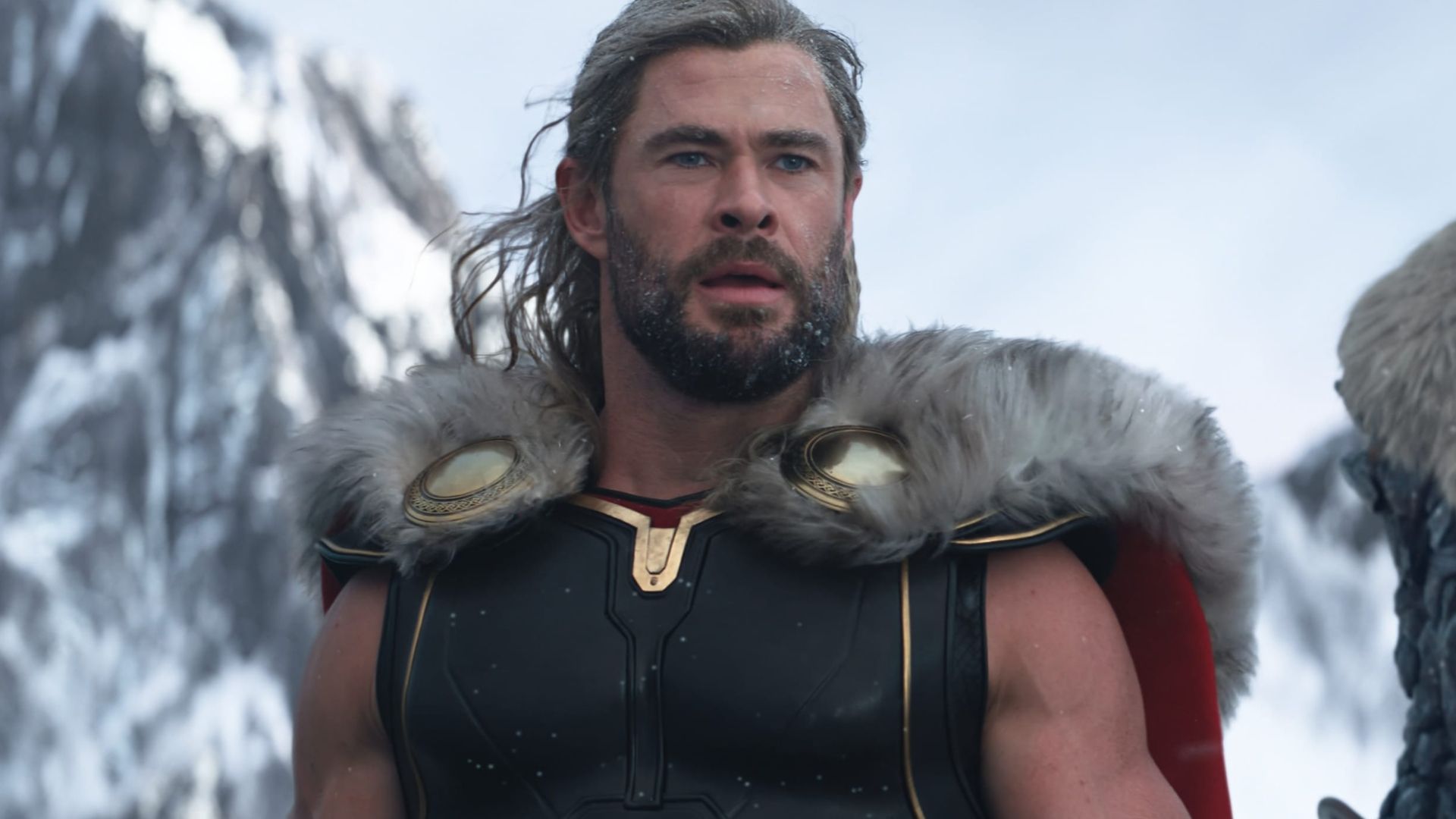
2 Thor's Love & Thunder Fur Cape Suit

Again, people have issues with Thor: Love & Thunder, but it got the production design mostly spot on, especially in the film’s early sequence when Thor sports not one but two great looks. His 1980s casual look alongside the Guardians is great, but had to go away when he broke away from the group, but his fur-caped second costume was a great replacement.
Some of Chris Hemsworth’s earlier MCU costumes had been somewhat over-designed (and the big chest circles weren’t universally loved), but this costume made him feel like an old-school ‘80s fantasy hero with a simplified warrior aesthetic. Sadly, this one didn’t last either, because midway through the film, he invokes his armor and this understated beauty was replaced with a garish, over-designed mess of blue and gold trim (and an awful helmet).
1 Sam Wilson's Falcon & The Winter Soldier Suit

Sam Wilson’s comic-accurate Captain America suit from the finale of The Falcon and the Winter Soldier is one of the strangest misjudgements in the MCU. Augmented with Wakandan technology, the bulkier suit combined Falcon’s military vibes with the pageantry of a Captain America costume, but with white as the primary color, differentiating Wilson from Steve Rogers’ tenure as Cap.
It was also one of the most faithful translations of a modern comic costume the MCU has ever produced, and the color scheme felt like an announcement. Rogers’ Cap had had a stealth suit, but Wilson was stepping into his new role visibly and proudly, and the white was a great choice to sell that.
And then Marvel decided to just drop it entirely for Brave New World, moving back to blue as the base color and rejecting Sam’s comics-accurate look for no good reason. They also added a nano-tech flight helmet that made sense, but looked awful.
- Movie(s)
- Iron Man, The Incredible Hulk, Iron Man 2, Thor, Captain America: The First Avenger, The Avengers, Iron Man 3, Thor: The Dark World, Captain America: The Winter Soldier, Guardians of the Galaxy, Avengers: Age of Ultron, Ant-Man, Captain America: Civil War, Doctor Strange, Guardians of the Galaxy Vol. 2, Spider-Man: Homecoming, Thor: Ragnarok, Black Panther, Avengers: Infinity War, Ant-Man and the Wasp, Captain Marvel, Avengers: Endgame, Spider-Man: Far from Home, Black Widow, Shang-Chi and the Legend of the Ten Rings, Eternals, Spider-Man: No Way Home, Doctor Strange In the Multiverse of Madness, Thor: Love and Thunder, Black Panther: Wakanda Forever , Ant-Man and the Wasp: Quantumania, Guardians of the Galaxy Vol. 3, The Marvels, Deadpool & Wolverine, Captain America: Brave New World, Thunderbolts*, The Fantastic Four: First Steps, Spider-Man: Brand New Day, Avengers: Doomsday, Werewolf by Night , The Guardians of the Galaxy Holiday Special, The Punisher: One Last Kill
- TV Show(s)
- Agents of S.H.I.E.L.D., Agent Carter, Inhumans, WandaVision, The Falcon and the Winter Soldier, Loki, What If...?, Hawkeye, Moon Knight, Ms. Marvel, She-Hulk: Attorney at Law, Secret Invasion, Agatha All Along, Ironheart, Daredevil: Born Again, Your Friendly Neighborhood Spider-Man, Wonder Man, Echo, Marvel Zombies, Eyes of Wakanda
- First Film
- Iron Man
- First TV Show
- Agents of S.H.I.E.L.D.
KioskNews shows a cleaned-up reading view extracted from the publisher’s page — the original always lives on their site, not ours.