Shah Alam’s flood fix needs plans, not just pumps
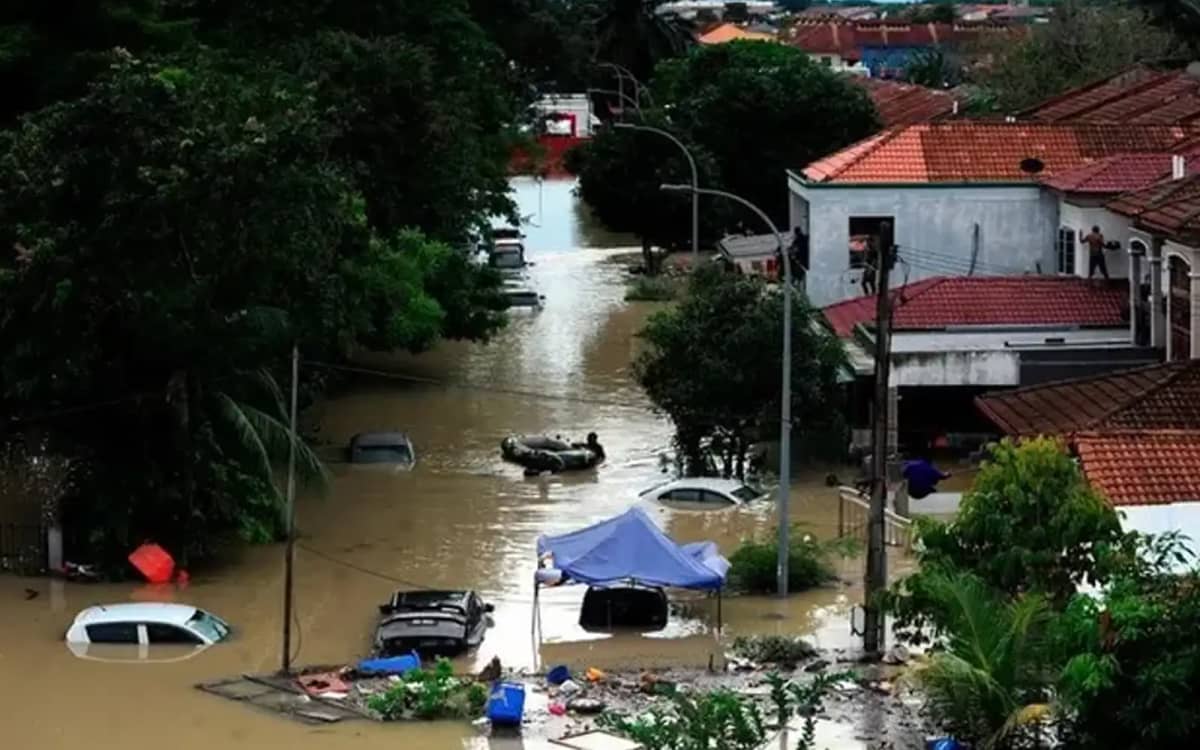
I refer to your report “Govt implementing 3 immediate flood mitigation measures in Shah Alam“.
Three flood walls, flap gates and an outlet structure cost RM749,000. Six mobile pumps have also been deployed at four high-risk locations. The larger fix, a RM40 million project at Sungai Rasah, will not be ready until 2029 at the earliest.
So Shah Alam, a city drawn on paper before a single road was built, faces at least three more monsoons of moving cars to higher ground and lifting sofas onto bricks.
Walls and pumps are a mop. They clean up the water but do not turn off the tap. The profession is called flood mitigation, not flood reaction, because mitigation is what you do before the water arrives.
I learnt that in England. I was a design engineer on drainage and flood mitigation schemes for West Sussex county during my engineering career. Before anyone picked up a shovel, we ran storms through a computer model of the drainage network and watched where the water came out. Then we fixed it on screen, where mistakes are cheap.
A good model tells you things nobody wants to hear, such as the new estate upstream flooding the old one downstream. It is better to hear that from a computer than from a resident standing knee-deep in his living room.
Today, I run a business in Shah Alam, and I watch the water come out in real life.
Less rain, more planning
Some will say England and the Netherlands are not tropical, so the comparison is unfair. They are right about the rain. Kuala Lumpur receives roughly four times as much rain a year as London, and our storms are far more intense.
But the countries with gentler rain are the ones that plan hardest for it.
In England, anyone can type in an address and see the official flood map for free. Developers building in a flood-risk area must submit a flood risk assessment, which goes into the public planning file. Since November 2003, the Dutch have required water assessments for formal spatial plans, including consultation with water authorities. They built all of that for drizzle.
If a country with a quarter of our rain takes flooding this seriously, a tropical country should be doing more, not less.
A map nobody can look up
A flood hazard map for Selangor was presented to the state government in August 2025. The public can see flood hotspots on the state’s Info Banjir site, but I cannot find the full map anywhere a homebuyer can look up an address.
In 2021, the irrigation and drainage department (JPS) commissioned a flood mitigation master plan study for the whole Klang River basin, at a cost of about RM2 million. It was due in late 2023 and was meant to produce flood risk maps.
Three years on, where is it? If it is finished, publish it. If it is not, tell us why.
That study matters because of how approvals work. Selangor developers must already hold back rainwater on their own sites and submit hydraulic studies. Last year, the federal government also said flood risk was a key factor in approving new housing.
But each project is studied on its own. Ten projects can each pass, and together still overload the same river. Only a basin-wide picture catches that.
A rulebook from 2012
JPS’s web page of hydrology procedures, the basic methods for estimating rain and flood flows, lists 27 documents. Twenty-four are dated between 1973 and 1983. Some have since been revised, including for climate change, but the page, last updated in 2017, does not say so.
The Urban Stormwater Management Manual for Malaysia (MSMA) had its second edition published in 2011 and launched in 2012. A third edition has been in JPS’s plans since at least 2021, and the department says a review is under way. There is still no new edition and no date.
Money is not the obstacle. JPS has about RM3.2 billion in this year’s federal budget, roughly RM9 million a day.
Meanwhile, the National Water Research Institute of Malaysia (Nahrim) published guidance on how climate change will increase design rainfall as far back as 2013. That is good science. Yet I can find no public Nahrim study of flooding in Shah Alam, and no statement from it during a month in which the city flooded repeatedly.
Research that stays in a repository protects nobody. Nahrim should be the loudest voice in the room whenever a large project is approved upstream. It received about RM21 million in the 2026 budget. If we want it heard, fund it to be heard.
700 ponds, no clear owner
A detention pond full of silt holds no water. A drain full of rubbish is not a drain; it is a dam.
Selangor has nearly 700 detention ponds whose ownership and maintenance responsibility still need to be made clear.
Every pond and main drain here deserves a named owner, a budget and a cleaning schedule.
Give the rain somewhere to go
Pour a bucket of water on concrete and it runs everywhere. Pour it on grass and it disappears. Engineers call this a nature-based solution: instead of fighting the rain with bigger drains, you let the ground do what it did before we built on it.
In Britain, many car parks and walkways use permeable interlocking paving, blocks set over gravel so rain drains through the gaps and soaks away slowly. England has required planning permission since 2008 to pave more than five sq m of a front garden with an impermeable surface, unless suitable drainage is provided.
Same car park, same cost range, but one sends every drop to the drain, and the other holds it back.
Bigger versions exist too. Rotterdam has a public square that is a basketball court on dry days and fills like a bathtub in a storm, holding about 1.7 million litres. Mansfield built more than 300 rain gardens into its streets.
Shah Alam has fields, car parks, school compounds and road shoulders that could do the same.
Three things, in the open
To be fair, the state has a multi-billion ringgit flood programme, with Shah Alam next in line after Klang. The money is there. What is missing is the openness.
To JPS, publish the Selangor flood hazard map and the Klang basin study, and give us a date for the new MSMA.
To Nahrim, tell us plainly, in public, what the science says about Shah Alam’s future rain.
To the state and MBSA, name the owner of every pond and main drain, and publish the cleaning schedule before the monsoon, not after.
Shah Alam was planned once. Plan it again, this time with the rain in mind. Otherwise, a few years from now we will be reading about the next three immediate measures. That would be flood reaction. We were promised mitigation.
Raja Ahmad Fauzan is the founder and CEO of Coffee Star, based in Shah Alam. He previously worked as a drainage and flood mitigation design engineer in West Sussex, England.
The views expressed are those of the writer and do not necessarily reflect those of FMT.
KioskNews shows a cleaned-up reading view extracted from the publisher’s page — the original always lives on their site, not ours.