Technology, AI has made us hasty readers – and that's a big problem
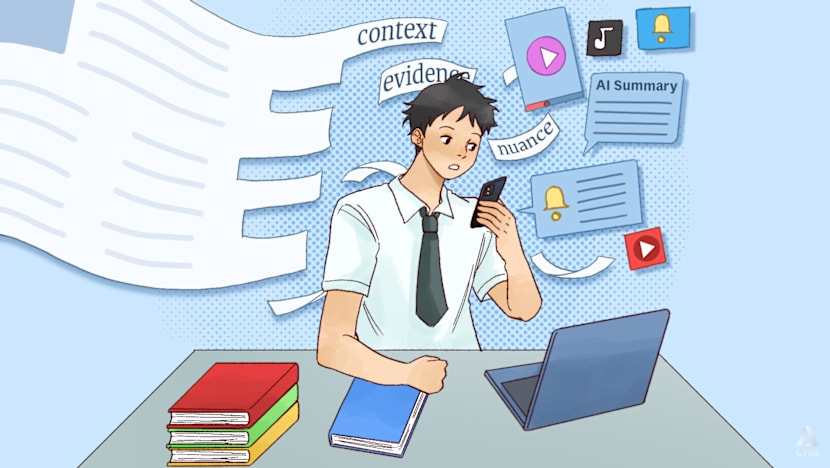
Some of Mr Julian Teo's secondary school students are in such a rush to answer mathematics questions that they skip over words. Others start working out the solution even before they finish reading.
The 48-year-old mathematics teacher said that he has seen this worrying pattern become increasingly common among his students over the past five years.
He showed CNA TODAY an example of the kind of problem sum that his students find too long to read properly. At 146 words, it required them to calculate the cost of driving between four cities.
"Their reading, comprehension and understanding skills are lacking because they don't read books, or long texts or articles, so chunks of words are tough for them," Mr Teo said. He has taught mathematics in various secondary schools for more than 20 years.
Indeed, the results of the 2025 OECD Programme for International Student Assessment (PISA), released on Sep 8 this year, showed that Mr Teo's students are unlikely to be an anomaly.
The test found that although Singapore's 15-year-olds still ranked first in reading, the country's average reading scores fell by eight points from 543 in 2022 to 535 in 2025.
This phenomenon is not unique to Singapore; it is evident among teenagers globally.
Across 91 countries, 760,000 students aged 15 took the test. Their average reading score was 461 in 2025, down from 476 in 2022.
OECD, the Organisation for Economic Co-operation and Development, which conducts the test once every three years, said in its PISA 2025 Results report: "This trend is particularly concerning because reading skills underpin learning across the curriculum and are essential for finding, evaluating, interpreting and reflecting on information in an increasingly digital world."
The results showed a decline in "the very skills that matter most in the AI (artificial intelligence) age", namely evaluating information, making connections across multiple sources, and thinking critically about what has been read, it added.
OECD also found that the number of "hasty readers" – students who rush through texts and give quick but incorrect answers – nearly doubled between 2018 and 2025.
Research has raised concerns about how AI use and digital habits may affect learning and attention.
A study of 1,000 students in Turkey, conducted in the 2023 to 2024 academic year, found that those with unrestricted access to AI performed worse in closed-book tests than those who had no AI access or had access with guardrails in place.

Another study of 583 people aged 13 to 25 in Singapore and Australia found that 68 per cent reported difficulty focusing.
Among the participants, 33 per cent described their inability to stop scrolling as a "kind of addiction", and 52 per cent admitted that they frequently get distracted during class by social media.
Singapore's Nanyang Technological University (NTU) and research agency Research Network conducted the study in collaboration with ListenLabs.ai, a United States-based AI platform.
The findings, released in July 2025, also reported that 65 per cent of students worried about the long-term impact of their social media use on school, work and their well-being.
To be fair, adults are not exactly burying their noses in books either.
A 2024 National Library Board (NLB) study found that only 28 per cent of Singaporean adults read books weekly. The proportion rose to 89 per cent when news, articles on social media and websites were included.
As for why they did not read books more, 62 per cent of the respondents said that they preferred spending their time on other activities, while 38 per cent said that they became bored after reading for a while.
It's understandable. Swiping through social media offers immediate stimulation, and getting the information we need from an AI-generated summary is undoubtedly very fast and easy.
However, these increasingly common habits are the opposite of what our brains need.
Education and literacy experts said that sustained long-form reading has been linked to building attention and critical thinking skills, supporting overall mental well-being and developing empathy and social understanding.
Acknowledging these benefits, NLB launched ReadSG on Sep 6, a five-year national campaign to make reading a daily habit among Singaporeans.
For all the ways that technology is affecting how people read, education and AI experts told CNA TODAY that strong literacy skills are becoming more, not less, important in an AI-driven world.
WHY "HASTY READING" IS BECOMING THE NORM
Professor Annabel Chen, a clinical neuropsychologist and director of the Centre for Research and Development in Learning at NTU, said that technology has weakened people's ability to read deeply in several ways.
Digital environments have fragmented people's attention and encouraged "media multitasking", as notifications, rapid task-switching and competing digital information interrupt sustained attention on any one task, she added.
They also encourage people to scan, navigate hyperlinks and extract information rapidly.
Furthermore, search engines and generative AI (GenAI) can reduce the need for people to retrieve, integrate, formulate and evaluate information for themselves.
When internet users allow these tools to take over such tasks, they are "offloading" some of the thinking involved, Prof Chen said.
Cognitive offloading is not necessarily harmful and can free working memory, she added.
But excessive reliance on such tools may reduce opportunities to practise the mental processes needed to develop lasting knowledge and understanding.

Reading a fluent AI-generated explanation can create a feeling of understanding, even if the person doesn't truly comprehend the material, she said.
This is especially relevant when students accept summaries or answers without checking sources, reconstructing arguments or generating explanations themselves, she added.
This illusion of understanding is becoming increasingly familiar to teachers and parents in Singapore.
Across subjects, educators said that students are having more difficulty paying attention or comprehending the bodies of text they read.
Mr Heng knows this problem all too well. The 53-year-old father of two secondary school children aged 15 and 14 often sees them glued to their phones at home.
He did not want to be identified by his full name because his employer does not allow him to speak to the media.
His children use their screen time for educational purposes, such as attending online classes and getting help to complete their homework.
But once the work is done, they stay on their screens, he said.
"They're busy swiping on TikTok, watching videos super fast that I catch no ball (don't understand) … I can't see what they're watching, let alone understand what they're hearing at that speed."
Mr Heng admitted, though, that he himself rarely puts his own phone down, and practically never opens a book.
"I don't remember when was the last time I read a book, let alone when my children did so," he said. "After work, I just use Facebook and TikTok … it's much more fun than reading."
He has received feedback from his children's tuition teachers that they hastily read through questions and rush to answer them without fully understanding what is being asked.
At this point, he said, he is rather at a loss.
"I just remind them to slow down before their exams," he said. "I don't think there's much I can do ... I don't think (putting down) the phone helps."
Jennifer (not her real name), an upper primary school English teacher, has noticed 11- and 12-year-olds struggling to focus on reading. She declined to be named because she did not have permission to speak to the media.
"Some of my students will skip words, and seemingly read a passage very fast," she said. "But oftentimes, they're just bored and moving on from paragraph to paragraph."
When she asked students what they read outside of school, most said that they do not read books but watch videos online or play games instead.
Some of her students have also admitted to skipping book chapters to quickly read the conclusion, so that they can "move on to the next fun thing".
"I worry quite a lot, because the joy of reading comes from the trepidation and excitement of following a character on a journey," Jennifer said.
"Many children today see that journey – the discomfort and fun of the ups and downs – as something to skip."
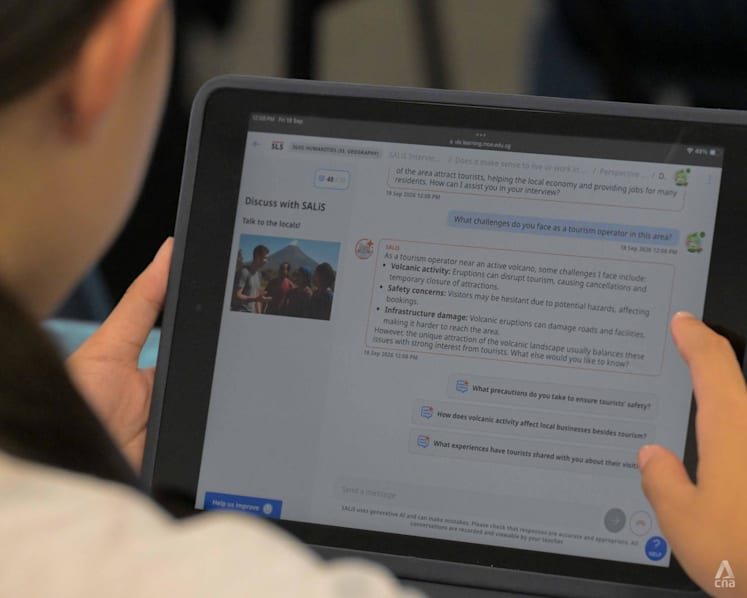
Among older students, teachers said, the same trend is occurring.
Mr Kelvin Hong, 58, founder of tuition centre The Economics Tutor and Ace GP, has noticed a change in the way his junior college students read.
Many lack the patience and stamina for sustained reading, and rather than read newspaper articles, commentaries, books or essays in their free time, they scroll through short social media posts, captions, headlines, online discussions and summaries.
"As someone who has taught Economics and General Paper for over 25 years, I find that, in recent years, more students struggle to explain a writer's overall argument, pick up on nuance or connect different ideas," Mr Hong said.
"Students are increasingly accustomed to scanning for key information and getting to the answer quickly.
"Faced with a long article or complex passage, some will skim for keywords instead of following the argument from beginning to end."
REDEFINING RULES OF LITERACY
Being able to sit with and understand written passages is one thing. In this digital age, literacy also means being able "to find, comprehend, evaluate, integrate and use information across human- and AI-generated sources", Prof Chen from NTU said.
This makes AI literacy increasingly important, she added.
People need to understand what AI can and cannot do, assess critically whether its answers are reliable, and know when and how to use it appropriately.
In an era where information is easily available with a tap of a screen, knowing what is true or false is crucial.
Associate Professor Loh Chin Ee, from the English Language and Literature Department at the National Institute of Education (NIE), said: "Given the amount of online information we have to process daily, a literate person would have to be able to read and process both print and digital texts."
For digital texts, people would have to process information presented in different forms – such as images, videos and graphics – across multiple sources, in order to search for information, analyse and evaluate what they encounter, she added.
Then they have to decide their next step: Do they believe the information? Should they act on it?
Assoc Prof Loh said that when a lack of literacy skills is paired with "hasty reading" habits of skimming through large chunks of text, people may find it harder to distinguish reliable information from false or misleading content.
With so much information available online – including convincing but potentially inaccurate AI-generated content – simply accessing information is no longer enough, Prof Chen said.
People need to judge whether the information is credible, cross-check evidence, reason critically and know what to trust, she added.
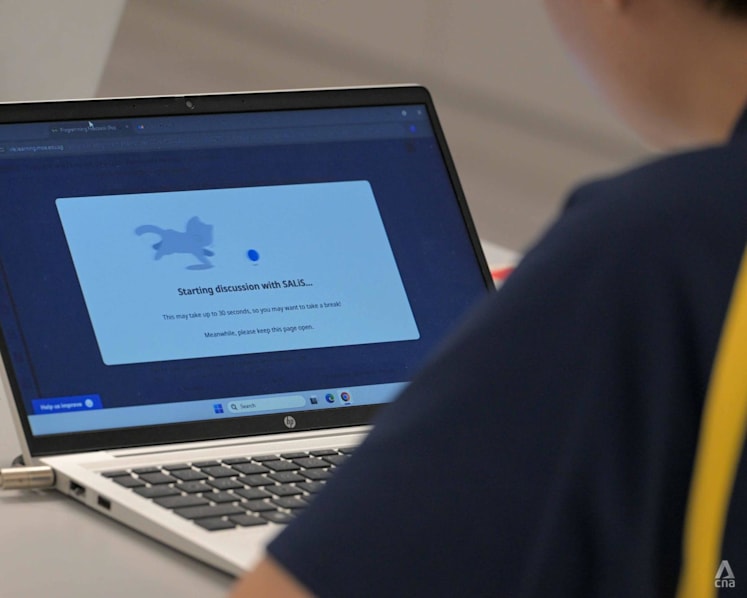
AI also presents another challenge.
Even though GenAI can produce seemingly polished answers and clear explanations within seconds, Assoc Prof Loh cautioned against relying on it to do the thinking – a practice known as "cognitive offloading".
When people use AI for cognitive offloading, that is, getting it to do a task rather than thinking through the task themselves, it can lead to sloppiness and hinder learning, she said.
"Some friction is required for learning, so students who avoid that struggle by relying on AI lose the chance to learn."
That being said, how students use AI matters.
Assoc Prof Loh said that AI can support learning when used selectively, at appropriate ages and in a structured, intentional way.
Given how deeply embedded technology and AI are in today's world, the experts said that the answer to declining literacy skills is not to stop using them entirely.
Instead, students and adults need strong literacy skills, including AI literacy.
Such skills could matter outside the classroom.
Mr Foo See Yang, the managing director and strategic business group head at PERSOL APAC, a recruitment solutions provider, said that AI literacy can affect future job opportunities.
This involves more than just knowing how to use AI tools, because employers will also look out for skills such as critical thinking and judgment.
"People should be encouraged to attempt a task themselves and form an initial view, and then bring in AI for feedback, refinement, or to explore another perspective," Mr Foo said.
"This keeps people actively engaged in the thinking process, while still benefiting from what AI can offer."
BACK TO THE BOOKS
So how can we strengthen critical thinking and judgment when digital distractions are everywhere?
One solution is surprisingly low-tech: good old reading.
Assoc Prof Loh said that students need to spend more time reading, particularly sustained, long-form texts such as fiction and non-fiction books, as well as news and magazine articles.
She pointed out that skimming and scanning are different from deep reading.
The problem arises when people avoid deep reading because it feels difficult.
"It does take effort to stay with a single text over a sustained period of time," she added. "Rather than immediate gratification, one has to be willing to wait to reap the rewards of the reading."
Assoc Prof Loh said that mandatory daily time limits on social media use can support efforts to reduce screen time, but they are not a standalone solution.
"Giving students time to read in school, creating opportunities for critical reading and encouraging parents and caregivers to put time aside for reading are helpful strategies," she suggested.
"The focus has to be on making reading engaging and meaningful."
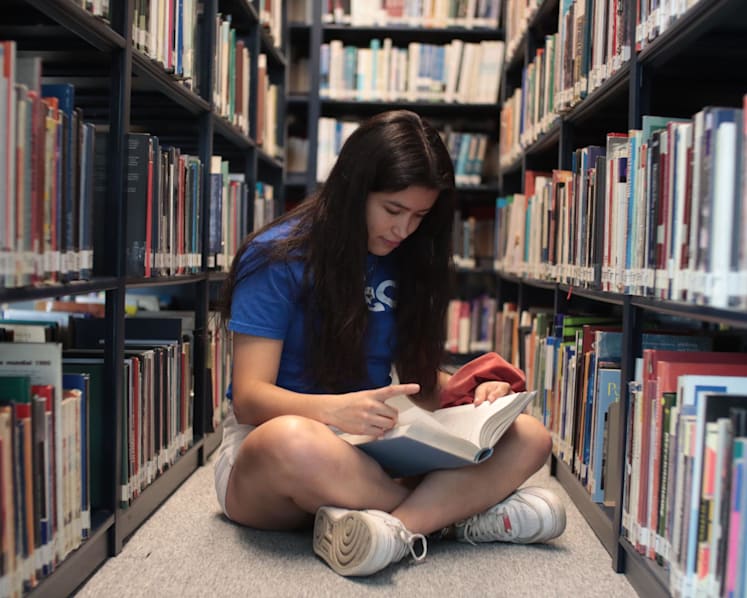
Beyond encouraging children to read, the experts said that parents can also model good digital and AI habits, showing young people how these tools can support their thinking rather than replace it.
Ultimately, Prof Chen said that the goal should not be to get learners to use less technology, but to develop "cognitively flexible learners" who know when technology enhances learning and when it takes over the thinking they need to do themselves.
In response to CNA TODAY's queries, the Ministry of Education (MOE) said that it develops literacy skills progressively in students.
"MOE recognises concerns that excessive or poorly designed use of technology and AI could affect learning. Our approach is therefore guided by students' age, development and learning needs."
For Primary 1 to 3 students, learning remains hands-on and print-first, with limited use of technology and AI.
Upper primary students use AI safely and purposefully under teacher supervision.
In secondary school, students gradually use it more independently through structured learning tasks.
"At the same time, students continue to develop human qualities that AI cannot replace, including sound values, critical thinking, self-management and the confidence to make responsible choices," MOE added.
“Some friction is required for learning, so students who avoid that struggle by relying on AI lose the chance to learn.
At Hougang Secondary School, students use AI tools in certain classes, but teachers also guide them to think beyond AI-generated answers and the first results that appear on search engines.
For example, through the school's Science, Technology, Engineering and Mathematics (STEM) Applied Learning Programme, students learn crucial literacy skills such as evaluating evidence, making connections and drawing on different sources to understand a topic.
Mr Javen Gwee, the school's head of department for infocomm technology, said that the programme helps students break complex problems into smaller components.
They also learn to consider different perspectives and evidence, and use tools such as AI where relevant to generate and evaluate solutions.
Students are encouraged to explore and test ideas, gather and reflect on feedback, and refine their thinking.
The aim is for AI to support, not replace, students' thinking or crucial skills such as disciplinary knowledge and critical judgment, Mr Gwee said.
"For us, becoming future-ready is therefore not about using more AI.
"It is about developing students who know how to think with AI, when to question it, and when not to rely on it, while remaining grounded in purpose, responsibility and sound judgment."

Fellow educator Jovin Loh, the co-founder of English learning centre Academia, has seen firsthand how important it is to inculcate literacy skills early.
Over the years, he has noticed that students increasingly need help with careful reading, comprehension, and reading stamina.
So, as a father of two boys aged four and one, he hopes to build the habit of reading at home.
"I do worry that, as they get older, reading will face growing competition from phones, games and other forms of entertainment," Mr Loh said.
"That is part of why I think it helps to start young, before reading feels like something that has to fight for space."
For now, with limited exposure to digital media, his children enjoy their bedtime reading routine.
His younger son listens to his parents reading simple books such as The Very Hungry Caterpillar, while their older son gets to choose a book to read, often a short library book such as his favourite, The Gruffalo.
Mr Loh's efforts have paid off, especially with his older son Owen, who often insists that they read a storybook together while he eats his breakfast before preschool starts.
Mr Loh has also noticed a social benefit of reading: Owen has bonded with his preschool classmates over the books that they had all read.
He noticed this while volunteering to read some of his son's favourite books to his classmates.
"When I asked who had read the books before, the children were very excited to recognise them, and Owen was delighted that his friends knew the same stories he loved.
"I think that reinforces the idea that children do not only engage with books privately. Books can become part of their friendships, their family life and the conversations around them."
KioskNews shows a cleaned-up reading view extracted from the publisher’s page — the original always lives on their site, not ours.