Ming dynasty work shows how Chinese understood the world in the 1600s

Long before the digital age, a Ming dynasty scholar made it his mission to map human knowledge from a Chinese perspective.
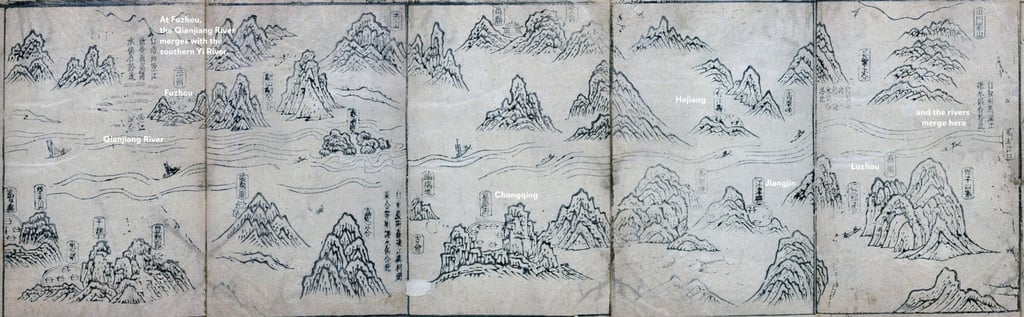
The result was an encyclopaedia spanning 127 volumes known as the Tushu Bian, or Compendium of Illustrations and Texts.
The work – published in 1613 – was compiled by Neo-Confucian scholar Zhang Huang and drew on more than 200 printed sources across several decades to document the concepts of heaven, earth and humanity.
“His goal was to gather all the illustrations and texts an educated person needed to understand the world,” information designer Paul Kahn, who analysed the encyclopaedia, wrote in his book Mapping Knowledge Across Time: Seven Books That Visualised the World.
“The result was too costly to print during his lifetime. It was eventually carved on woodblocks and printed after his death,” Kahn wrote.
Kahn compared the Tushu Bian with six other books that described the world from the perspective of Euro-Mediterranean culture.
KioskNews shows a cleaned-up reading view extracted from the publisher’s page — the original always lives on their site, not ours.