The things she knew how to make — Nahrizul Adib Kadri
NOVEMBER 3 — When I was growing up, I never knew that people actually bought kuih.
Lepat pisang, kuih talam, seri muka, nagasari, epok-epok (karipap to the rest of you), and even the humble pisang goreng were things that appeared on our dining table, usually for breakfast or afternoon tea.
I knew they came from the kitchen, and more specifically, from Mak, but it never occurred to me that other families might have to visit a stall or a shop to enjoy them.
As far as I was concerned, these were simply things that mothers knew how to make.
It was only when I grew older that I began to appreciate how much knowledge went into preparing something as ordinary as a piece of kuih.
I remember asking Mak for her buah melaka recipe while I was studying in Australia.
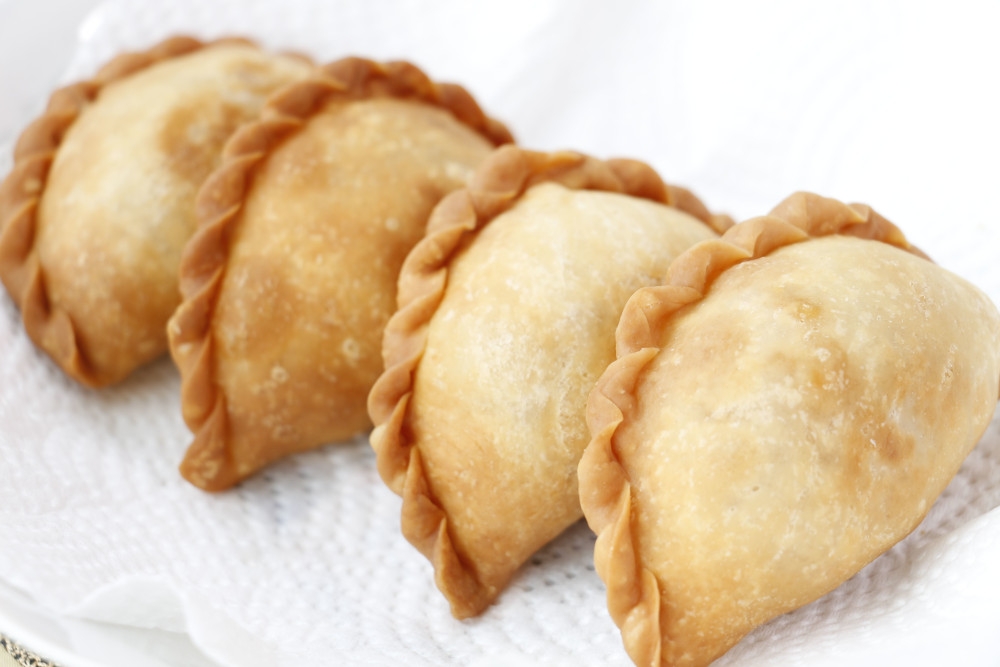
The author never knew that others had to buy epok-epok (karipap) to enjoy them. — Picture via Unsplash/Kent Ng
By then, I was living far enough from home to discover that many things I had taken for granted required considerably more effort when there was nobody around to prepare them.
Looking back, I wonder how Mak would have described her occupation if someone had asked her to fill in a form.
Most likely, she would have written housewife, which was how many women of her generation described themselves.
It was a perfectly respectable answer, although I have come to realise that it told only a small part of her story.
Mak raised seven children. She also looked after young children from neighbouring families, sewed baju kurung, and sold kain and Tupperware.
But one activity occupied a particularly substantial part of her working life. For many years, beginning around the time I was in secondary school and continuing until my younger siblings had completed their schooling, Mak sold food by the roadside.
She had a small lorry, roughly the size of what we might call a food truck today, although considerably less fashionable, I imagine.
From there, she sold kuih prepared by other housewives, alongside small packets of nasi lemak, mee goreng and bihun goreng that she made herself.
The business occupied her mornings, and I remember it as a familiar part of our family life for many years.
Only now do I appreciate the different kinds of work involved. Preparing food for sale was one thing, but obtaining kuih from other women, managing what was available and selling everything to customers required a different set of abilities.
It was a small business, certainly, but no less a business for being conducted from a lorry beside the road.
There was also something rather lovely about the fact that other housewives were earning money through the food she sold.
As children, however, we rarely thought about these activities as work. They were things Mak did, just as Abah went to school to teach and we went to school to learn.
The distinction between paid employment, small businesses and household responsibilities meant very little to us.
We experienced the results of her efforts without necessarily recognising the effort itself.
There is another memory that has stayed with me. Our house did not have a water heater, but Mak would boil a kettle of water for us to bathe.
There were three boys in the family before our younger siblings came along, and that one kettle was shared between us.
It was never enough to turn an entire bath into a luxurious experience, but mixed with the water we already had, it made the morning a little more comfortable.
I did not think of that kettle as anything particularly significant. It was simply how we bathed.
Only now, having raised children of my own, do I understand how much of parenting consists of remembering small things that children themselves barely notice.
Someone has to think about what the family will eat, whether there are clean clothes available and what needs preparing before the day begins. Much of this work is invisible precisely because it is done so regularly.
I suspect many parents today would recognise something of Mak’s life in their own. Some manage full-time jobs alongside family responsibilities, while others run small businesses or spend their days caring for children and older relatives.
Their circumstances may be different, but the work often overlaps in ways that official descriptions struggle to capture.
I do not mean to suggest that Mak was remarkable simply because she worked hard, or that a good mother must always be busy doing something for everyone else.
Indeed, one of the things I appreciate more now is that Mak possessed abilities beyond those required of her as a mother.
She knew how to prepare food, sew, sell things and look after children, and those skills were part of who she was.
Since Mak passed away in September, I have found myself remembering these ordinary details more often.
I think about the kettle of warm water shared between three boys, the kuih that appeared on our table, and the small lorry from which she sold food for so many years.
They are not particularly dramatic memories, but perhaps that is why they have remained with me.
For much of my childhood, I thought Mak’s occupation was simply to look after us. It has taken me a good part of my adult life to appreciate that looking after us was already an enormous undertaking, and that she was doing many other things besides.
These days, whenever I see karipap or kuih talam being sold, I remember a childhood when I never had to think about buying them, because Mak knew how to make them herself.
I also remember the women whose kuih she helped sell, and the many mornings she spent running her own little business by the roadside.
Perhaps “housewife” was never an inaccurate description of Mak. It was simply never a complete one.
* Nahrizul Adib Kadri is a professor of biomedical engineering at the Faculty of Engineering, the Director of UM Press, and the Principal of Tuanku Bahiyah Residential College (KK2), Universiti Malaya. He may be reached at [email protected]
** This is the personal opinion of the writer or publication and does not necessarily represent the views of Malay Mail.
KioskNews shows a cleaned-up reading view extracted from the publisher’s page — the original always lives on their site, not ours.