Opinion: Opinion | India Has Enough Coal. So Why Are Power Plants Running Short? A 76 Million 'Crunch'
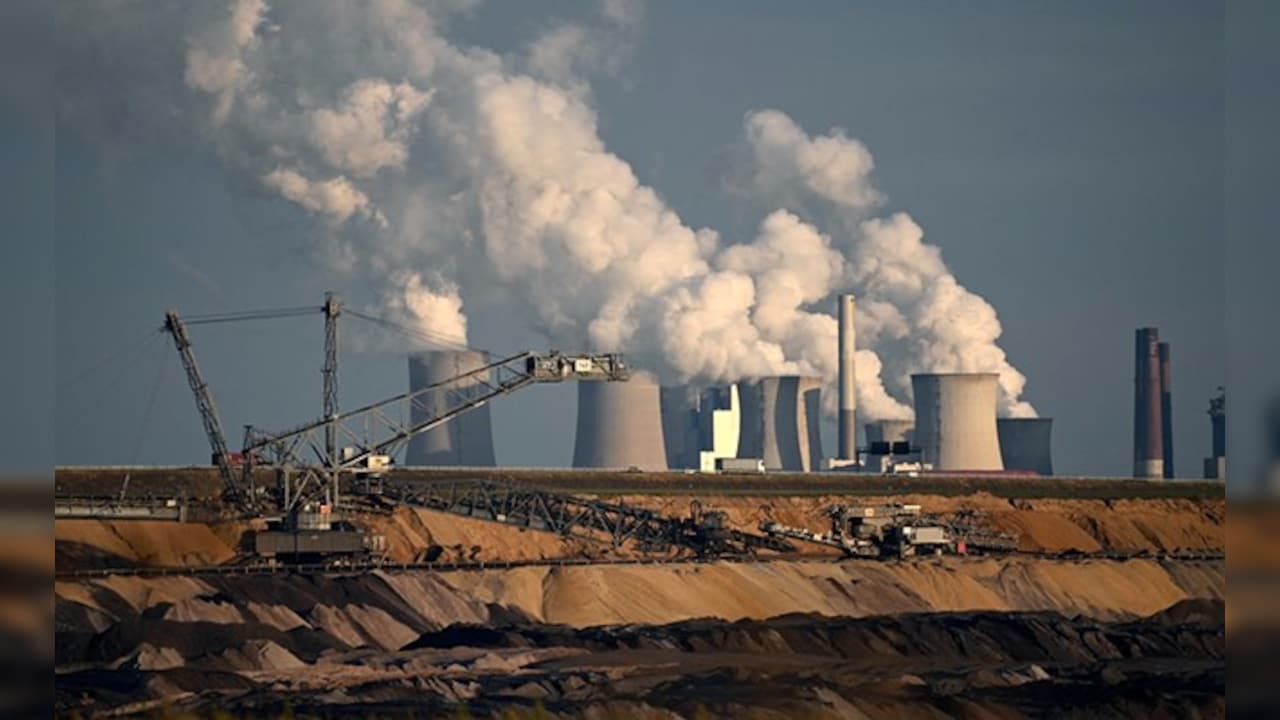
India's power sector is confronting a paradox that is becoming increasingly relevant to the broader macroeconomy. Coal stocks at thermal power plants are critically low, even as millions of tonnes of coal remain available at pitheads. Electricity demand is rising rapidly, yet the constraint is not simply generating capacity. It is the ability to move fuel to where it is needed. At the same time, India is entering a potentially more difficult agricultural season with fertiliser costs and import vulnerabilities rising sharply amid the West Asian conflict.
Taken separately, neither is necessarily a crisis. Taken together, they point to something more consequential. India's macroeconomic buffers remain substantial, but the supply chains that allow those buffers to translate into economic activity are becoming more fragile.
Advertisement - Scroll to continue
The coal data is the clearest warning.
As of October 5, as many as 82 of the 191 thermal plants monitored by the Central Electricity Authority were in the 'critical' category, meaning stocks below 25% of the normative requirement or less than three days of generation. The count rose steadily from 31 plants at the end of July to 59 on September 9, to 74 on September 19, and 82 on September 27, and has since hovered in that range. Yet, Coal India was still reported to be holding around 76 million tonnes at its pitheads in late September.
This is not a typical shortage. It is a distribution problem. India has been trying to boost coal production for years, assuming that more coal at the mine would lead to more coal at the power plant. The September-October episode reveals the fallacy of that belief. When the resource is present, but the capacity of the railway, weather conditions, loading, and dispatch may become the limiting factor, then that means that inventory at the plant level is more economically significant than aggregate production. Coal at the pithead is a stock. Energy that is delivered to a power station is usable energy. The gap between the two is growing as a weak point of India.
Advertisement - Scroll to continue
This fragility is becoming more apparent on the demand side.
September's power consumption increased 11.35% YoY to 162.2 billion units, and peak demand touched 269 GW, just short of the all-time record of 270.8 GW set in May. Power demand had already increased by 9.5% during April-August, which resulted in an increase of thermal coal consumption by approximately 8% to 395 MT.
Part of this is good news. Rising incomes, urbanisation, and industrialisation are increasing electricity demand. But the system is also becoming more sensitive to weather. August 2026 was the hottest August since 1901, and the southwest monsoon season ended at 87.4% of the long-period average.
When it's hot, cooling demand increases, and when it's dry, hydropower decreases. That shifts the burden back to thermal generation. Although India's renewable energy capacity has grown significantly, it still faces challenges in meeting electricity demand during periods outside of daylight hours, and coal-based generation accounted for 69.54% of the country's power generation in April-June 2026, according to the Power Ministry.
This is where the energy story starts to cross over with agriculture.
The fertiliser problem going on under the surface is likely to be more significant than the data on immediate availability indicates. India currently has adequate fertiliser stocks. During the 2026 kharif season, availability was found to be more than the assessed requirement for urea, DAP, MOP, and NPKS, according to government data.
However, inventories are a stock. The ability to replenish those stocks at a reasonable cost is essential to agricultural production.
In FY26, India imported 28.2 MT of fertilisers valued at about USD 14.5 billion. Imported inputs like ammonia, phosphoric acid, sulphur, and natural gas are also heavily used in domestic fertiliser production.
The conflict in West Asia thus presents a new form of vulnerability. The Strait of Hormuz does not need to be completely closed for India to experience an agricultural shock. Even if physical supplies are still received, the replacement cost of fertiliser can increase due to higher freight, insurance, transit times, and input costs.
The sulphur numbers illustrate the problem. Sulphur landed prices have climbed to about USD 1,050-1,100 per tonne, which is about double the price at the start of the year. Contract prices for phosphoric acid delivered to India rose from USD 1,290 per tonne of P2O5 in January-March to USD 1,360 in April-June. This is an unusual situation. India can store sufficient fertiliser today and be less secure tomorrow.
The difference between inventory security and replacement-cost security is worthy of more attention.
The fiscal implications are clear. The government initially allocated Rs 1.71 lakh crore for the FY27 fertiliser subsidy. In May, a senior Department of Fertilisers official acknowledged the bill could rise by as much as Rs 70,000 crore, to roughly Rs 2.4 lakh crore. Later estimates put it near Rs 2.5 lakh crore or lower as global urea prices eased.
The subsidy shields farmers from short-term fluctuations in international prices. It doesn't take the edge off the shock, though. It moves some of it from the farmer's balance sheet to the government's balance sheet.
That results in a three-way policy trade-off. The government takes the blow, and the fiscal burden increases. Farmers take it up, and input use, margins, or crop selection can be affected. It is absorbed by consumers, and food inflation increases. When imported energy and fertiliser prices go up at the same time, the import bill also goes up, and monetary policy has less room to absorb the shock.
This is why coal and fertiliser stories should not be considered sectoral issues.
They expose a wider failure in India's approach to measuring economic resilience. The debate on India's “strong fundamentals” is rightly about foreign-exchange reserves, GDP growth, banking-sector health, foodgrain stocks, and fiscal consolidation. However, buffers are not sufficient to ensure resilience if the links between them and the real economy are weak.
Consider the contrast. India had about 76 MT of coal at the pithead in late September, while 82 of 191 plants were in critical stock levels in early October. It can maintain comfortable levels of fertiliser stocks as the price of replacing critical inputs increases rapidly. Central pool wheat and rice stocks stood at about 60.4 MT on April 1, nearly three times the buffer norm, but replenishing them becomes harder after a poor agricultural season.
The vulnerability is thus becoming more and more a flow vulnerability.
This also alters the nature of the West Asian crisis for India. The initial impact is more easily quantifiable in oil, gas, fertiliser, freight, and shipping prices. The second round effects are less obvious. They emerge through railway bottlenecks, power shortages, irrigation costs, crop decisions, subsidy expenditure, food inflation, and the exchange rate.
The second round can be much longer than the first round.
The coal episode is thus not just a sign of low inventories. It demonstrates that an economy can have sufficient aggregate resources and yet be in a state of scarcity because the distribution systems are not able to distribute the resources quickly enough.
The same lesson is being learned in fertiliser. India's short-term food security is safeguarded by its large grain reserves and government procurement. However, if energy continues to be costly, the cost of replacing fertiliser continues to be high and another poor agricultural season is likely to follow, which will start to deplete those buffers. The next question is whether India can take one shock and whether it can take multiple shocks in succession without a material deterioration in inflation, fiscal balances and rural incomes.
This is the test that lies before them. Macro buffers in India could remain robust. The more difficult question is whether its supply-side capacity is sufficient to replenish those buffers at a rate faster than a prolonged external shock can drain them.
For now, the answer is reassuring on stocks and less reassuring on flows. And that distinction could determine whether the West Asian crisis remains a manageable commodity shock or becomes a much broader test of India's macroeconomic resilience.
(Deepanshu Mohan is Dean and Professor of Economics, O.P. Jindal Global University. He is a Visiting Professor at the London School of Economics and a Visiting Research Fellow at the University of Oxford. Ankur Singh studies Economics and is a Research Analyst with Jindal University's Centre for New Economics Studies)
KioskNews shows a cleaned-up reading view extracted from the publisher’s page — the original always lives on their site, not ours.