Nuclear kill zones: How Eisenkot would contain Iran if he manages to beat Netanyahu - exclusive
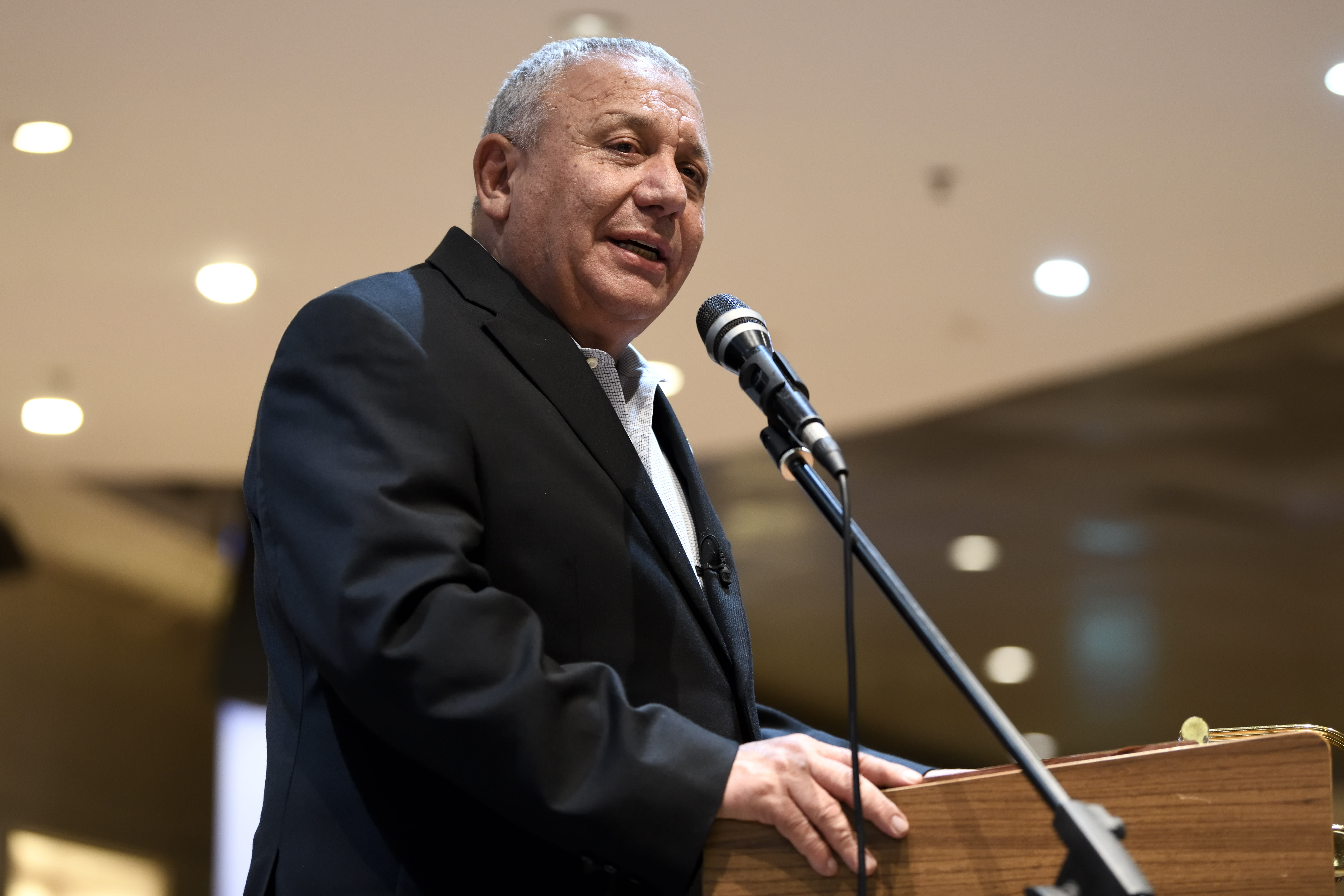
The dissection of the war and peace policies that Prime Minister Benjamin Netanyahu faces from his challengers in the October 27 election is not new: he has failed to achieve diplomatic and lasting strategic changes to make Israel safer, wasting a wide range of large tactical military wins.
This is the main message of Gadi Eisenkot, who has been leading in the polls in the race for prime minister in recent months.
Regarding security zones, at first blush, Eisenkot wants to maintain some kind of significant security zone in Gaza, Lebanon, and Syria, the same as Netanyahu and former prime minister Naftali Bennett, who is currently third in the pack for the prime minister's race.
But Eisenkot has several original ideas for improving Israel's security and diplomatic situation, which The Jerusalem Post has learned about.

Eisenkot's nuclear 'kill zone' in Iran
Regarding Iran, Eisenkot has a creative idea that no other Israeli official has voiced out loud: for the US to create a "kill zone" around the few areas where Iran's 60% enriched uranium is still underground (whether covered in rubble or finally being properly stored)
While US President Donald Trump has talked theoretically about watching everything near those few sensitive Iranian nuclear areas, Eisenkot would suggest making a clear public commitment to attack any changes in those areas that might involve moving nuclear material.
This would also require committing long-term aerial resources to the area, just as the US did over Iraq in the 1990s.
This is his out-of-the-box solution if ongoing maximum pressure and negotiations fail to produce a good deal.
A "good deal" for him would be to remove Iran's nuclear threat permanently with very long-term, anytime, anywhere inspections to ensure there is no clandestine attempt to later reestablish the program.
While the IDF strikes in June 2025 succeeded in pushing back Iran's nuclear program for some years and the Islamic Republic has not seriously tried to restore the threat since, the existence of the 60% enriched uranium remains a significant untied loose end.
The Post understands that Eisenkot is no more willing than Netanyahu to endorse a "bad deal," one which would merely delay an Iranian nuclear threat to a later date.
In contrast, if the US established a "kill zone" in the few key nuclear areas which remain, Tehran would have no way to move forward without being noticed and struck from the air.
Of course, the nuclear threat is only part of the Iranian security dilemma.
Since April 2024, the Islamic regime has shown it is prepared to attack Israel with ballistic missiles directly during four separate rounds, and has attacked around a dozen other Middle Eastern countries: from the Saudis to Jordan, to the UAE to Qatar.
Regarding the ballistic missile threat, Eisenkot takes partial credit for helping prepare the country's air defenses for the day when Iran would finally attack, though that day came five years after he had left office as IDF chief.
Going forward, Eisenkot recognizes that his and Israel's maneuvering room against the ballistic missile threat is narrower than it is versus the nuclear threat.
Whereas Trump has made removing Iran's nuclear weapons threat a central pillar of his presidency, he has publicly dismissed the missile threat. He has even bizarrely said that Iran having such missiles (which it has fired thousands of all over the region) is no more dangerous than the Saudis having such missiles (though Riyadh has not fired them on anyone)
Accordingly, the Post has learned that Eisenkot would return to using covert Mossad operations against Iran, but he would widen the attack and spying targets to include ballistic missiles, and not just the nuclear issue as in the past.

'Post' learns that Eisenkot believes Syrian President Sharaa remains a jihadist
Unlike Bennett, who is suspicious of Syrian leader Ahmed al-Sharaa but is willing to entertain US arguments that he may have reformed himself, Eisenkot is fully convinced that the Syrian president remains a jihadist, given the background he comes from.
Accordingly, like Netanyahu and Bennett, Eisenkot is in no rush to withdraw from any part of the buffer zone in Syria.
However, there is a critical difference.
In Eisenkot's view, Netanyahu has lost sight of the idea that holding onto territory in a foreign hostile country is not an end in itself that can be perpetuated forever, but leverage with which to negotiate improved strategic diplomatic terms.
The 1974 ceasefire between Israel and Syria created demilitarized zones on the Syrian side, so there is precedent for demanding that, in exchange for any partial future withdrawal, the Syrian military remain at a distance from the Israeli border.
If Syria can be influenced to sign on to such terms, then provided that Israel holds on to the Syrian-side of Mount Hermon, due to its unique strategic significance, the Post understands that Eisenkot could see reaching a deal with Syria at some later date.
He would view such a deal as moving Syria's military further away from Israel than it currently is, while wasting fewer Israeli resources on occupying large swaths of Syria, which Jerusalem has no actual interest in.
Of course, Syria is more complicated than that.
Eisenkot also wants to keep Turkey and Russia out of Syria, such that al-Sharaa shifts more permanently into the US's sphere of influence.
This would not mean al-Sharaa would never attack Israel, but it would make it harder and more costly for him to do so.
Turkey may be the trickiest part of this situation.
Here, Eisenkot has a very creative idea.
The truth is that Israel and Eisenkot would not be terribly concerned about a small tactical Turkish presence in northern Syria, around Alexandretta, far from Israel.
Rather, the Israeli defense establishment and Eisenkot are worried that Turkey cannot have ground forces near Israel's border in southern Syria, and, more importantly, that Ankara cannot have radars and air defenses in Syria, which would limit the Israeli air force from taking action.
In other words, even if Israel and Syria reach a new defense deal, which Eisenkot thinks he can do better than Netanyahu, The Post has learned that he would insist on overriding security freedom of action to strike any strategic threat from the air which Iran or another adversary might try to move through Syria.
In addition, he would advocate for a much larger UNDOF Syria peacekeeping force, with the US heavily involved to ensure that the force would be effective, and not a burden, as UNIFIL has been in Lebanon.
Last, Eisenkot is strongly committed to protecting the Syrian Druze from any potential massacre by al-Sharaa and his allies during any future internal Syrian feud.
If pressured by Trump not to interfere in the Syrian Druze issue and only to take action if Israel is under threat, Eisenkot is confident that he could explain to Trump the unique Israeli bond to the Syrian Druze by virtue of the Israeli Druze being deeply embedded within the IDF.

What is Eisenkot's plan for Gaza?
Regarding Gaza, Eisenkot's fiery accusation is that Netanyahu has kept Hamas in power in the Strip.
True, Netanyahu has ordered the IDF to kill around 25,000 Hamas fighters, including most of its leaders, but he has also blocked attempts to replace Hamas with either the Palestinian Authority (PA) or the NCAG technocratic body which the Trump administration wanted to send into Gaza in early 2026.
Certainly, Eisenkot would place blame on Hamas itself for dragging its feet on making the concessions toward disarmament which it agreed to in the Trump-brokered October 2025 ceasefire.
But he would add that Netanyahu repeatedly dropped the ball on putting full-court diplomatic and political pressure on Hamas by focusing solely on military pressure.
Like Bennett, Eisenkot is more open to working with other political interests to replace Hamas.
If Bennett is almost entirely focused on Egypt, Eisenkot dislikes the PA, but the Post has learned that he agrees with the majority defense establishment opinion that if the choice comes down to: PA or Hamas, Hamas is much worse.
In that sense, Eisenkot does not have as much of a set ideology on who should run Gaza, as long as Israel preserves a security corridor, whoever might take control.
Additionally, if Netanyahu has tried to use the "poison pill" that Hamas must fully disarm before Israel allows any Gaza rebuilding, Eisenkot is ready to agree to the spirit of the Trump deal in which partial disarmament can lead to partial rebuilding measures.
He does not want to give Hamas the excuses that he says Netanyahu is giving the terror group to refuse to cooperate.
Moreover, Eisenkot recognizes that Israel's diplomatic standing and legitimacy have hit new lows in recent years, and he frames Netanyahu's avoiding any rebuilding in Gaza under any circumstances as perpetuating this situation.
In contrast, he strongly believes that getting Netanyahu himself out of the premier's chair will already start to generate some goodwill globally. He also thinks that even partial deals could weaken Hamas and start to rehabilitate Israel's reputation.
After all of that, Eisenkot is absolutely opposed to any discussion of a Palestinian state in either the near or medium term, saying that those suggesting such a solution do not understand post-October 7 Israel's social and political realities.
But he thinks saying yes to other kinds of international initiatives more often, and providing a horizon for the Palestinians in the distant future, beyond what would be his first term in office, will fundamentally restore Israel as a member of the West in a way that Netanyahu cannot and will not do.
Eisenkot aims to restore US-Israel relations, remind Washington of Israel's regional Importance
A major goal for Eisenkot as prime minister would be to remind and convince Americans – both Democrats and Republicans – that Israel is an asset for the US.
From a security perspective, while the US may not feel as imminently threatened by nuclear weapons in the Middle East, he would emphasize that leaders from both major American political parties have opposed Iraq, Syria, and Iran obtaining such weapons.
All US political leaders have said that nuclear weapons in the Middle East would eventually endanger America.
Eisenkot will seek to remind Americans that Israel has helped save the US from this danger, not just regarding Iran - which is a mixed political bag these days because of the gas prices crisis connected to the standoff with the Islamic Republic – but also with Iraq and Syria.
Further, Eisenkot will call on Washington to recall that Israel was a significant asset for the US across the Middle East in combating the expansion of ISIS – and this was true even though the group did not really directly threaten Israel in any large near-term sense.
Until the broad US attack on Iran in early 2026, America had managed in many instances to benefit from Israel policing aspects of rogue and dangerous Middle East actors without having to get its hands dirty, and always with unparalleled intelligence help.
With Netanyahu out of the way, the end of political attacks on Israel's rule of law institutions, the end of government officials making statements of incitement, and new government officials extending themselves to restore a common dialogue with the West, Eisenkot believes that Israel can once again benefit from being viewed as the only democracy in the Middle East.
Eisenkot believes that both the internal and global behavior of Netanyahu and his coalition partners, like Itamar Ben-Gvir and Bezalel Smotrich, have greatly harmed Israel's image as a democracy with values in common with the West, but that it is not too late to repair that damage.
If suddenly the Israeli prime minister is trying to find ways to say "yes" to Western initiatives for peace and to project positivity around them, even if Eisenkot would not be able to sign off on certain key Western priorities, the Post has learned that he believes the entire tone and playing field will change.
How will Eisenkot differ on Lebanon?
One very specific example where Eisenkot would be different than Netanyahu is in Lebanon.
There, while he agrees with Netanyahu that US military liaisons should be the most dominant in handling and improving the Lebanese army and in judging whether benchmarks have been met by that army regarding any IDF partial withdrawal issues, the Post understands that he would also restore the French to a significant role.
Netanyahu has been in a large battle with the French over Gaza, Lebanon, and Iran, pushing them out of having any influence to punish them for rebuking his policies, and especially the heavy criticism of France of the IDF's conduct of the war in Gaza.
In contrast, Eisenkot would seek out areas of agreement and common views, and try to focus more on those issues than on getting stuck on fighting over areas where the parties disagree.
Regarding the security zone, Eisenkot and Netanyahu are not far apart.
Netanyahu has been indicating he would like to hold the entire current security zone, which in some places goes beyond 10 kilometers, though he already withdrew from Lebanon in early 2025 and has started a possible withdrawal process in recent weeks.
Eisenkot is as skeptical, or more so (due to his military expertise and having been northern commander), as Netanyahu about the weak performance of the Lebanese military, but in certain circumstances, the Post has learned he would be willing to move back to an eight-kilometer security zone.
This position once again reflects Eisenkot's military expertise, knowing that an eight-kilometer zone will prevent Hezbollah from firing anti-tank missiles into Israeli territory. This contrasts with demanding a larger zone that offers less specific military benefit and may be more political.
But Eisenkot is deeply worried about what he says are still 2,000 Hezbollah fighters in southern Lebanon, despite the deep IDF invasion of the area.
He hopes American and French political and military backing can push the Lebanese army to take on Hezbollah in a much more confrontational way.
France is not the only European country Eisenkot wants to repair relations with.
According to Eisenkot, France, England, Germany, and Italy are critical allies for Israel and should be treated as such.
Few officials in Netanyahu's government mention that France and England put their own forces in harm's way to shoot down Iranian ballistic missiles multiple times in 2024, but Eisenkot believes Israel must work harder to re-elevate relations with all of these countries, even if they criticize Israel at times.
He also believes that with a new government led by him, which is open to discussing peace initiatives, their criticism will be reduced to prior, more "normal" pre-October 7 levels.
Eisenkot may not fully understand the challenge in this area post the Gaza war.
In his view, encouraging tourism and business even with countries which have shifted to being rabidly anti-Israel, like Spain and Ireland, could restore prior relations.
With such countries, he may face a rude awakening that their attacks on Israel are on consensus moves the IDF took in Gaza, which Eisenkot also supported, not just against Netanyahu.
Still, he is a realist.
Eisenkot is upfront about the normalization process with the Saudis being dead for the foreseeable future.
And he understands that this is not merely because the Saudis are demanding a Palestinian state, which only a tiny percentage of Israelis would currently endorse, but also because of the sides' diverging views over the Gaza war.
If weeks before October 7, the Saudis were talking about imminent normalization so they could be more like Israel's dot-com society, many Saudis were horrified by the intensity and length of Israel's war on Hamas, which destroyed the vast majority of Gaza's structures and, compared to other Gaza wars, killed an unprecedented number of Hamas and civilians.
Eisenkot understands that the ideological and identity differences between the countries and how they view the post-October 7 world are now a gulf that will take much longer to cross.
In the meantime, he would emphasize improving relations with Egypt, Jordan, the UAE, and other Gulf countries, all of whom he would say Netanyahu ignored or got into unnecessary and unproductive fights with.
Regarding Jordan, he supports the fence the Netanyahu government began building in early 2026 to strengthen security on that border. Yet he emphasizes that improving relations with Jordan to pre-2023 levels will lead to greater cooperation and safety, even more than the fence.
Further, Eisenkot believes that once Netanyahu, who these countries now see as too aggressive and destabilizing, is out of the picture, they will return to seeing Israel as their best security partner versus Iran.
West Bank violence forces its way back into headlines
Maybe the largest policy difference between Eisenkot and Netanyahu relates to Judea and Samaria.
Both of them are strong on cracking down on Palestinian terror.
But Eisenkot accuses Netanyahu – by enabling Ben-Gvir, Smotrich, and with the appointment of Shin Bet Director David Zini – of turning the West Bank into a cauldron of Jewish extremist violence against innocent Palestinians.
If he becomes prime minister, Eisenkot will not just obviously be replacing Ben-Gvir, Smotrich, and likely Zini themselves. He will also roll back the major policy changes they made, which he views as having paved the way for anarchist Jewish extremists to be able to spread chaos and violence.
Ben-Gvir reversed decades of policy in which the West Bank Police were empowered to arrest and prosecute violent Jewish extremists for attacking or harassing Palestinians.
Even prior to Ben-Gvir, the police never did this well enough, but the deterioration has been off the charts, and Eisenkot has made it clear he will reverse this.
Somewhat less obvious, but a part of the picture has been the over 100 illegal farms which Smotrich has allowed to spread across Judea and Samaria, including into disputed areas.
Eisenkot said he will return power over such decisions to apolitical IDF officials, and remove political cabinet members from having any authority over the issue.
The Post also understands that he will make the unusual decision to remove Zini mid-term, given that the Shin Bet chief only started in October 2025 and was appointed to a standard five-year term.
However, Netanyahu forced Ronen Bar, Zini's predecessor, out of office early, and according to Eisenkot, Zini's conduct in reducing the power of the Shin Bet unit that handles Jewish violence, along with many other problems he has caused, departs enough from standard Shin Bet policy that he cannot likely remain in his role.
In contrast, Eisenkot will likely appoint a new Shin Bet chief who will strengthen the agency's unit which handles Jewish violence.
Next, the Post has learned that Eisenkot will restore and encourage the use of administrative detention against violent Jewish extremists.
Although the number of such Jews in administrative detention is often zero, and rarely jumps beyond single digits, he is convinced that its occasional use deters extremists from many of the actions they are currently taking against Palestinians.
In January 2025, Defense Minister Israel Katz became the first in decades to cancel administrative detention of Jews, while continuing administrative detention of well over 3,000 Palestinians.
Katz has refused to reverse himself despite even top Israeli supporters like US Ambassador to Israel Mike Huckabee attacking him and Israel's current government as failing to prevent "Jewish terror."
All in all, the Post understands that Eisenkot expects it to take two to three months to make the initial large-scale changes needed to restore prior policies within the police, the IDF, and the Shin Bet, followed by a longer period to ensure the situation stabilizes long-term.
Of course, all of this depends on what happens on October 27.
The author wrote In The War Room: The Inside Story of Israel’s Fight Against Hamas and the Iranian Axis, among several other books. He is the Post's senior military analyst and is an expert on Iran, Gaza, and Lebanon.
KioskNews shows a cleaned-up reading view extracted from the publisher’s page — the original always lives on their site, not ours.