Small uptick in polyclinic, emergency room visits in Singapore due to haze: MOH
SINGAPORE - As unhealthy air continues to linger over Singapore, there has been a small spike in visits to clinics and emergency rooms due to haze-related health issues.
Hazy conditions can also cause flare-up of chronic conditions, and could result in the spread of infectious diseases as people congregate indoors, doctors here told The Straits Times.
The Ministry of Health said in a response coordinated with hospitals here that it has observed a “slight uptick” in emergency room and polyclinic visits. It did not cite figures.
“We are not aware of any cases requiring intensive care unit admission or any mortalities due to the haze,” the MOH spokesperson added.
MOH was responding to queries from ST on whether the haze had led to an increase in the number of patients visiting hospitals’ emergency departments, following the recent publication of a local study that had linked small spikes in haze pollutant concentrations with emergency room visits.
The study published on Sept 28 found that for every 10 microgram per cubic m increase in pollutant PM2.5 above a reference level, emergency visits for asthma and lung disease increased by 3.2 per cent over the following two days.
The dominant air pollutant during haze is PM2.5 - micro-particles that can get lodged deep into the lungs and enter the bloodstream.
GPs and telemedicine providers also say they have seen a 20 to 30 per cent increase in patients with symptoms that are linked to the haze.
These include runny nose, sore throat, sneezing, conjunctivitis and eye irritation, asthma, skin rashes and respiratory issues.
Sharon Ngoh, acting medical director of Parkway Shenton said compared to the modest uptick in cases in mid-September, the picture has become more sustained as the haze has persisted since October.
Air quality in Singapore dipped into unhealthy levels for the first time in three years on Sept 4, and hazy conditions have hung over the country since then.
She has observed a gradual increase in patient visits across Parkway Shenton’s more than 40 clinics islandwide, with haze-related health conditions making up around 30 per cent of all visits, up from 20 per cent before the haze set in.
“Cumulative exposure, rather than any single day of poor air quality, is driving the (health) burden,” she said.
“We are also seeing more patients reporting headaches and fatigue, which they associate with haze exposure,” added Ngoh.
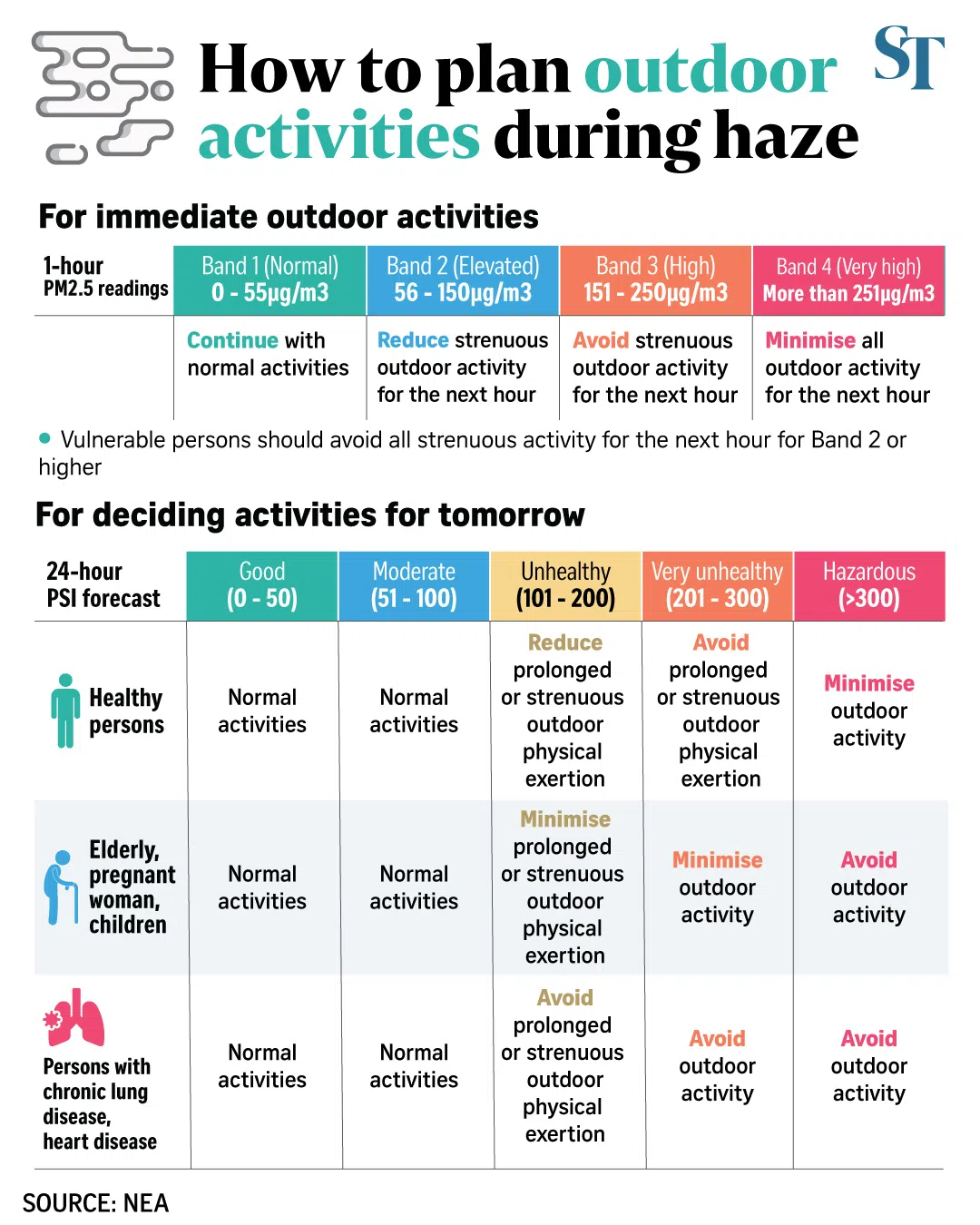
Singapore is currently facing its longest episode of unhealthy air that started on Oct 5. Air quality is considered unhealthy when PSI levels are 101 and above.
In the afternoon of Oct 13, all regions in Singapore registered unhealthy air quality of between 128 and 174 on the PSI.
The Pollutant Standards Index (PSI) crept close to the “very unhealthy” range of 201 and above on Oct 9. The PSI hit 192 in central Singapore at 6pm that day, the highest so far in 2026.
Patients with pre-existing chronic respiratory conditions, such as asthma and lung disease may also experience worsening symptoms, including increased coughing, wheezing, chest tightness and shortness of breath.
Doctors interviewed say the prolonged haze has caused flare-ups of asthma cases in patients who have had the condition well-controlled for years. At the same time, the spike in haze-related cases is overlapping with the Influenza A season.
Raffles Medical’s family physician Yak Sin Lin said: “Some patients had not had symptoms for a long while and suddenly had to start using their inhalers again.”
She advised asthmatic patients who need to use their inhalers more frequently to visit their GP for evaluation just in case they need to adjust doses and relook their plans to manage symptoms.
Over the past two weeks, Raffles Hospital’s 24 Hour Acute and Critical Care clinic has seen a 10 per cent rise in respiratory cases.
Family physician Mark Sim from Island Family Clinic’s Sengkang branch noticed rising Influenza cases over the past month.
“Haze can irritate inflamed airways, so patients with flu may have more cough and breathlessness and take longer to recover,” he added, reminding people with fever, breathlessness, or chest pain to see the doctor instead of assuming their symptoms are caused by the haze alone.
Sim added that most of his patients with haze-related conditions are preschoolers and primary school students, as well as seniors.
International Medical Clinic’s medical director Lim Hui Ling noted that haze particles can be a carrier for viruses to get deeper into the respiratory system.
As people avoid the outdoors, they may congregate more indoors which can increase the chances of catching respiratory infections, she added.
The recent F1 weekend was another trigger, she noted.
“Just saw a patient with severe asthma who was attending outdoor concerts for three days. She has not had the influenza vaccine. She caught a respiratory infection because she was in a crowded concert situation, plus the haze exacerbated her asthma,” said Lim.
The haze has had an impact even in indoor spaces such as community hospitals and nursing homes.
There were 10 per cent more patients with respiratory conditions at the Ang Mo Kio – Thye Hua Kwan Hospital, and at the two Thye Hua Kwan nursing homes, respiratory ailments affected 17 per cent more residents who are immunocompromised or have lung and heart conditions.
The community hospital is closely managing patients’ symptoms and nutrition, and may consider administering antibiotics and antivirals where necessary, said a spokesperson.
Shravan Verma, chief executive of telemedicine and home medical service Speedoc said another concern beyond the respiratory effects is how the haze disrupts the daily routines of older adults.
“Patients who normally enjoy morning walks have had to stay indoors, reducing opportunities for physical activity and social interaction,” he said.
Verma urged caregivers to encourage seniors to move more indoors and keep them engaged.
He added: “Prolonged inactivity can affect mobility, while reduced social interaction can take a toll on mood and quality of life.”
From Oct 12, Singaporeans seeking treatment for haze-related conditions will be able to receive subsidised care at polyclinics and GP clinics under the Public Health Preparedness Clinic Scheme.
All Singapore citizens will pay no more than $10 when they seek treatment at polyclinics for such ailments under the Haze Subsidy Scheme (HSS).
Pioneer Generation and Merdeka Generation seniors will have their out-of-pocket costs capped at $5, while those on the Public Assistance scheme will enjoy fully subsidised care.
MOH said healthcare institutions conduct routine stock checks to ensure there is sufficient medications available to meet the needs of more patients during prolonged haze episodes.
KioskNews shows a cleaned-up reading view extracted from the publisher’s page — the original always lives on their site, not ours.