Geoff Russ: The War of 1812 belongs to Canada
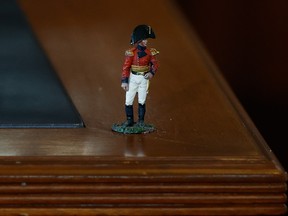
October 13 marked the anniversary of the great victory at Queenston Heights during the War of 1812, when General Sir Isaac Brock fell defending Upper Canada from an American invasion. He commanded a force of British professional soldiers, Canadian militiamen and Indigenous allies. Though he died, the battle was won and the colony preserved.
Sign In or Create an Account
The anti-Canadian left has long scorned colonial history as an era of foreign occupation by the British. They treat the arrival of European colonists in the 16th century as the point at which Canadian history was put on hold, only to resume in the late 20th century.
It is regrettable, but not unexpected, that they are being joined by an amusing brigade of alleged “conservatives” and their fellow-travellers. They insist that because Canada’s founding document was signed in 1867, nothing that came before can be claimed by Canadians today. A fascinating thesis, and one that would make Canada exceptional among the nations of the world.

Columnist Jesse Kline keeps you up to date with what’s happening in Israel and the effects of antisemitism on life here in Canada. Friday mornings.
By signing up you consent to receive the above newsletter from Postmedia Network Inc.
A welcome email is on its way. If you don't see it, please check your junk folder.
The next issue of Channel Israel will soon be in your inbox.
We encountered an issue signing you up. Please try again
More telling is that the War of 1812 began with campaigns fought in places called Upper Canada and Lower Canada, while correspondence from the time referred to their residents as “Canadians”. Even during earlier invasions, such as the botched attempt to conquer Quebec during the Revolutionary War, there were references to Canada and Canadians.
“I am now on my march to Quebec, to restore liberty to our brethren of Canada,” wrote American General Richard Montgomery in 1775. He was killed instantly in the opening seconds of his disastrous attempt to seize Quebec later that year.
Some have gone even further on 1812 by declaring that the Americans were fighting a defensive war to save their young republic. Since they insist that government paperwork is the be-all and end-all of nationhood, they might look into which side’s leader initiated hostilities.
On June 18, 1812, President James Madison signed the American declaration of war against Britain. The following month, Brigadier-General William Hull invaded Upper Canada. His proclamation addressed the “Inhabitants of Canada” and announced that his army “has invaded your country.” Famously, Hull would later surrender Fort Detroit to General Brock without a fight after hearing war cries from Brock’s Indigenous allies.
The American forces might have been rather inept at conquering Upper Canada, but their commanders had a far better grasp of what Canada was and who Canadians were than too many among us today.
It should not be forgotten that British naval interceptions of American shipping bound for Napoleonic France, Britain’s mortal enemy, had understandably whipped up war fever in the United States before the invasion.
However, that does not absolve the Americans of their status as aggressors in the war itself, which they earned by invading the Canadian colonies.
Don’t take my word for it. Take the words of congressman Henry Clay, as he agitated for war:
“We are invited to drink the potion of British poison… to submit to debasement, dishonour and disgrace — to bow the neck to royal insolence. What are we to gain by war has been asked. In reply I would ask, what are we not to lose by peace?”
Those words are the facts, even if citing them seems to confuse a very special group of people in Canada today.
Equally revealing is this group’s affinity with the left when it comes to Canadian history. During the bicentenary of the War of 1812, a contributor to the Socialist Worker insisted that Canada “did not exist” and therefore the commemorations held here rested on false foundations. Again, he might have consulted a historical map from the time.
Let us apply that same standard elsewhere. The American version of Thanksgiving falls next month and commemorates the trials and triumphs and turkeys of the Pilgrims, but would the celebration not be misplaced? When the Pilgrims arrived at Plymouth Rock aboard the Mayflower in 1620, they had no notion of a place called the United States or a Revolutionary War.
What of the legendary fall of the Alamo in Texas in 1836? The Texian rebels fought in the name of liberty for an independent Republic of Texas. They were ultimately successful in avenging the Alamo and expelling the Mexican Army, and the republic existed as an independent state until 1845, when Texas entered the United States.
If Canadians cannot claim the War of 1812 today, the Americans have neither Plymouth Rock nor the Alamo.
Fortunately for both Americans and Canadians, the notion that national histories are entirely determined by legal and political documents has no bearing on this continent. Neither that Charter of Rights of Freedoms here, nor America’s Declaration of Independence, the New Deal or the Civil Rights Act wiped the slate clean.
Confederation united communities whose inhabitants had called themselves Canadians and been called Canadians by others for generations; it did not manufacture a people with no previous lives. Treating 1867 as the beginning of Canada is like asserting that your parents’ relationship only began on their wedding day.
Prior to Confederation, Canadians were recognized as both the King’s subjects and a distinct people within the British Empire. The ironclad evidence can even be found among the villains of 1812.
An Upper Canadian politician named Joseph Willcocks fought with Brock at Queenston Heights, only to turn traitor and defect in 1813. He raised a company of like-minded men called the “Canadian Volunteers”, who burnt down present-day Niagara-on-the-Lake. Deservedly, Willcocks himself was killed in battle in 1814, while eight more traitors were hanged at Burlington Heights that same year in what became known as the Bloody Assize.
Attempts to undermine and extinguish Canada have long come from both without and within. Neither has ever prevailed.
For a country long dismissed by its critics as a “fake country” devoid of any nationhood or culture, Canada has proven to be remarkably durable, especially given the overwhelming power of our neighbour to the south. If we were destined to disappear, it would have happened already.
There were Canadians long before 1867, and they will still be commemorating the War of 1812 in 2067.
National Post
Join the Conversation
This website uses cookies to personalize your content (including ads), and allows us to analyze our traffic. Read more about cookies here. By continuing to use our site, you agree to our Terms of Use and Privacy Policy.
KioskNews shows a cleaned-up reading view extracted from the publisher’s page — the original always lives on their site, not ours.