‘Finger pointing to the moon is not the moon’: Shelja Sen writes on communication between generations
We often seek help for our children when we worry something is amiss. They might not be studying, spending too much time on screens, becoming withdrawn, sleeping late, lying, not attending school, and so on. We worry about them, at times annoyed or even frustrated. We want them to be fixed so that they can get on with their life. Yet invariably, the more we try to fix it, the more they push back.
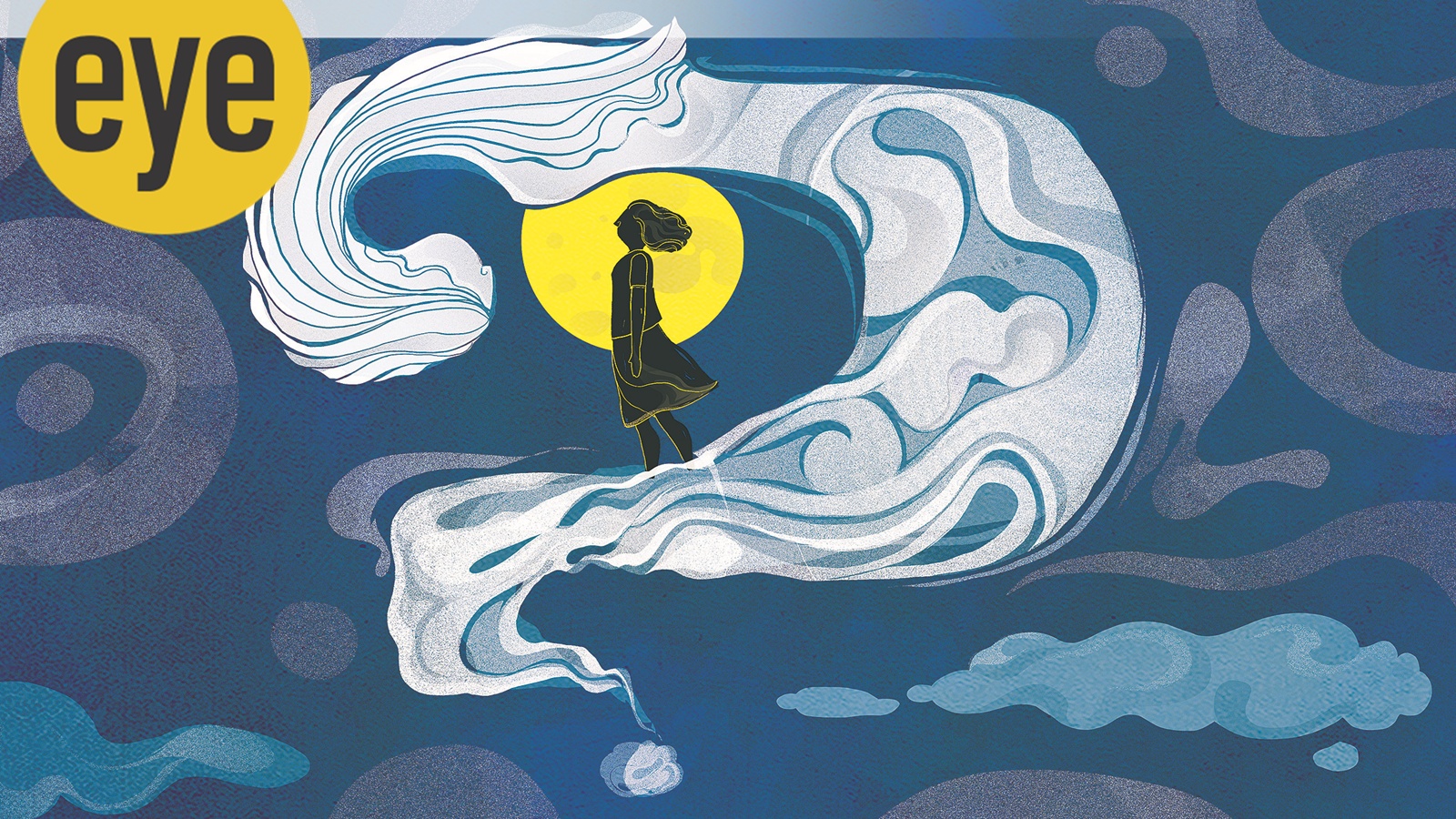
There is an old Zen saying, “Finger pointing to the moon is not the moon”, and I find it so relevant in understanding our struggles as parents. Imagine the moon as our relationship with our children, and the finger pointing to it as our expectations from them. We often confuse parenting with the finger and ignore the moon. As a parent and a family therapist, I have learned that unless we focus on the moon, our relationship, the struggles will remain. There are no quick fixes to it.
Rhea, a 15-year-old, and her mother, Vidya, came to meet me because recently there had been “too many fights at home.” In a one-to-one conversation, Rhea shared that her mother was “constantly nagging me about studies,” “criticising everything I do”, and not “letting me spend time with my friends.” Vidya was worried that Rhea’s focus was too much on her friends and social media and not on her studies. “She is rude, spends all her time in her room and refuses to listen to me.” I am sure you are familiar with this, as it plays out in so many of our homes. I checked with both of them to see if we could meet together, and they both readily agreed. Before we began, I showed them a pile of blocks, each with a word written on it, like “love”, “trust”, “understanding”, etc. I asked each of them to pick a word to put on the table to make the conversation easier. Both reached out for “understanding” together, and there was a moment of humour and light banter. Rhea shared that she wanted her mother to understand she wanted to do well in her boards too, but the “constant policing” wasn’t helping. As the conversation moved, we learned how both of them wanted the same thing — listening to each other, understanding, more fun, more peace, more love.
As parents, we want our children to have a good life, “Achchi zindagi je sake.” To reach that “Achchi zindagi”, we push them to study hard, get good grades, have healthy habits, be disciplined and so on. We keep checking, criticising, controlling, prodding, punishing — each push moving us more and more away from the moon. Until both the children and the parents begin to believe, “Something is wrong with me,” or even, “I am a failure.”
Often, our worries for our children follow a pattern handed down by previous generations. Our parents, and their parents before them, had fixed ideas of how children should behave or achieve. Any time they strayed from those expectations, there was an implicit rule that they had to be disciplined, taught limits, and given firm boundaries.
When we push our children, we may be carrying forward generations of fear. Otherwise, we think we are failing as parents.
The pressures we face at home are also shaped by the wider socio-cultural context where there is immense obsession with “better, faster success”. We are all being sold an idea of success, beauty, fitness, worthiness and how to optimise our lives. Apps record our steps, track our calories, maintain sleep logs, analyse sleep patterns, and so on.
Productivity is being measured by how fast our lives move, busyness is becoming proof of our worthiness, and exhaustion a badge of honour. And if we were to pause and check, “What is this all about?”, we say, “For a better life!” Really?
Unwittingly, we end up putting the same pressure on ourselves and our children. And at what cost? Our mental health struggles are spiking; we are hearing a lot about the “loneliness epidemic”, and suicide numbers for young people are surging. So again, are we missing the moon for the finger?
Most families who meet me come with some fear — the child or young person not performing, “bad habits”, not sleeping on time, being rude, too much screen time, not going to school/college, not communicating, lying and so on. I am not being dismissive, as these are real problems, and as a parent, I have struggled with many myself. Behind our explicit fear is our implicit love for our children.
But the interesting thing is, only when we turn to the moon and focus on our relationship does the shift happen. Holding on to the pointing finger can become a tug-of-war, with each side insisting, “Why don’t you?” “Why should I?” When Rhea and Vidya both reached for “understanding,” they were already looking at it together. The finger was still there, the boards, the studies but it had become something they could talk about and work towards as allies.
We can take this “turning to the moon” practice to any relationship that matters to us, not just parenting. It could be with a significant person you value a lot, but for various reasons, there has been some strain recently. Reflect on these questions. What are my concerns about this relationship? Have I been trying, against my better judgment, to fix the other person or change them? Is it really helping? What is our moon? What steps can we take to strengthen our relationship? If the other person is open to it, then maybe explain the Zen metaphor to them. Take turns telling each other what you appreciate. Or maybe even apologise for something you did or said that might have hurt the other person. Ask the other person what one thing you could do to make the relationship stronger. Offer the same to them.
My invitation is to step away from the hustle of life, to look up now and then and ask ourselves, and each other, what matters to us, what we value in our relationship, and what the moon means to us. There may be many pointing fingers, but the moon, curiously, is often the same. Listening to each other, understanding, more fun, more peace, more love.
Composite stories and pseudonyms are used to maintain confidentiality.
Acknowledgement to my friend and colleague, John Wheeler, for introducing me to this powerful Zen metaphor.
In this column, Shelja Sen curates the knowhow of the children and youth she has the honour of working with. Email her at shelja.sen@childrenfirstindia.com
KioskNews shows a cleaned-up reading view extracted from the publisher’s page — the original always lives on their site, not ours.