Airports gear up for the intelligent aviation era
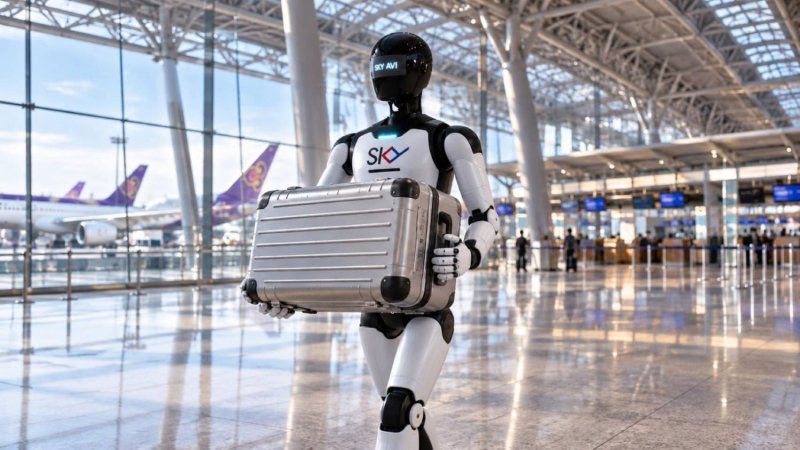
The global aviation sector is entering the intelligent aviation era, driven by the integration of data analytics, artificial intelligence (AI), automation, robotics and biometric technologies, according to SET-listed aviation tech provider Sky ICT.
Chief executive Sithidej Mayalarp said an important industry trend is the integration of data from different stakeholders, allowing all parties to share a common operational picture and coordinate their activities more effectively.
"Automation is being applied to airport operations to help facilities accommodate growing passenger volumes," Mr Sithidej said.
Humanoid robots, for example, can provide airport information and guidance in a manner similar to human staff, while conventional robots can assist with transporting baggage and parcels along airport conveyor systems, he said.
The transition towards intelligent aviation is expected to take place in three stages.
The first stage is analysis and prediction, focusing on integrating data from different airport systems through an aviation data hub to forecast trends and potential operational situations, enabling more accurate decision-making and improving airport management efficiency.
The second stage is personalised services and predictive intelligence, using AI to analyse data and develop services tailored to individual passenger preferences while applying predictive intelligence to identify operational risks and support preventive maintenance.
AI will also enhance predictive operational management by analysing flight operations and aircraft technical data to identify potential risks, allowing maintenance teams to plan preventive maintenance in advance, thereby reducing the likelihood of technical failures and improving flight safety.
The third stage is autonomous airports, resulting in wider adoption of automation, biometric systems and robotics to streamline airport operations and deliver a seamless passenger experience, Sky ICT notes.
NEW OPPORTUNITIES
Another emerging trend is electric vertical take-off and landing aircraft (eVTOL), which are creating new business opportunities in passenger transport and logistics, Mr Sithidej said.
Passenger eVTOL services are already operating in China and the US, carrying between one and six passengers per flight, he said.
In logistics, eVTOL aircraft can support deliveries to remote or difficult-to-access locations, including mountainous areas. They can also be deployed in emergency response operations, such as rescuing people trapped in high-rise buildings.
"These developments present opportunities for Thailand to advance its ambition of becoming a regional aviation hub, supported by growing confidence in the country's airport digital technologies and operational standards," Mr Sithidej said.
He said Thailand has made progress in developing its aviation capabilities, including the establishment of the Flight Operations Center of Excellence under Airbus's Skywise platform, which supports regional digital aviation operations in cooperation with the International Civil Aviation Organization.
The country is also expanding its airport infrastructure. These developments are intended to strengthen Thailand's capacity to handle an estimated 150-200 million passengers annually.
Thailand's geographical position links East Asia, South Asia, Europe and Australia, offering the potential to develop into an international transit and air cargo hub.
Over the past decade, Sky ICT has focused on introducing smart aviation technologies at Thai airports, said Mr Sithidej. The company plans to step up its technology development towards the end of this year, with the pilot deployment of humanoid robots to provide services at Suvarnabhumi airport, he said.
KioskNews shows a cleaned-up reading view extracted from the publisher’s page — the original always lives on their site, not ours.