Is it a bus? Is it a Metro? Brisbane will investigate small Metro vehicles
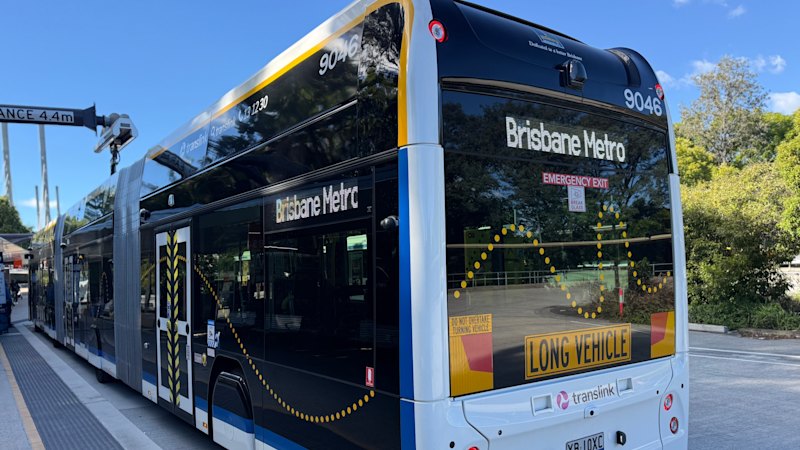
Brisbane will investigate buying mini Metro vehicles to speed up services across the city as new data shows peak-hour speeds on major roads are slower than they were six years ago.
The vehicles would be smaller than the current Brisbane Metro, which the council said was designed for busways.
The council has not committed to the power source of the potential new buses, instead saying: “smaller vehicles powered by several possible fuel sources suitable for high-frequency operational requirements, including battery electric buses and other sustainable energy solutions, could bring bus rapid transit services closer to thousands more residents”.
Lord Mayor Adrian Schrinner said building new busways and tunnels through established suburbs could cost billions and take years to deliver, causing significant disruption.
The council has not yet revealed more details, including whether a tender will be released, a delivery date, or how smaller Metros would differ from existing buses.
A Metro can carry 150 people, or up to 170 in “event mode”, standard buses have a capacity of 79 people and bendy buses can hold more than 110.
Labor opposition leader Jared Cassidy said Brisbane needed a public transport shake-up, not a new type of bus.
“Brisbane’s bus network is not working. We need more services connecting more people to more places,” he said.
The RACQ floated the idea of “Metro Glider” services – smaller, more agile electric buses modelled after the Metro – last year.
In October 2025, RACQ general manager advocacy Joshua Cooney said Metro Glider buses could act as suburban connectors, channelling passengers onto main, high-frequency routes, servicing key corridors leading into the city that larger Metros could not access.
A leaked document obtained by this masthead in May showed the proposed expansion of the Brisbane Metro, including 22 new stations and stops to the north, south, east and airport, was unlikely to be finished before the 2032 Olympic Games.
It suggested the council would instead partner with the state government to give buses priority on Old Cleveland Road and Gympie Road, with a staged rollout of future corridors from late 2032.
However, Schrinner argued without federal funding there would be no expansion of the Metro.
The $36 million expansion business case is due to be finished by August next year, and will look at how existing corridors could be used as well as future options, such as the proposed Gympie Road tunnel.
Exactly two years ago, the first Metro rolled out, almost nine years after then-lord mayor Graham Quirk announced his Metro plan.
Meanwhile, more than 70 per cent of south-east Queensland’s road sections were slower in 2025 during peak hour than in 2019, according to the RACQ’s annual travel speeds report.
On the Gateway Motorway between Nudgee and Pine River Bridge, motorists lost an average of 15.34 minutes each trip during the afternoon peak, the equivalent of more than 2.5 days a year extra spent in traffic.
On Gympie Road, drivers averaged 25.2km/h in the afternoon peak between Kedron and Beams Road at Carseldine, adding almost nine minutes to the trip.
The Centenary Motorway between Ipswich Motorway and Fig Tree Pocket Road averaged 32.8km/h during the morning commute, adding nearly eight minutes.
Start the day with a summary of the day’s most important and interesting stories, analysis and insights. Sign up for our Morning Edition newsletter.
More:
KioskNews shows a cleaned-up reading view extracted from the publisher’s page — the original always lives on their site, not ours.