Why Meta CEO Mark Zuckerberg is unhappy with two of the biggest US AI companies
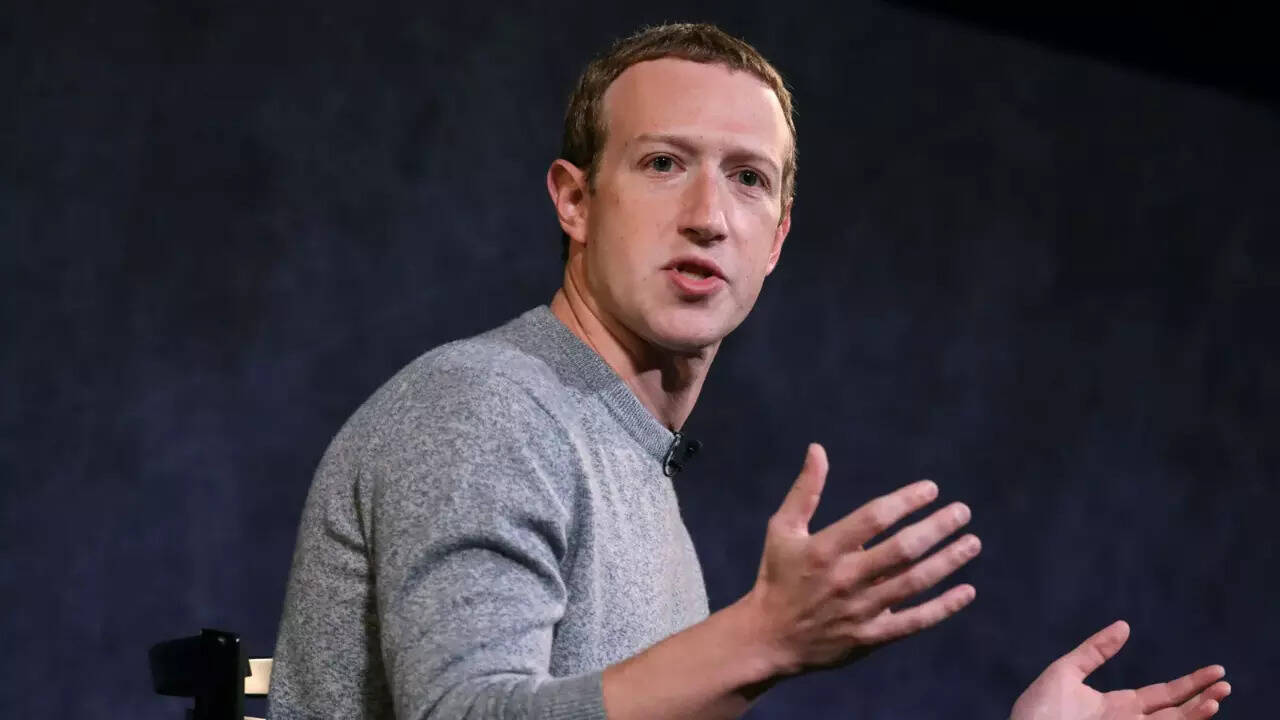

Meta CEO Mark Zuckerberg.
Mark Zuckerberg has picked a fight with OpenAI and Anthropic, and he is no longer pretending otherwise. In an interview with The New York Times, the 42-year-old Meta chief executive said that building AI in the tightly controlled way those two labs have chosen amounts to "abandoning our values" in American technology.
He did not name them. He did not have to. Anthropic's Dario Amodei and OpenAI's Sam Altman have both argued that today's most capable models are too dangerous to hand out freely, and Zuckerberg thinks that argument is a story companies tell to justify keeping the best AI for themselves.The grievance got its full airing on August 10, when Zuckerberg published a 6,500-word essay on Meta's newsroom titled "The Future is for Everyone."
It is less a product announcement than a philosophical broadside. "The notion that AI is so dangerous that the only safe path is an extreme concentration of power seems inherently problematic," he wrote, adding that hoping an absolute power will benevolently look after humanity has historically not ended well.
He also took a swipe at the tone of the debate itself, telling the NYT that the discourse from other labs is "overwhelmingly filled with doom" and that someone needs to bring realism to it.
Meta CEO Mark Zuckerberg's sharpest jab lands on alignment, the idea Anthropic was built around
Amodei has spent years warning about alignment risk, the problem of making a powerful model reliably safe toward people. Zuckerberg's essay calls that framing fundamentally flawed. Humanity is not a monoculture, he argues, so no single system can be aligned with everyone's conflicting values at once. "I think it is literally impossible to have a single benevolent superintelligence that is simultaneously aligned with everyone at once," he told the NYT.His alternative is what Meta calls personal superintelligence: agents aligned to a user's goals rather than a lab's house values. The essay throws in a pointed example, describing a leading model that refused to help draft a letter to prospective school parents because it had decided standardised testing was unethical. That, in Zuckerberg's telling, is not safety. It is a company's opinion shipped as a guardrail.
Meta's counter-argument: hoarding a frontier model is the real danger
The essay's most direct hit is saved for the closed-lab model itself. The most dangerous scenario, Zuckerberg writes, is leading AI labs training powerful models and keeping them in-house, no matter how much responsibility and safety language is wrapped around the decision. He also writes that most other labs are building AI for companies, governments and institutions, so if those labs lead, power tilts toward large institutions and away from individuals.Meta backed the words with a release. Muse Glimmer, an open-weight model developers can download and modify, arrived the same day, with weights for a version of the more powerful Muse Spark promised soon. Zuckerberg went further and defended distillation, the practice OpenAI and Anthropic have accused Chinese labs of using on their outputs, saying the principle that you can learn from anything you observe is worth protecting.
OpenAI and Anthropic aren't conceding the point, and the timing invites scepticism
Amodei published a blog post the same Monday setting out Anthropic's position: keeping advanced chips away from authoritarian governments, stopping industrial-scale distillation, and requiring safety testing for all sufficiently capable models, open and closed. OpenAI has said it supports open-source software and is working with the White House. Neither company responded to the NYT's request for comment.Zuckerberg has also made this argument in a Wall Street Journal op-ed, criticising the centralising of AI power. His critics note that Meta held back Spark's weights earlier this year on safety grounds and started charging for access, and that the openness pitch has arrived while Meta trails the labs it is criticising. His answer, in the NYT interview, was that the arc of the industry bends toward openness, not away from it.
KioskNews shows a cleaned-up reading view extracted from the publisher’s page — the original always lives on their site, not ours.