Himachal wildlife department decides to keep all 7 monkey sterilisation centres operational
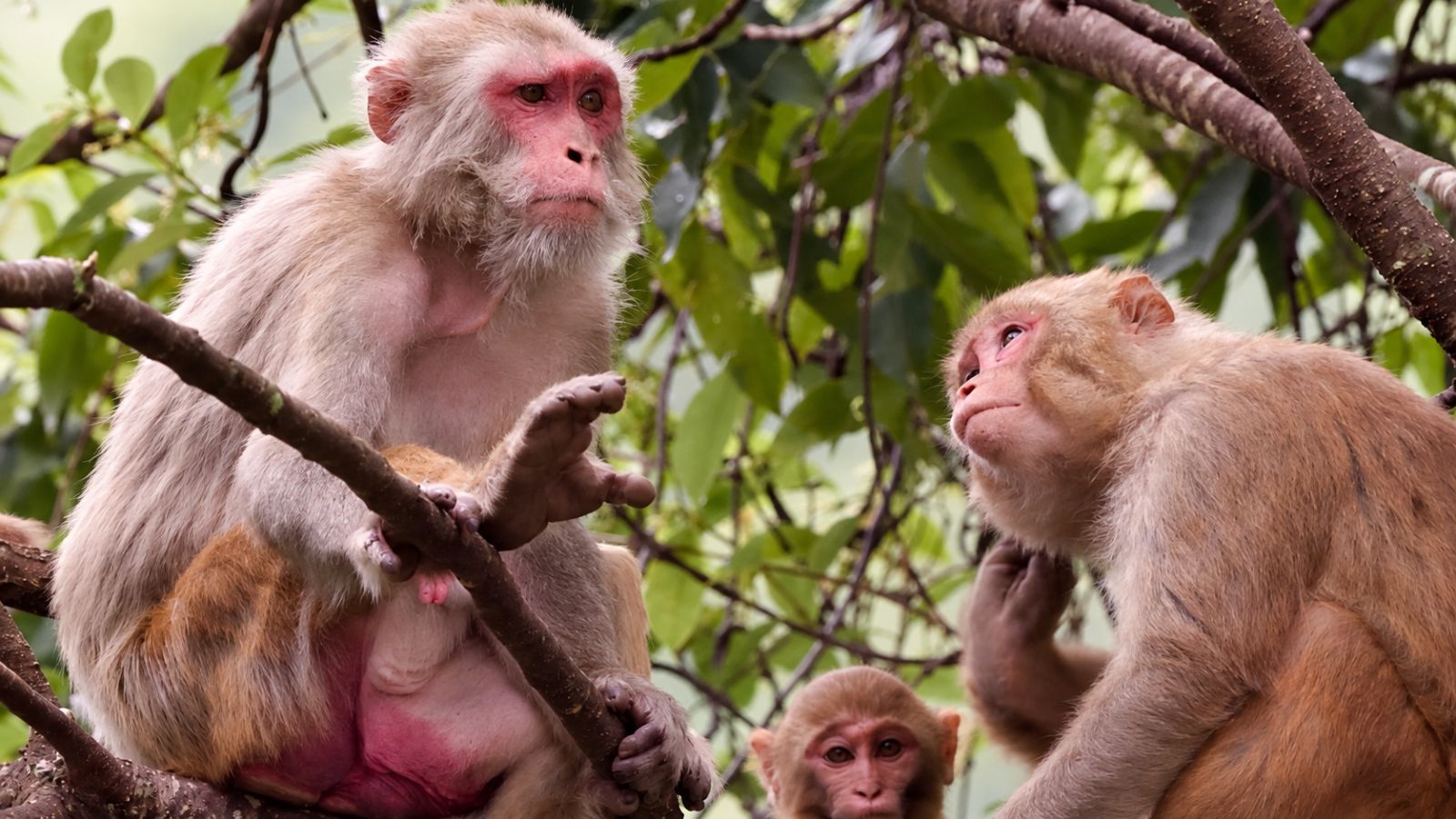
The Himachal Pradesh Zoo & Conservation Breeding Society annual report says 1.88 lakh monkeys were sterilised between 2007 and 2025. (File Photo)
Departing from its earlier stance to shut five out of seven Monkey Sterilisation Centres (MSCs), following the exclusion of the rhesus macaque from the schedules of the Wildlife (Protection) Act, 1972, the Himachal Pradesh Forest & Wildlife Department has decided to keep these facilities operational and has initiated efforts to get funding to continue with the capture and sterilisation process of monkeys.
The Himachal Pradesh Zoo & Conservation Breeding Society (HPZCBS) has been managing these seven MSCs in Shimla, Kangra, Mandi, Hamirpur, Sirmaur, Chamba and Una districts since 2007.
According to officials, the proposal to close the five centres — Bakani in Chamba, Paonta Sahib in Sirmaur, Boul in Una, Salapar in Mandi and Sastar in Hamirpur districts — was discussed at the 22nd Governing Body meeting held on October 7, 2025, and that the rationalisation of the facilities was being considered in view of the reduced workload.
It was also decided to continue with the Tutikandi centre in Shimla and the Gopalpur centre in Kangra, operating alongside the rehabilitation and animal rescue facilities, depending on operational requirements and future decisions.
APCCF (wildlife)-cum-CEO, HPZCBS, K Thirupal said, “The wildlife department has almost closed the sterilisation of monkeys since 2024, given that primates are not scheduled animals for over one year. But now there are demands to include the monkeys back on the list of scheduled animals.
“The monkey menace has also increased in several states, including Himachal Pradesh. In such a scenario, we have decided to continue these MSCs operational and have been making efforts to get funding to continue with the sterilisation programme.”
According to officials of the Shimla Municipal Corporation, Shimla records 50-55 cases (figures are collected from government and private hospitals) of monkey attacks every month.
Story continues below this ad
Thirupal said the department used to get grants through the National Compensatory Afforestation Fund Management & Planning Authority(CAMPA) funds to sterilise monkeys. “We are exploring other schemes to get funding to continue with the sterilisation process.”
According to officials, manpower shortage is another hindrance in keeping these MSCs operational. Monkey sterilisation teams also include members who attend human-wildlife conflict complaints. Also, these MSCs are located inside the Rehabilitation & Animal Rescue centres.
Launched in 2007, the state monkey sterilisation programme is a key initiative to manage the rhesus macaque population and mitigate human-monkey conflict. The centres use surgical sterilisation techniques, including laparoscopic procedures, to control reproduction before the primates are released into the wild.
Between 2007 and 2025, as many as 1,88,752 monkeys, including 98,139 males and 90,593 females, were sterilised at these centres — 34,632 at Tutikandi (Shimla), 43,049 at Sastar (Hamirpur), 35,738 at Gopalpur (Kangra), 34,343 at Boul (Una), 10,779 at Bakani (Chamba), 17,095 at Salapar/Dhanog (Mandi) and 13,096 at Paonta Sahib (Sirmaur).
Story continues below this ad
According to the HPZCBS annual report released on Thursday, the programme faced operational challenges following the 2022 amendment to the Wildlife (Protection) Act, which removed the rhesus macaque from the schedules. The change affected the legal framework governing capture operations, contributing to a decline in the number of monkeys brought to the centres.
Against a sterilisation target of 8,800 monkeys for 2024-25, only 2,284 were sterilised, the report stated.
Meanwhile, the department is awaiting the results of a fresh population estimation exercise conducted in 2024.
A 2019 survey pegged the rhesus macaque population at around 1.36 lakh, a 33 per cent decline from 2015, when their population was calculated at approximately 1.80 lakh.
Story continues below this ad
A senior wildlife officer attributed the long-term decline to sterilisation and other population-management measures. “The report also highlights the value of infrastructure, trained personnel and technical expertise developed at the centres over the years. These resources are important for future primate-management strategies, even as the department considers restructuring the programme,” the officer added.
Sixty-three-year-old Satya Devi Chauhan died in Shimla on September 5 after she was injured in a monkey attack on the roof of her house on August 30. Following her death, several local organisations held protests against the authorities and demanded that they control the monkey menace.
© The Indian Express Pvt Ltd

Saurabh Parashar is an Assistant Editor at The Indian Express, primarily responsible for the publication’s coverage of Himachal Pradesh. He is a seasoned journalist with over 17 years of experience in print media, specializing in crime, legal affairs, and investigative reporting. Professional Background Education: He holds a Master’s degree in Mass Communication from Guru Jambheshwar University of Science & Technology (Hisar) and a Law degree from Himachal Pradesh University (HPU), Shimla. This legal background significantly informs his reporting on complex judicial and administrative matters. Career Path: Before joining The Indian Express in 2017, he spent 12 years with The Times of India. Core Beats: His primary focus is the socio-political landscape of the hill state, with a specific emphasis on the environment, forest conservation, drug menace (specifically "Chitta"), affairs related to tribal and archaeology and the unique challenges of governance in high-altitude regions. Recent Notable Articles (Late 2025) His recent reporting highlights the critical intersection of policy, law, and social safety in Himachal Pradesh: 1. "Himachal’s battle against Chitta: Why the border areas are most vulnerable" (Late 2025): An investigative look at the transit routes from Punjab and the impact on local youth. 2. "Shimla ropeway clears key hurdle as 820 trees face the axe :According to the Forest Survey of India’s 2021 assessment, 47.21 percent of Shimla’s 5,131 sq km geographical area is under forest cover (Nov 17, 2025). 3. "Himachal to handover 2.7427 ha of non-forest land for Shimla Ropeway: Given the land’s non-forest nature, RTDC and the state will not require permission from MoEFCC" (Nov 18, 2025) 4. "How the centuries-old Jodidara tradition is fading in Himachal’s Trans-Giri region: Jodidara: a form of fraternal polyandry—has long been part of Hatti tribal culture in the Trans-Giri region of Himachal Pradesh and adjoining Uttarakhand. It is believed to have evolved to prevent division of ancestral land and maintain unity among brothers in the harsh, mountainous terrain" (Aug 18, 2025) Legal & Agricultural Affairs "Kisan Sabha hails SC’s setting aside Himachal HC order to remove orchards from forest land" (Dec 18, 2025): Covering a major Supreme Court victory for farmers, where a High Court order to remove fruit-bearing apple orchards was overturned. "Himachal Cabinet nod to new tourism policy; focus on home-stays in tribal areas" (Dec 11, 2025): Detailing the legislative push to decentralize tourism and bring economic benefits to Lahaul-Spiti and Kinnaur. 3. Governance & Environment "Forest rights and development: Why Himachal is seeking more leeway from Centre" (Dec 19, 2025): Reporting on the legal hurdles faced by the state in infrastructure projects due to the Forest Conservation Act. "Cloudbursts and resilience: How Himachal’s remote villages are building back better" (Nov 2025): Following up on the long-term rehabilitation efforts after monsoon-related disasters. Crime especially cyber crimes, crypto currency etc: crypto currency: "Agents in uniform, motivational speeches, lavish parties: How a Himachal crypto con went unnoticed:A serial conman, a ‘Nelson Mandela Nobel Peace Award winner', and retired policemen got together to pull off a Rs 1,740-crore fraud" (Nov 10, 2023) Signature Beats Saurabh is recognized for his tenacious reporting on the state's drug epidemic. His deep familiarity with the topography and tribal culture of Himachal allows him to report from remote locations like Spiti, Pangi, Shillai, which are often overlooked by national media. His legal expertise makes him a primary choice for covering the Himachal Pradesh High Court on issues ranging from local body elections to environmental PILs. X (Twitter): @saurabh_prashar . ... Read More
KioskNews shows a cleaned-up reading view extracted from the publisher’s page — the original always lives on their site, not ours.