Lake weeds meet traditional art in Kashmir
A Kashmiri artisan is turning weeds pulled from Srinagar’s famous Dal Lake into a new ingredient for the centuries-old craft of papier-mache, one of Kashmir’s best-known traditional art forms.
Dal Lake is famed for its floating gardens and houseboats against a Himalayan backdrop.
Among its past visitors was Beatles guitarist George Harrison, who stayed on a houseboat in 1966 and met sitar maestro Ravi Shankar.
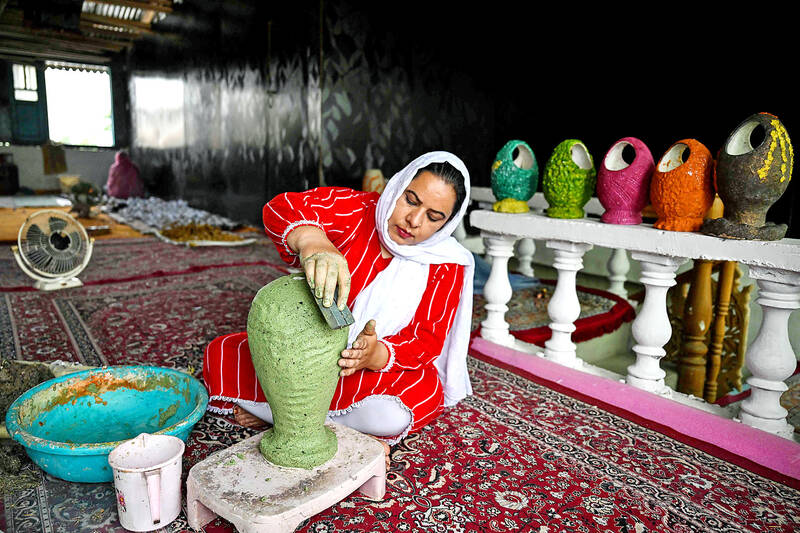
An artisan uses dried aquatic weeds and grass collected from Dal Lake to create handcrafted home decor items at a workshop in Srinagar, India, on Aug. 19.
Photo: AFP
However, the lake has long struggled with heavy growth of aquatic weeds, which Indian authorities regularly remove to keep its waterways clear.
Simran Irshad, 35, began experimenting with weeds after the rising cost of paper made traditional papier-mache increasingly expensive.
With roots in Persian craftsmanship, Kashmir’s papier-mache is known for brightly painted boxes, trays and ornaments decorated with intricate floral, bird and paisley motifs — as well as Christmas ornaments exported worldwide.
Irshad searched for a cheaper, locally available material and eventually turned to aquatic vegetation regularly cleared from the lake as waste.
After months of experimentation, she developed a technique using dried and pulverized weeds mixed with recycled paper pulp and a binding agent to create the material.
“For the past 100 years this craft has been done this way, using only paper,” Irshad said.
“Why not use something that can increase production, make it durable and also make it cheaper?” she said.
Irshad collects the weeds by boat before drying and processing them at her workshop.
She tested different vegetation before finding the lake weeds most suitable because of their higher moisture content.
“Paper comes from trees, trees are cut down to make paper,” she said. “What I am removing from the lake is like a treasure given to me by God.”
She has trained about 50 women to make paper products, with 15 currently working with her on the weed-based craft.
Irshad hopes to expand the initiative, but said she needs more support to provide work for additional women.
KioskNews shows a cleaned-up reading view extracted from the publisher’s page — the original always lives on their site, not ours.