24 Sussex Drive is getting renovated. Some think the National Capital Commission should be overhauled too
OTTAWA — As he makes his way north through Ottawa’s Strathcona Park, Peter Meggs walks across the Adawe Crossing Bridge, veering away from the connecting path that leads to a parking lot.
Sign In or Create an Account
Both the connecting path and the pedestrian bridge are municipal jurisdiction. The bridge overlooks the Rideau River, which is provincial responsibility, although the Rideau River Conservation Authority is the river’s watershed agency, which means it manages things such as environmental and flood monitoring.
After crossing the 125-metre bridge, Meggs then hangs a right and joins a smattering of cyclists, dog walkers and step counters for the home stretch along the multi-use pathway of his regular, 5-kilometre loop around his Overbrook neighbourhood. That means he’s now on property run by the National Capital Commission (NCC), the under-the-radar federal body whose mission, according to the organization’s web site, is to help the national capital region be “a dynamic and inspiring source of pride for all Canadians, and a legacy for generations to come.”
Before being turned into a park 119 years ago, Strathcona Park was a swampy floodplain overrun by mud and swarms of mosquitoes. But as Meggs’ brief trek across the bridge suggests, the 15-acre park may now be overrun by swarms of government.
The difference in this regard between the national capital region and other Canadian cities is the NCC. The commission’s critics have for years been asking why the national capital region needs – or perhaps deserves – an extra layer of government and extra source of taxpayer dollars than other Canadian communities.
Those questions have re-emerged in recent months because the NCC’s profile has jumped over its management of the prime minister’s official residence, uninhabited for more than a decade but now on a path to repair. Some NCC critics are also asking if it’s not time that the commission undergo its own renovation.
The NCC, unlike municipalities, is run by unelected officials who are not directly accountable to the public – and, according to critics, seem fine with it that way.
“You have to accept the good and bad of democracy,” said Meggs, a former town councillor in Cornwall, P.E.I.
But Franco Terrazzano, federal director of the Canadian Taxpayers Federation, said the NCC needs greater scrutiny and accountability, in part because it spends and wastes a lot of taxpayers’ money. For example, he said, the crown corporation spent $140,000 to study and design – not build – a staircase, and $1 million for a barn at Rideau Hall, the governor general’s official residence.
“It must be the most incompetent agency in all of Canada — which is saying a lot.”
With the Carney government presumably looking for more cuts in the bureaucracy to help pay for big spending hikes in defence, infrastructure and other priorities, could the NCC be a target for this fall’s upcoming budget?
John Fragos, a spokesman for Finance Minister François-Philippe Champagne, said it’s too early in the budget process to speak to any possible cutbacks.
Don Drummond, a former senior official at the Department of Finance and chief economist at TD Bank, said most of the discussions over the years about the NCC have been about democratic reform and transparency, not getting rid of it. For example, Drummond said, folding the NCC into a federal department that may have more experience writing cheques than running programs might be tempting but also might be a bad idea.
Supporters say the NCC, created through a House of Commons vote in 1959, is important because it helps make the National Capital Region – Ottawa and the city of Gatineau, Que. on the other side of the Ottawa River — a special region that all Canadians can be proud of. It brings a national perspective, they argue, to issues that would normally be local.
Results have included a protected Greenbelt on the outskirts of Ottawa, federal parklands and parkways including the popular Gatineau Park, and a wide range of recreational sites, such as cross-country ski trails, walkways, the Rideau Canal skating rink, and public swimming spots along local lakes and rivers — all considered attributes by local residents, and some visitors.
Supporters, such as former Ottawa city councillor Clive Doucet, say the NCC has made an excellent contribution towards presenting the national capital region as the country’s heart, not just another city, in a way that local governments likely wouldn’t.
“It’s been a great success in beautifying Ottawa.”
NCC defenders point out that Canada is by no means the only country that assigns a special government body to giving its capital extra care.

There’s no perfect comparison internationally, but India, France, Australia and Brazil are among those countries that have a federal body with a mandate similar to the NCC. In the U.S., the National Capital Planning Commission (NCPC) serves as the federal government’s planning agency for Washington, D.C.
But in other ways, the District of Columbia is far from over-governed – or as governed as Canadians in the national capital area.
Unlike Ottawa-Gatineau, D.C. residents are less represented than those in any other part of the U.S. While the city of Washington has a mayor and council, the District is part of no state, which means that it has no governor or state legislature. It also means that D.C. also has just one non-voting representative in the U.S. House of Representatives and no representation in the influential U.S. Senate.
Doucet isn’t wrong that the NCC’s job is to make the national capital region an enjoyable and attractive place to live or visit. In other words, the commission has goals that are often in line with most municipalities, even if the structures, and method of funding, are very different.
As a federal body, one key discrepancy is of course its source of money. The NCC, unlike municipalities, gets its funding from the federal government, which means taxpayers from across the country, not just those in Ottawa and Gatineau.
According to its annual report, the NCC received $164.3-million from Parliament in 2025, a 57 per cent increase from the previous year. While much of the NCC’s annual budget is a function of the capital projects that it’s asked to manage during any given year, its operating budget has also been on the rise, a pace well above inflation.
By contrast, the crown corporation is now a larger organization by budget than the municipal governments in cities such as Maple Ridge, B.C., North Bay, Ont. and Moose Jaw, Sask.
Despite its low profile nationally, the NCC is a large organization by other metrics too.
According to its web site, the organization has 419 employees, although that figure doesn’t seem to have been updated since 2017.
And those pathways along the river at Strathcona Park are only a tiny fraction of the NCC’s territory. It manages about 116,000 acres of land in the National Capital Region, about 11 per cent of the region’s land. That’s about eight times the size of Manhattan, more than double the size of Washington, D.C., and much larger than all of Vancouver.
The crown corporation, which reports directly to Parliament through Public Works Minister Joel Lightbound, is also responsible for management of 1,664 properties, including Rideau Hall (the governor general’s residence), Stornoway (the opposition leader’s residence), The Farm (the Speaker’s residence), 7 Rideau Gate (the government’s official guest house), and the prime minister’s two official residences: Harrington Lake, the prime minister’s cottage, and 24 Sussex, the prime minister’s dilapidated official residence.
With 24 Sussex Dr. uninhabited for more than a decade, there have also been fresh accusations that the NCC doesn’t do a good enough job of maintaining its properties.
The prime minister’s official residence has been vacant, in part, because of complaints about heating and cooling, asbestos, mould, and even rodents. The absence of a decision about what to do with the famous residence does not fall on the NCC, however, as the long-term pause can be traced back to the prime minister’s office.
Detractors have also pointed out that the organization makes important planning decisions about the national capital region, yet its board members are appointed, not elected. And related to that, the most frequent criticism of the NCC is likely that it lacks the transparency expected of other levels of government.

In 2023, when the Office of the Information Commissioner of Canada ruled that the NCC had improperly withheld information in response to an ATIP request, it bolstered that case.
Neither NCC chief executive Tobi Nussbaum, nor a spokesperson, was available for interview.
Earlier this year, when asked for an interview about plans for the prime ministers’ official residence, an NCC spokesperson told National Post that that subject is one that the Crown corporation normally would only discuss after its board meetings. They’re held four times a year.
___
But are there not other models that would allow the capital region to get some extra care, without adding a layer of government that seems less transparent and accountable than our norm?
Jerald Sabin, a public policy specialist at Carleton University in Ottawa, called the NCC a “band-aid solution” designed to fix the fact that the Canadian constitution didn’t create a capital region structure.
In 1867, as the Canadian constitution was being drafted, Sabin said, there were more important issues that how to carve out special attention for the new country’s capital region. “They had bigger fish to fry.”
Beyond the cost to taxpayers, extra layers of government can also have other unintended consequences. During the 2022 truckers’ convoy protest in downtown Ottawa, for example, Ottawa police were tasked with enforcement, including on NCC property.
There have been no reports of a turf war at that time between the two organizations — the NCC has conservation officers, but no police force — but that doesn’t mean there wasn’t jurisdictional confusion, and more layers of communication required than otherwise would have been the case.
Andrew Sancton, a retired professor from Western University in London, Ont. who specializes in local government, said it’s “reasonable” to want a presentable national capital region for both foreign and domestic visitors.
He said he’s not sure why the NCC isn’t expected to be as open as municipal governments, but that getting rid of it would likely lead to a legal battle over which levels of government would inherit its land.
For the NCC, 24 Sussex represents perhaps its highest profile, and most politically sensitive, project in decades, even though the Carney government has limited the organization’s role in the process.
In April, the Auditor General of Canada reported that the NCC’s systems and practices showed a “significant deficiency” in its handling of employee safety, and, among other things, that improvements were needed in its managing of assets and capital projects. While those findings likely didn’t help the NCC’s case to play a bigger role in the 24 Sussex renovation project, Auditor General Karen Hogan also found there were “no significant deficiencies” elsewhere in the NCC’s systems and operations.
Two months later, Carney announced a competition for the redesign and rebuild of the prime minister’s dilapidated official residence. That competition, which largely ends more than a decade of debate about where Canada’s prime ministers will live, will be led and largely judged by The Royal Architectural Institute of Canada — not the NCC. The institute, which has experience supporting architectural competitions, will review proposals and then make a recommendation to cabinet by July 1 of next year.

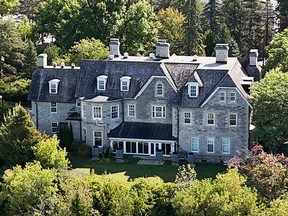
The residence, which sits on a 2.1-hectare property overlooking the Ottawa River, has been out of commission since the end of former prime minister Stephen Harper’s government years. The 35-room, 12,000-square-foot residence has suffered over the years from a range of problems. Both Carney and former prime minister Justin Trudeau have lived across the road at Rideau Cottage, on the governor general’s grounds.
When he announced the competition in June, Carney also said the government will try to reduce the costs of the project by using a non-partisan charity, the Rideau Hall Foundation, to lead a national fundraising campaign to raise as much money as possible.
As of July 27, the fundraising effort, which has a $50-million cap, has received $735,000 in donations from 3,336 Canadians.
Despite being asked to play a limited role in the 24 Sussex reno, there’s little indication that the federal government is considering changing the NCC’s role or reducing its budget.
Most Ottawa-Gatineau residents, living in a region where the federal government forms the economic base, are less concerned about jurisdictional divisions, and just happy to take advantage of the NCC’s recreational sites, and other services.
Vino Bhindi, who grew up near Strathcona Park and crosses the pedestrian bridge to get to the Rideau Sports Club, also on NCC land, said the region seems to have a lot of government levels, but that never gets in the way of his tennis matches.
“I don’t feel the politics.”
National Post
Our website is the place for the latest breaking news, exclusive scoops, longreads and provocative commentary. Please bookmark nationalpost.com and sign up for our daily newsletter, Posted, here.
Join the Conversation
This website uses cookies to personalize your content (including ads), and allows us to analyze our traffic. Read more about cookies here. By continuing to use our site, you agree to our Terms of Use and Privacy Policy.
KioskNews shows a cleaned-up reading view extracted from the publisher’s page — the original always lives on their site, not ours.