China moves to set global standards for brain-computer interface technology
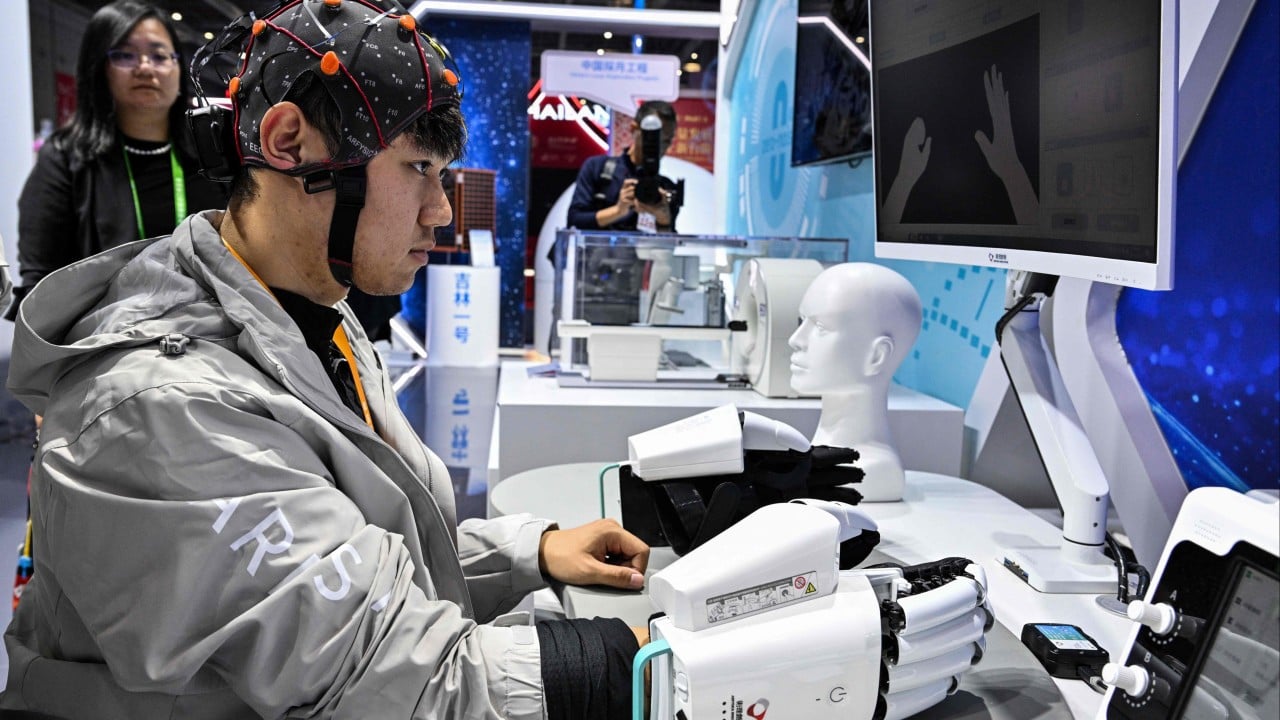
China has taken a major step in spearheading the standardisation of brain-computer interface (BCI) technologies, as it now chairs the secretariat of a subcommittee jointly overseen by two key international organisations and lists the technology applications as a national development priority.
The China-led subcommittee, known as ISO/IEC JTC 1/SC 43, was set to formulate global standards regarding the communication and interaction between brains and computers that are applicable across application areas, according to abstracts on both websites of the International Organization for Standardization (ISO) and International Electrotechnical Commission (IEC).
The committee, chaired by Yu Yuntao, a technical director with the China Electronics Standardization Institute, has already published several standards, including the BCI vocabulary, data format for non-invasive brain information collection, reference architecture and use cases.
“The [Chinese] government is betting on this industry, among others, as one that has the potential to become the next EV sector,” said Xiaomeng Lu, director of geo-technology at Eurasia Group.
ISO is “the de facto global industry standard with major commercial implications”, according to Lu. This was “a very meaningful step for Chinese and global BCI companies”.
BCI is an emerging technology that translates neural signals into commands for external computers, allowing humans to steer technology using thoughts.
BCI is one of six industries of the future under China’s 15th five-year plan and this year was included for the first time in the government work report delivered to the National People’s Congress.
On Wednesday, two of the highest policy authorities in China – the General Office of the Central Committee of the Communist Party and the General Office of the State Council – released a joint call to accelerate the industrialisation and commercialisation of BCI as a key frontier technology.
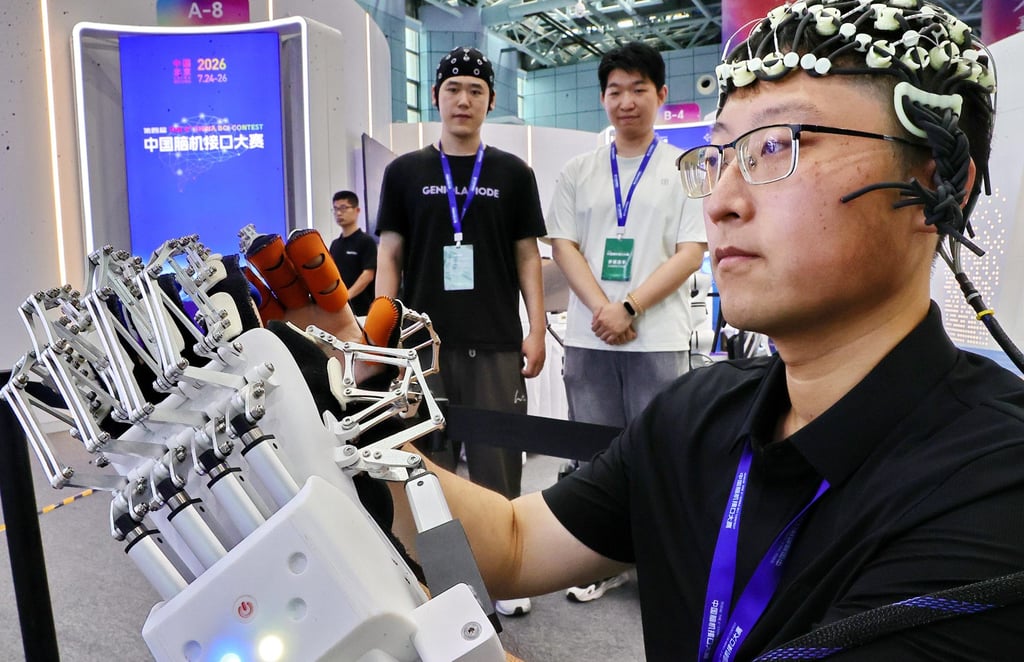
“China’s BCI sector needs access to overseas markets, especially for its most advanced products, approved invasive and non-invasive brain devices,” said Altynay Junusova, an analyst at the Berlin-based think tank MERICS.
“Chinese policymakers want to help the industry to scale up, ahead of the US and Europe,” Junusova said, adding that China’s leadership on the ISO document would help it “secure the terms on which everyone else’s BCIs are built.”
Lu said the Chinese government, with a few exceptions, mirrored Elon Musk’s research road map in its own technology investment plan. “A group of Chinese companies are fast followers,” Lu said. Musk co-founded the leading BCI company Neuralink.
“My theory is that the Chinese government views Elon Musk as a tech visionary,” Lu said.
In July of this year, Shanghai-based Neuracle Medical Technology completed the world’s first commercial surgery using BCI.
“Washington has not paid a lot of attention to this industry yet,” Lu said. “Their attention is concentrated on more visible and mature technologies such as semiconductors and AI models.”
A US delegation also took part in the drafting of the ISO’s BCI standards document.
China’s BCI market was projected to be valued at 6.14 billion yuan (US$919.88 million) by 2028, with a compound annual growth rate of 17.7 per cent from 2024 to 2028, according to the China Centre for Information Industry Development.
KioskNews shows a cleaned-up reading view extracted from the publisher’s page — the original always lives on their site, not ours.