The Guardian view on the Drumcree parade: ghosts from the past have brought Stormont to the brink | Editorial
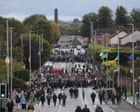
The last time that the Orange Order successfully marched from Drumcree parish church down the Garvaghy Road, a mainly Catholic part of Portadown, it required a British army presence and a lockdown of locals forced off their own streets. The 1997 parade was preceded by loyalist death threats and followed by nationalist riots, in which more than 160 people were injured. The lengthy track record of lethal violence and disorder associated with the march led the Parades Commission – established the following year as part of the peace process – to ban it.
On Sunday, however, in scenes that rolled back the years in deeply unwelcome fashion, the old traumas and hostilities were recklessly allowed to resurface. Unfathomably, after a routine decision to renew the ban this year was challenged on procedural grounds, the commissioners reversed their ruling late last week and permitted a march to go ahead on a limited scale. The entirely predictable result was a tense standoff and a political crisis in Stormont, after protesters blocked the Garvaghy Road route until the early hours of Monday morning.

Facilitating the parade – a decision witheringly criticised by the Irish taoiseach, Micheál Martin – was a grievous unforced error on the part of the Parades Commission. Police advice that it was unlikely to provoke disorder was tin-eared, given the context. Orange Order parades now take place without incident across Northern Ireland each summer. But Drumcree’s notorious history makes it prime territory for unionists seeking to reignite a culture war and provoke a response.
Thankfully, violence was averted. But the continuing fallout of a needless episode has dangerously exacerbated tensions in the deadlocked Northern Ireland executive, as it approaches a final Westminster deadline for agreeing a budget. Unionist demands for a police investigation, on the grounds that the Sinn Féin first minister, Michelle O’Neill, broke the law by attending the protest, are indicative of a polarising political climate that bodes ill for the future.
Depressingly, in the short term that may suit both Sinn Féin and the Democratic Unionist party (DUP). After being damaged by internal scandal and spectacular misjudgments over Brexit, the DUP is attempting to shore up its base and see off a challenge from the still more hardline Traditional Unionist Voice party. Sinn Féin’s support has also been slipping amid stasis at Stormont and calls for a faster push towards a united Ireland.
As division and acrimony deepen, the desire of most voters for a functioning executive seems dismally low on the list of priorities. The Drumcree standoff was the worst possible way to begin a crunch week of talks over a budget that should have been set six months ago. On Sunday, the new Northern Ireland secretary, Sir Chris Bryant, flew to Belfast to meet political leaders and members of the Garvaghy Road residents’ association. He already looks to have one of the most challenging jobs in Andy Burnham’s cabinet, as cross-party relations in the assembly break down and fears of a DUP walkout mount.
Calling for “calm on all sides”, the prime minister has stressed the need to preserve the gains made since the Good Friday agreement. That is the right message. But disastrously wrong calls on Drumcree, from bodies that should have known better, have now brought Stormont to the brink.
KioskNews shows a cleaned-up reading view extracted from the publisher’s page — the original always lives on their site, not ours.