First Australian death of little penguin with H5 bird flu confirmed on Phillip Island
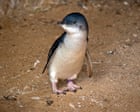
Australia’s first case of the deadly H5 bird flu in a little penguin has been confirmed on Victoria’s Phillip Island, only days after the state government announced it would begin vaccinating the species.
Confirmation of the virus in the little penguin will spark a race against time to vaccinate thousands of birds, with the government announcing on Saturday it would begin the roll out on Monday.
The government did not provide the exact location where the bird was found, but said it was not inside the island’s famous penguin parade area.
A spokesperson confirmed the little penguin had died.
There are about 40,000 little penguins on Phillip Island, making it the world’s biggest colony of the species and a major tourist attraction.
Environment advocates have been concerned about the potential for mass deaths of little penguins if the virus reached the island.
On Wednesday, the Victorian government announced plans for the world’s largest H5 bird flu vaccination program of wild birds.
The government said it would vaccinate up to 5,000 little penguins across populations at Phillip Island and at Melbourne’s St Kilda beach. While vaccinating wild birds is challenging, it was considered possible in Victoria’s wild little penguins because they generally return to the same burrows at Phillip Island and St Kilda each night.
But vaccination requires the delivery of two doses with a gap of a few weeks between each dose.
The detection on Phillip Island will spark concern that it may be too late for some little penguins to develop immunity.
after newsletter promotion
The state’s chief veterinary officer, Dr Graeme Cooke, said Agriculture Victoria and Phillip Island Nature Parks “activated plans” to vaccinate little penguins as soon as the federal government authorised the vaccines for priority native bird species.
“Agriculture Victoria is working closely with Phillip Island Nature Parks to support vaccination of little penguins from Monday,” he said.
“While the first detection in a little penguin is a concern, vaccination of little penguins on Phillip Island remains a meaningful way to help protect this important colony.”
The Victorian government said there had been two further detections of H5 in greater crested terns, one at Lakes Entrance and the other at Dromana on the Mornington peninsula.
The state’s chief biodiversity officer, James Todd, said the detection at Lakes Entrance was significant because it confirmed H5 bird flu was present in east Gippsland and showed the virus was continuing to move through wild bird populations across Victoria.
On Saturday, the NSW government also confirmed the fifth detected case in the state, in a tern found at Eden on the far south coast.
The government said it would increase surveillance in the area as a result.
There have been two other confirmed cases in local birds in the state, one at Narooma on the state’s south coast and one at Wentworth in the far south-west. All of the confirmed cases in local birds have been in greater crested terns.
KioskNews shows a cleaned-up reading view extracted from the publisher’s page — the original always lives on their site, not ours.