Forty years on from the tragic killing of Ahmed Iqbal Ullah, activists call for renewed fight against the far right
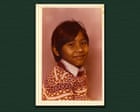
“For my brother Ahmed, British values meant standing up for others. It was doing right. It was supporting and looking after the underdog, whoever that may be, regardless of their colour or background,” Selina Ullah says, of the brother she lost to a senseless act of violence 40 years ago.
Ahmed Iqbal Ullah, a British Bengali schoolboy, was 13 when he was murdered in a racist attack in the playground of Burnage high school, in south Manchester, in 1986, after defending young pupils from bullying.
Ahmed’s murder – by a 13-year-old white British pupil who was sentenced to the youth equivalent of life, was a landmark moment. The Macdonald inquiry into the racism and racial violence in Manchester schools that surrounded Ahmed’s death sparked a national debate about antiracism in education.
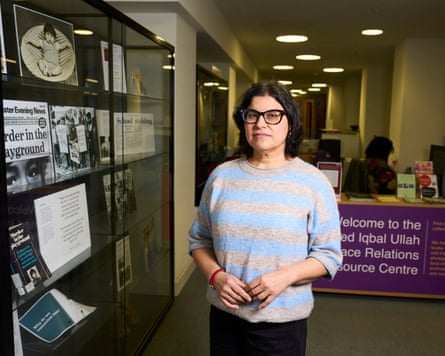
Forty years on, Ahmed’s memory is at the heart of the Ahmed Iqbal Ullah RACE Centre (AIU), which houses archives on Black figures in Manchester, community history on events such as Manchester carnival, and pan-African activism in the city and beyond.
The 1970s concept of “political Blackness” – the idea of a strategic multiracial alliance across groups affected by racism – fell out of favour in the 1990s, as it became seen as an inadequate reflection of differing experiences.
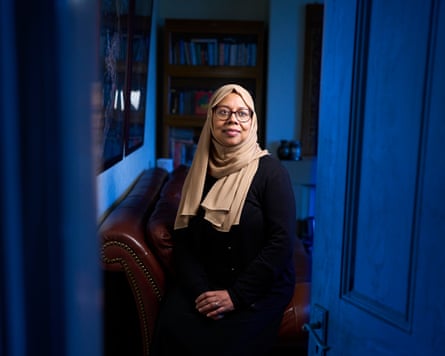
But the story of AIU speaks to the power of solidarity across communities. Since it was founded in 1987 in Ahmed’s memory by Lou Kushnick, a Jewish-American professor at theUniversity of Manchester – with teacher Jackie Ould as its education co-ordinator – it has provided archivists, teachers and campaigners with the inspiration and resources to document under-recorded Black, antiracist and migration histories, fight social injustice and push for greater representation in education.
A memorial event, The Legacy of Ahmed: 40 years on, was held last month. It was attended by Ahmed’s family, AIU’s head, Maya Sharma, justice campaigners from 1986, including lawyer Robert Lizar, and a new generation of antiracism activists.
At the event it was argued that “political Blackness” – the framework in which AIU was founded – had a new relevance in the face of a resurgent far right.
Zara Manoehoetoe, a youth worker with Manchester antiracism organisation Kids of Colour, said: “Politically black is the note that we have to ground ourselves in, because anti-blackness manifests for all of us.
“We are working with young people from across Greater Manchester … The international context lives in their DNA, it lives in their homes, it lives at the kitchen table, it lives in the food that their mothers and their nanas are putting on their plates.”
The writer and film-maker Tariq Mehmood was a speaker on the panel alongside Manoehoetoe.
In 1986 Mehmood joined the justice campaign, spearheaded by Selina Ullah, which preceded the Macdonald inquiry.
Mehmood urged activists today to move offline and into grassroots organising across communities, amid a “continuing struggle” against racism in the UK and genocide in Gaza.
He added: “We were not victims [in the 1980s]. We educated ourselves. We organised youth movements. We organised workers’ organisations. That’s Indians, that’s Pakistanis, that’s Bangladeshis, that’s Africans, a whole plethora of anti-imperialist organisations … and in that context, we were Black.”
Prof Gus John, who served on the panel for the Macdonald inquiry and co-authored the book of the report, Murder in the Playground, was among speakers at the memorial event.
John said of the inquiry and the book: “What we were saying was it was important that schools have a responsibility to teach children and enable them to understand racism, how it operates in society and how they could be implicated in perpetuating it.
“Kenneth Baker [then education secretary] refused to accept the report, refused to raise the matter in parliament, and refused to put this book in the House of Commons library. Roll on 40 years … and every day, we hear more and more stories of racist incidents.”
Nika Muthra-Shah, the director of educational innovation at the Rekindle Collective, the Black-led supplementary schools programme, spoke of how young people are “feeling a lot of anger and a lot of fear about the rise of the far right”, and how the collective was countering it through youth empowerment, education in critical thinking and encouraging dialogue.
The memories of speakers who were at school with Ahmed highlighted how racism – and the fight against it – shape young lives.
From the audience at the memorial event Naeem, who was in the playground the day Ahmed was stabbed, said: “Ahmed was a very good friend. I was sometimes jealous of him because he used to wear the best clobber – Adidas tracksuits, like Run DMC!
“[When Ahmed was killed] we didn’t get any help or support from nobody, and we just got on with our life. After then, my life just deteriorated, I wasn’t bothered with school, I was fighting, I was suspended, I became racially abusive towards people. I turned my life around, [but] it’s always in my heart.”
Pervez Iqbal, who was a year older than Ahmed at Burnage High and part of the original justice campaign, was inspired by the tragedy to pursue a career in education.
He said: “We grew up very quickly when in reality we were still children who needed some guidance. Those experiences eventually gave me the determination to do something positive in my life. I studied, became a teacher and eventually I returned back to Burnage where I worked for 23 years.
“Schools and communities can change, education can change attitudes, and people working together can create something better for the next generation. My message for today is simple. Never forget Ahmed [or] our responsibility to educate, guide, and protect people.”
In October, Home Office figures revealed racially and religiously motivated offences have reached record highs in the UK. Police recorded 146,825 hate crimes in the year ending March 2026 – a rise of 7% in the past year. Offences targeting Muslims increased the most – up 15%, from 4,479 to 5,132.
KioskNews shows a cleaned-up reading view extracted from the publisher’s page — the original always lives on their site, not ours.