The 6 Best Fantasy Books Released Since 1990, Ranked

Sign in to your Collider account
Books have a funny modern problem: a lot of people meet the story second. They know the HBO opening credits, the Hogwarts score, the armored bear, the casting, the memes, the prestige adaptation, the canceled adaptation, the thing their friend swears is “basically impossible to film.” Then eventually somebody hands them the book and the scale changes. Or maybe a Season ends and they’re curious to find out what’ll happen in the next one, without having to wait a whole year, and the book surprises them.
The world gets stranger. The characters get messier. Whole motivations appear that never survived the edit. Suddenly the famous screen version feels like somebody showing you a photograph of a country you have now actually visited. That is the angle here. These are not books that need defending because an adaptation became famous. They are the source code. The thing before the costumes, before the fandom arguments, before somebody decided which chapter could be cut. And in several cases, the book is so much richer than the version people know that reading it feels less like revisiting a story and more like discovering the story was larger than you were told. Here are 6 fantasy books released since 1990s.
6 'The Name of the Wind' (2007)
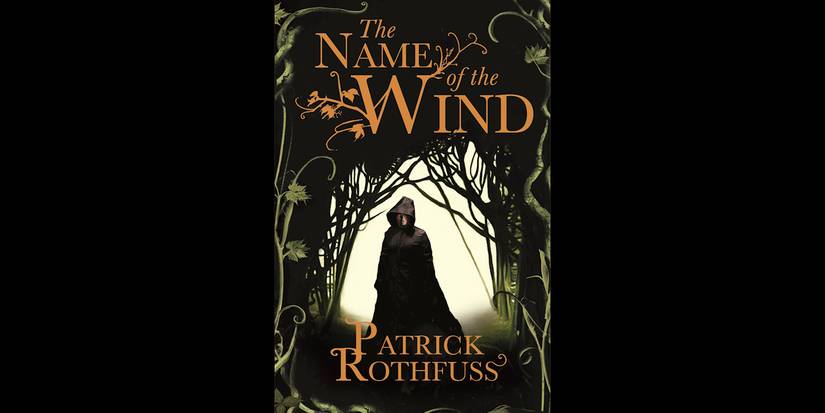
The Name of the Wind follows Kvothe, a gifted musician, magician, and notorious figure who agrees to tell the true story of his life, beginning with his childhood among traveling performers, the murder of his family, years of poverty, and his eventual admission to a university where he begins chasing the forces responsible. Patrick Rothfuss wrote the novel, and the whole thing is built around the gap between the legend people know and the person Kvothe remembers being.
That distinction is what makes the book addictive. Kvothe is brilliant, yes, but he is also proud, broke, reckless, emotionally stupid, and constantly one bad decision away from making his own life harder. The University gives you magic with actual intellectual texture, but the book’s real pull is voice. Music matters. Money matters. Reputation matters. A room full of people hearing Kvothe play can feel as tense as a duel. The long-discussed screen adaptation never properly materialized, which almost feels appropriate. This story lives in the telling itself, and Kvothe is the one thing no casting announcement could ever fully capture.
5 'The Way of Kings' (2010)
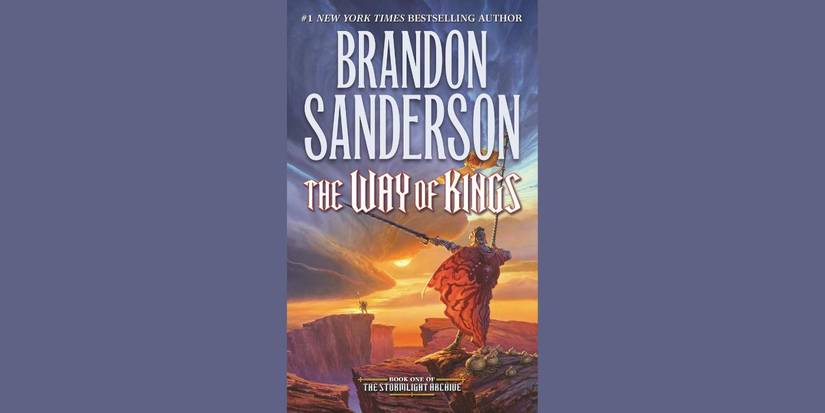
The Way of Kings follows several people across the storm-battered world of Roshar, especially enslaved soldier Kaladin, scholar Jasnah and her ward Shallan, and highprince Dalinar, as war, ancient powers, political fractures, and forgotten supernatural threats begin converging around them. Brandon Sanderson wrote it, and this is the book where you realize he is not interested in giving you one fantasy adventure when he can build an entire civilization and make you live inside it.
Kaladin is the reason I would push this on somebody who thinks giant fantasy novels are mostly homework. His life keeps narrowing until Bridge Four looks less like military service and more like organized human disposal, with bridgemen literally carrying siege bridges into enemy fire so more valuable soldiers can advance behind them. Then something starts changing. Leadership appears where despair had settled in. Sanderson gives you magic, Shardblades, highstorms, politics, visions, and enough worldbuilding to crush a weaker novel, but the emotional high comes from people deciding they are still responsible for one another. No screen adaptation has yet defined these characters for the public. Honestly, that is a gift. You get to meet them here first.
4 'The Golden Compass' (1995)

The Golden Compass follows Lyra Belacqua, a fiercely curious girl living at Jordan College in an alternate Oxford, who travels north after children begin disappearing and uncovers a conspiracy involving kidnapped children, armored bears, witches, a mysterious substance called Dust, and experiments that separate humans from their animal-shaped dæmons. Philip Pullman wrote it, and the book is much sharper, stranger, and more dangerous than its “young fantasy adventure” label ever suggests.
A lot of people came to Lyra through the 2007 film or HBO’s His Dark Materials, and both made the dæmons visually easy to understand. The book makes them emotionally impossible to forget. Your dæmon is not a pet. It is part of you. So when the story reveals what happens at Bolvangar, where children are being severed from theirs, the horror lands at a level no amount of exposition could achieve. Iorek Byrnison is magnificent, Mrs. Coulter is terrifying because affection and cruelty coexist so comfortably inside her, and Lyra lies with the confidence of a child who believes imagination can save her. Sometimes it does.
3 'Harry Potter and the Prisoner of Azkaban' (1999)

Harry Potter and the Prisoner of Azkaban follows Harry through his third year at Hogwarts as escaped prisoner Sirius Black is believed to be hunting him, Dementors guard the school, Professor Lupin begins teaching Defense Against the Dark Arts, and the truth about Harry’s parents and their old circle of friends starts changing everything he thought he knew. J. K. Rowling wrote it, and this is where the series stops feeling like childhood mystery adventures with a larger villain waiting in the distance and starts becoming something emotionally denser.
The film adaptation is excellent and probably the first Potter movie many people point to when the series “grew up,” but the book has room for the Marauders that the movie simply does not. Moony, Wormtail, Padfoot, and Prongs become more than mysterious names. The Shrieking Shack reveal is not just about Sirius. It is about friendship, betrayal, mistaken blame, and a generation of adults still living inside what happened when they were teenagers. Then Harry and Hermione use the Time-Turner and the story quietly turns earlier scenes into things they themselves were already causing. That construction is so satisfying you want to read the last hundred pages twice.
2 'A Game of Thrones' (1996)

A Game of Thrones follows the Stark family after Lord Eddard Stark is asked to become the king’s chief adviser, pulling his household into court politics, old rivalries, succession disputes, and dangers spreading across Westeros while an exiled Targaryen princess begins her own transformation across the Narrow Sea. George R. R. Martin wrote it, and the novel makes power feel less like a throne people want and more like a machine that keeps chewing up everyone who believes they understand it.
The HBO series made these names global, but reading the first book after seeing the show is still a revelation because you get inside the heads the camera could only observe. Ned’s honor becomes more complicated when you hear the calculations behind it. Tyrion’s wit is sharper when you also get the hurt underneath it. Sansa’s romantic ideas about court life feel sadder because you understand how sincerely she believed them. And Bran’s fall, Jon’s arrival at the Wall, Daenerys learning what power means in practice — all of it feels more intimate on the page. The adaptation gave us the spectacle. The book gives you the private reasoning that makes the catastrophe inevitable.
1 'The Fifth Season' (2015)

The Fifth Season follows Essun, a woman with the power to control seismic activity, as she searches for her kidnapped daughter after her husband murders their son on the same day a massive geological rupture begins an extinction-level catastrophe across the continent. N. K. Jemisin wrote it, and the world she builds treats people like Essun, called orogenes, as both essential and dangerous, training them, exploiting them, and teaching them to fear what they are.
There is no giant screen adaptation people can hide behind here yet, and maybe that is why the book still feels so pure when you first encounter it. You have to build the Stillness yourself. You have to understand why a society terrified of earthquakes would both depend on and brutalize the people capable of controlling them. And you have to trust Jemisin when the structure starts doing something strange with perspective and time. I will not spoil the turn because ruining it should be a minor crime. What I will say is that when the pieces lock together, the book stops being impressive and becomes personal. The world is ending in spectacular fashion. Essun still has one question that matters more: where is her daughter?
Collider Exclusive · 8 Questions · 2 Minutes What Fantasy World Do You Belong To? Middle-earth · Grand Line · The Continent · Camp Half-Blood
Pick your magic, your crew, where you want to wake up and who you would rather be fighting, and we will tell you which world you actually belong in. Four are open to you: an ancient kingdom living through its last good age, an endless sea full of pirates, a continent that pays people to kill monsters, and a summer camp where the Greek gods are extremely real and mostly a nuisance.
💍Middle-earth(Rings of Power)
👒Grand Line(One Piece)
🐺The Continent(The Witcher)
🔱Camp Half-Blood(Percy Jackson)
01
What kind of power do you want? Every one of these worlds runs on a completely different sort of magic.
02
Who is travelling with you? Nobody gets through any of these stories entirely on their own.
03
Where do you want to wake up tomorrow? The best fantasy is usually just somewhere you would genuinely like to live.
04
How are you making a living out there? Even in fantasy somebody has to pay for the horse.
05
There is something in the woods. What do you do about it? All four of these worlds keep something unpleasant out there in the dark.
06
Who is the villain of your story? The enemy tells you far more about a world than the hero ever does.
07
What do you actually believe in out there? Every world hands its heroes one rule and asks them to hold onto it.
08
A thousand years from now, how are you remembered? Eight questions in, this is the one that decides your world.
The Map Is Drawn Your World Is…
Four worlds and four completely different ideas of what a good life looks like. This is where you belong, what it would ask of you, and what you would get back in return.
Middle-earth
You belong somewhere old enough that the mountains have names and somebody can still tell you who gave them. Middle-earth is for people who think the right thing is worth doing even when it will not be finished in their lifetime.
- This is the only world on the list where doing good is understood as a very long defeat, fought anyway, by people who will never see how it ends.
- You are drawn to grandeur, to white cities and deep forges and the sense that almost everything you touch is older than your entire family line.
- The Rings of Power is set in the last good age before it all goes wrong, which gives every quiet scene in it a slightly unbearable weight.
- You would take the hard road, and you would take it on foot.
The Grand Line
You want the sea, a crew, and absolutely nobody telling you where you are allowed to go. The Grand Line is the world for people whose main ambition in life is finding out what is over there.
- One Piece has run for decades on one very simple engine, which is a group of people who each want something impossible and have decided to go and get it together.
- You collect people. Your ideal crew is a set of misfits who were each written off somewhere else before you turned up and offered them a better idea.
- The world is enormous and deliberately ridiculous, and the emotional gut punches land harder because of that rather than in spite of it.
- You would set sail knowing the map runs out, which is more or less the entire point of it.
The Continent
You would rather be feared and useful than liked and useless. The Continent is a world where the monsters are the straightforward part of the job and the people are where it all gets complicated.
- Witchers get paid to do what nobody else will and resented for existing at all, which is a trade most people would refuse and you would probably accept.
- You have no real illusions about which side is the good one, largely because on the Continent that question tends to have a disappointing answer.
- The best of these stories are not about the fighting. They are about somebody with a rigid code being repeatedly cornered into caring about people.
- You would take the coin, finish the job properly, and be out of town before the story got told wrong.
Camp Half-Blood
You want the myths to be real and loose in the actual world, and you want to find out at about thirteen that you were never anywhere near as ordinary as everybody kept telling you.
- Percy Jackson takes the oldest stories we have and drops them into car parks and diners, which makes the gods considerably funnier and a great deal worse.
- You would be the kid every school gave up on, who turns out to have been built for something nobody thought to test for.
- The series is genuinely about friendship rather than destiny, and it says so out loud every time a prophecy tries to get in the way.
- Camp Half-Blood is the real fantasy here: a place where the thing that made you difficult everywhere else is the thing that makes you belong.
KioskNews shows a cleaned-up reading view extracted from the publisher’s page — the original always lives on their site, not ours.