Video: Reporter Questions Pak PM Shehbaz Sharif About Hafiz Saeed At UN, He Walks Away
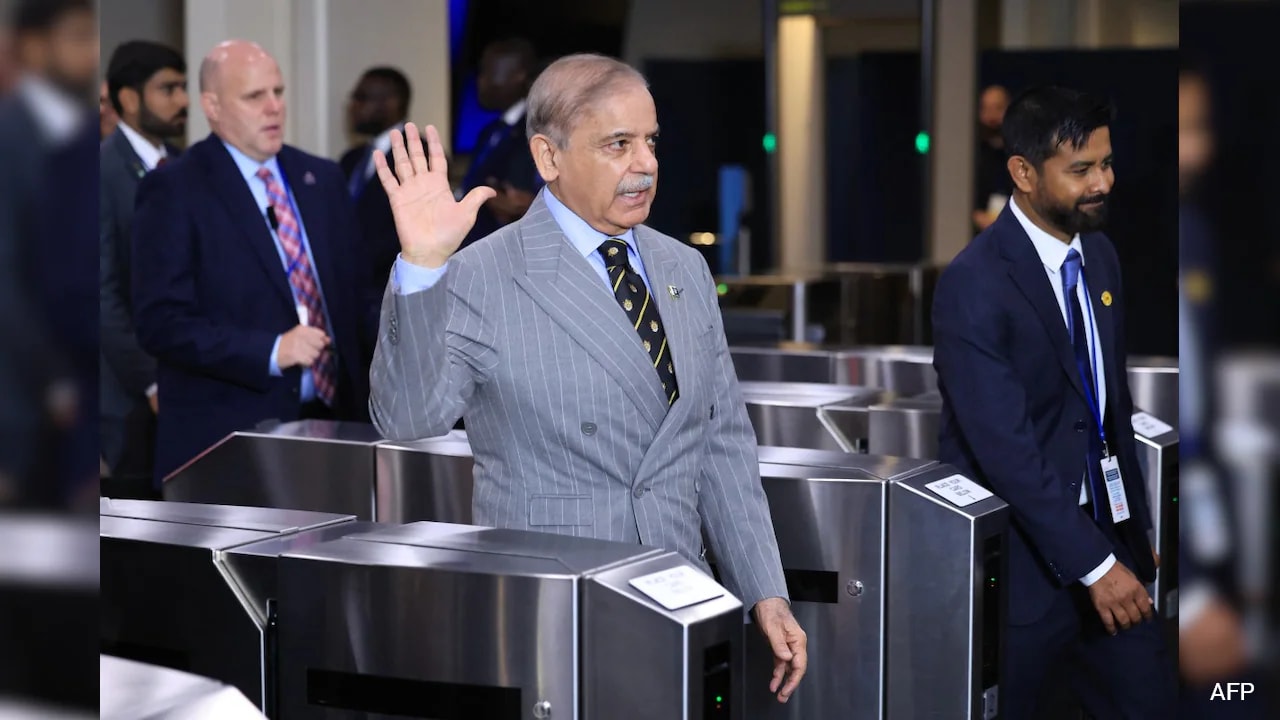
Pakistan Prime Minister Shehbaz Sharif on Thursday refused to answer questions regarding Lashkar-e-Taiba (LeT) chief Hafiz Saeed during his visit to the United Nations headquarters for the 81st United Nations General Assembly (UNGA).
As Sharif entered the UN headquarters, reporters asked, "Prime Minister, when will you stop harbouring terrorists?" However, the Pakistani Prime Minister did not respond.
Later, while leaving the UN headquarters, Sharif was again asked, "When will you prosecute Lashkar-e-Taiba (LeT) chief Hafiz Saeed?" The Pakistani Prime Minister again refused to answer.
#WATCH | New York, US: "Prime Minister, when will you stop harbouring terrorists?" ANI questions Pakistani Prime Minister Shehbaz Sharif as he enters the UN headquarters. Pakistani PM refuses to answer. pic.twitter.com/IMANrxWYb5
— ANI (@ANI) September 24, 2026
Hafiz Muhammad Saeed, a resident of Sargodha in Pakistan's Punjab province, is a designated terrorist under the Unlawful Activities (Prevention) Act, 1967, and the founder of the proscribed terrorist organisation Lashkar-e-Taiba (LeT). Saeed is wanted as an accused in the 26/11 Mumbai terror attack case. More recently, the National Investigation Agency (NIA) has also alleged that the Pahalgam terror attack on April 22, 2025 was orchestrated by Pakistan-based operatives of the banned terrorist organisation Lashkar-e-Taiba (LeT).
Its supplementary chargesheet names LeT founder and designated terrorist Hafiz Muhammad Saeed as Accused No. 8, alleging his involvement in the larger conspiracy behind the attack.
A day earlier, India delivered a scathing rebuke to Pakistan at the United Nations, telling Islamabad to direct its energy towards a debt-ridden economy surviving on bailouts rather than harbouring territorial ambitions or sponsoring cross-border terrorism.
Exercising its right of reply at the UN Human Rights Council, Indian diplomat Kshitij Tyagi dismantled Pakistan's diversionary tactics, asserting that its hostile posturing would do nothing to rescue its failing financial system.
Stating that Pakistan's priorities remain fundamentally misplaced, Kshitij Tyagi remarked, "Pakistan would better serve its people by focusing on development, rather than by coveting territory of others or exporting terror, because neither these nor its theatrics in the Council would help repay the loans its economy survives on."
Kshitij Tyagi further exposed Islamabad's severe domestic hypocrisy, highlighting its suppression of civilians and acute humanitarian crises in Pakistan-occupied Kashmir, where widespread protests met with lethal state violence and blockades on essential supplies such as food, fuel, and medicine.
Calling out the glaring omissions in Islamabad's governance, Kshitij Tyagi noted, "This Council was told last Friday of scores of civilians killed since June in the territory Pakistan occupies, of students arrested in Islamabad and Rawalpindi, and of food and medicine held back. When those accounts were given, Pakistan's answer was a point of order. If any delegation in this room meets every objective criterion for this Council's scrutiny, it is Pakistan."
(Except for the headline, this story has not been edited by NDTV staff and is published from a syndicated feed.)
KioskNews shows a cleaned-up reading view extracted from the publisher’s page — the original always lives on their site, not ours.