Labourer’s son turns Rs 87,000 drone prototype into Rs 3.5 crore Army project
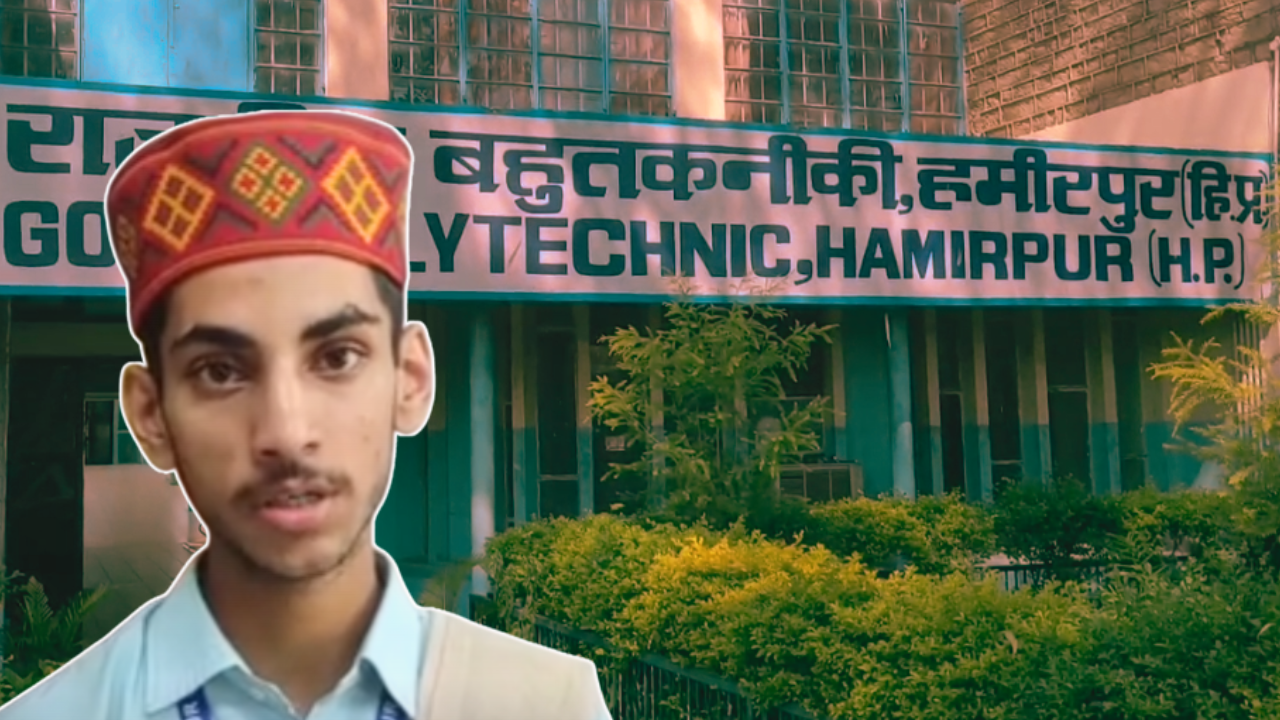
Sharma comes from Bahanvi village in Hamirpur. His father is a daily-wage labourer, while his mother is a homemaker.
A fifth-semester computer engineering student from Himachal Pradesh has secured a Rs 3.5 crore grant from the Union Ministry of Defence to develop a specialised drone for Indian Army border surveillance.
Sarvesh Sharma, a student of Government Polytechnic, Hamirpur (Baru), will work on the indigenous ‘Rudra Edge T-1 (Spectra)’ drone under the Ministry of Defence's Defence Innovation Organisation (DIO) and Innovations for Defence Excellence (iDEX) initiative.As reported by The Tribune, the grant was approved under the MoD's defence innovation programme. The drone is being developed for surveillance in high-altitude border areas.
Sharma has said that it is designed to evade enemy radar detection and resist electronic jamming attempts. However, these capabilities will only be confirmed after the drone is developed and tested.
Sarvesh comes from a low-income family
Sharma comes from Bahanvi village in Hamirpur. His father, Sanjeev Sharma, is a daily-wage labourer, while his mother is a homemaker, according to The Tribune. Sharma completed his schooling at Government Senior Secondary School, Bahanvi, before joining the Government Polytechnic in Hamirpur.
His achievement has drawn attention in the region because of the scale of the defence project and the limited financial resources available to his family.
From a Rs 87,000 prototype to a Rs 3.5 crore defence project
Sharma's journey to the defence project began with a national-level drone competition organised by IIT Jodhpur and the Konark Corps. His team competed against around 50 teams from premier institutions across India in the Open Cardboard Drone Competition and secured fourth position, winning a cash prize of Rs 10 lakh.
Speaking to ETV Bharat, Sharma said the competition pushed him to work on a practical surveillance drone for the challenges faced by forces deployed in high-altitude border areas.“My team competed against 50 teams from premier institutions across India and got fourth prize and a Rs 10 lakh cash award. We had proposed solutions to high-altitude surveillance challenges faced by border forces.” The competition also gave Sharma an opportunity to work on the idea beyond the event.
He spent Rs 87,000 on developing his initial project and preparing a proposal before approaching the Defence Ministry.
"I spent Rs 87,000 and prepared a startup proposal and submitted it to the defence ministry under its individual innovation framework. Luckily, it was approved," Sharma said. The project has now moved from an individual prototype to a formally supported defence innovation programme.
Governor felicitates Sarvesh Sharma
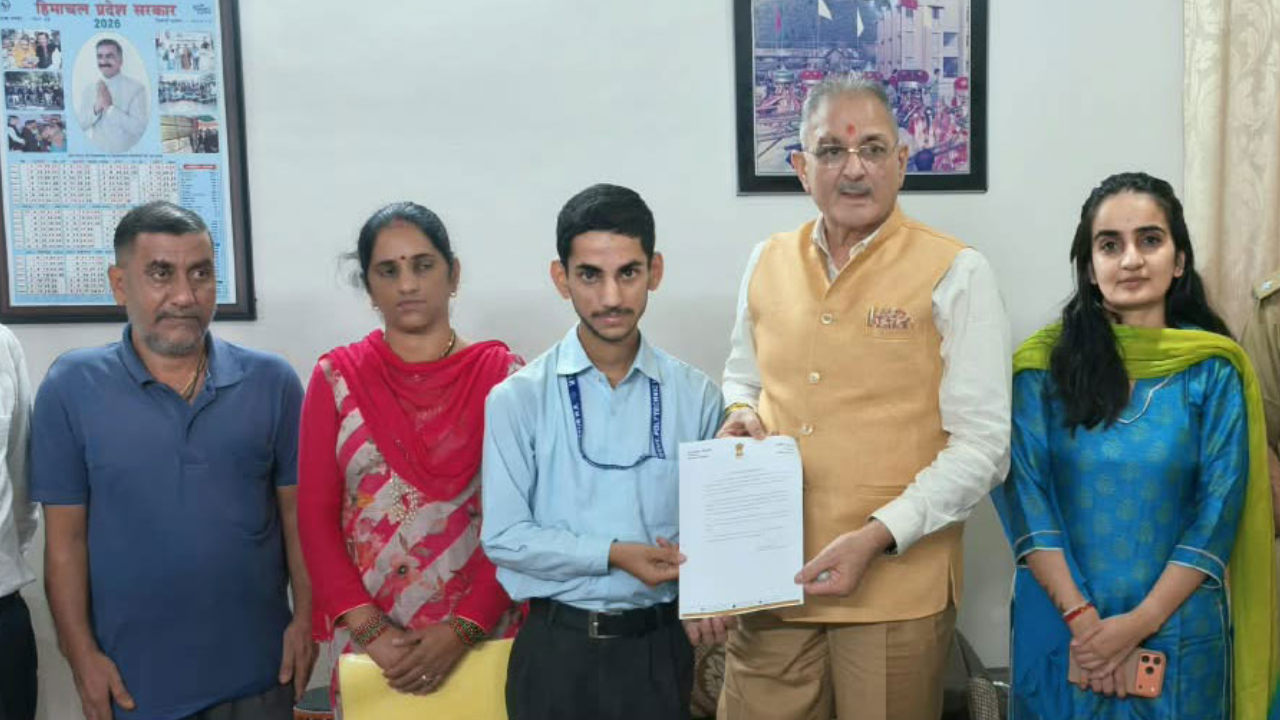
Governor Kavinder Gupta felicitated Sharma for securing the Rs 3.5 crore grant for the development of the indigenous drone.
Himachal Pradesh Governor Kavinder Gupta felicitated Sharma on Wednesday for securing the Rs 3.5 crore grant for the development of the indigenous drone.
While congratulating him, Gupta said: "Such achievements give impetus to the spirit of Aatmanirbhar Bharat and strengthen the country's efforts towards developing indigenous technological capabilities in the defence sector."
IIT Roorkee to incubate the project
The Ministry of Defence has paired Sharma's project with an incubation centre at IIT Roorkee, where he will use the institute's laboratories and receive professional mentorship. The project has a target completion period of 20 months. The drone is intended to address the technical requirements of surveillance in mountainous and high-altitude areas. Sharma's team has claimed that the UAV will be developed to reduce the chances of detection by enemy radar and to withstand electronic jamming.
The project will now move into its development and incubation phase, with the 20-month timeline set for completing the drone project.
KioskNews shows a cleaned-up reading view extracted from the publisher’s page — the original always lives on their site, not ours.