Israel election 2026 as it happened: Netanyahu, Eisenkot set for lengthy battle to win power in nation’s first election since October 7 attacks
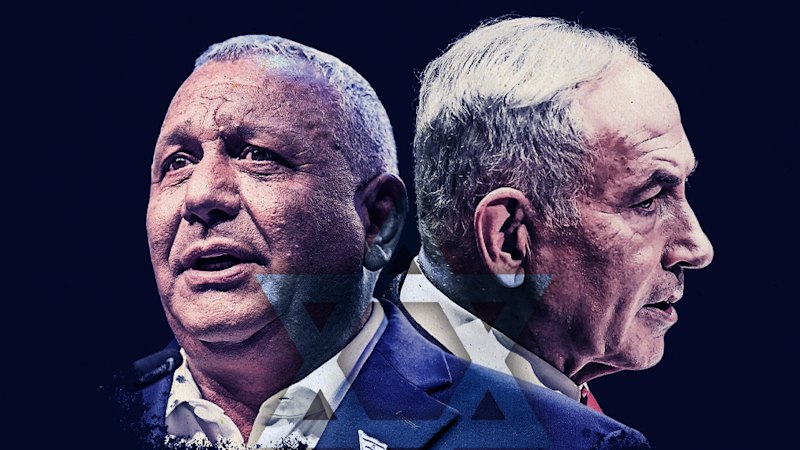
Good morning and thanks for joining our live coverage of Israel’s election, which is widely seen as a referendum on Prime Minister Benjamin Netanyahu’s almost two decades in power. Here’s what to know:
- Polls closed at 10pm in Israel (7am AEDT) in the first national elections since the Hamas attack on October 7, 2023, a day that shook the country and plunged the Middle East into turmoil.
- Turnout was high: The final update from Israel’s Central Elections Committee put voter turnout at 77.7 per cent at the close of polls. That’s the highest at that hour since 1999, and more than 7 percentage points higher than at the same time in the 2022 election.
- Exit polls released just as booths closed showed the opposition bloc of parties – led by Gadi Eisenkot – slightly ahead of Netanyahu’s right-wing coalition and the Arab parties surging in popularity.
- One exit poll from Israel’s Channel 12, one of the main networks shows the opposition bloc scoring 52 seats, Netanyahu’s bloc 50 and the Arab parties 18. Sixty-one seats are required to form a majority in the Knesset, the Israeli parliament, although it is possible to serve in a minority government.
- While the polls, widely regarded as accurate – but not foolproof – suggest Netanyahu and his right-wing allies have lost the vote. This is a significant decline given his bloc won 64 seats at the most recent elections in 2022. That number also rose to 68 over the course of the term.
- Eisenkot called the result a “no confidence” vote for the PM, the longest-serving leader in Israeli history still has a hope of remaining as prime minister.
- With no clear winner, it will likely set off weeks of jockeying before a leader is declared and leave Israel in political limbo.
- Netanyahu’s nearly unbroken 17-year rule has had left Israelis divided on several issues – wars in Gaza, Lebanon and Iran and settler violence in the occupied West Bank, which have stoked global outrage, strained ties with Israel’s closest allies and fuelled a rise in antisemitism.
Latest Posts
Israelis have rushed to the polls in huge numbers to reject Benjamin Netanyahu and the far-right extremists who have kept him in power for the past four years.
Yet, despite overseeing the greatest security failure in Israeli history, the nation’s longest serving prime minister could remain in the job for months, and even years.
F. Scott Fitzgerald, one of America’s greatest authors, argued: “The test of first-rate intelligence is the ability to hold two opposed ideas in the mind at the same time, and still retain the ability to function.”
Never has that been more true than assessing the results of an election many Israelis believed to be the most important in their history.
Read Matthew Knott’s full election analysis from Israel here.
Amichai Chikli, minister for diaspora affairs for Israel’s government, said it was too early to celebrate the initial poll results, but that the party was optimistic and had to be patient.
“One thing we know for sure, those who said Netanyahu is over, the Likud is over, celebrated too early,” he said.
Voters elect members of the Israeli parliament, known as the Knesset. It is what is known as a unicameral parliament, meaning it has only one chamber. The Knesset has 120 members, who are elected nationally based on a system of proportional representation. Crucially, voters vote for party lists rather than individual candidates. There are no local electorates. The parties that receive the most votes are rewarded with the most Knesset members, who are drawn from ordered lists of candidates submitted before election day.
For example, Netanyahu’s conservative Likud party won 23 per cent of the vote at the 2022 elections, more than any other party. On a proportional basis, this meant Likud was awarded 32 seats in the Knesset. The centrist Yesh Atid party won 18 per cent of the vote, receiving 24 seats.
The key number to aim for is the 61 seats required to form a government, though leaders prefer a more substantial buffer to create a more durable coalition. It is possible to govern in minority, but such a government would be even more fragile.
Crucially, parties must meet the threshold of 3.25 per cent to enter the Knesset. If they don’t meet this minimum, the party’s votes go to waste. This can have big implications for the election results. For example, two left-wing parties narrowly failed to cross the threshold in 2022, wasting nearly 290,000 anti-Netanyahu votes and helping him return to power. This means it can be more effective for several smaller parties to run together on a joint list to maximise their vote share.
Israel’s President Isaac Herzog will be tasked with asking the party leader with the best prospect of forming a government – usually one with the most seats – to cobble together a coalition.
If Benjamin Netanyahu’s right-wing Likud emerges as the largest party, he could claim that right.
Meanwhile, there will be heavy pressure on opposition-bloc leader Gadi Eisenkot to reach a deal with the Arab parties, while Netanyahu and his allies are likely to cast any such alliance as illegitimate and even treasonous.
If no one can cobble together a majority coalition, new elections could be held early next year. Israel held five elections between April 2019 and November 2022 because of a similar stalemate.
The Israeli election commission has published the first batch of official results – but don’t get too excited.
It says it has tallied just 2670 of the more than 7.3 million ballots cast.
Ballots are to be counted throughout the night in Israel, with clearer results expected in the coming hours.
AP
Otzma Yehudit (Jewish Power) leader and far-right National Security Minister Itamar Ben-Gvir tried to revive spirits by reminding supporters of all he had achieved in the past four years to further his agenda, including passing a law approving the death penalty for Palestinians convicted of murdering Israelis and worsening conditions for Palestinian prisoners.
A few hundred activists gathered in the nightclub in central Israel that the party had rented for the evening, waving flags and wearing shirts emblazoned with his face.
With his own theme song touting his love of guns, Ben-Gvir took the stage to wild applause despite most exit polls putting his party at six or seven seats.
Ben-Gvir denounced other members of Netanyahu’s coalition for immediately suggesting a unity government with his main rival, Gadi Eisenkot, which the audience booed loudly.
“This is precisely the scenario we warned against – it is a terrible mistake,” Ben-Gvir said.
AP
The United Nations nuclear watchdog said it had not detected any efforts by Iran to rebuild nuclear facilities damaged in US and Israeli strikes over the past two years, even as Tehran continues to block inspectors’ access to most of its atomic sites.
“Since June 2025, we have not identified any activity to repair or reconstruct any of the facilities damaged in the military attacks of 2025 and 2026,” International Atomic Energy Agency director general Rafael Mariano Grossi told the UN Security Council on Tuesday (US time).
Grossi’s remarks undercut US President Donald Trump’s narrative that launching a new war against Iran in late February was necessary to halt its nuclear weapons ambitions. The president has repeatedly said he’s weighing renewed strikes on Iran after the US midterm elections.
The assessment echoes a conclusion that former US Director of National Intelligence Tulsi Gabbard included in written testimony before a congressional committee earlier this year. She wrote that Iran’s uranium enrichment program had been “obliterated” in US and Israeli strikes in June 2025, and that there “has been no efforts since then to try to rebuild their enrichment capability”.
The final update from Israel’s Central Elections Committee put voter turnout at 77.7 per cent of eligible voters by the time polls closed at 10pm on Tuesday, Israel time (7am, Thursday AEDT).
That’s the highest turnout at that hour since 1999, and just over 7 percentage points higher than at the same time in the previous election in 2022.
Yohanan Plesner, the president of the Jerusalem-based think tank Israel Democracy Institute, noted that though early exit polls are just estimates and expected to change, it was clear that Benjamin Netanyahu had a significant decrease from a coalition of 68 seats in the outgoing Knesset to about a potential 50 according to the polls.
“Netanyahu doesn’t have a realistic path for forming a coalition with the current parties,” Plesner said. He noted that Netanyahu’s Likud party lost nearly a quarter of its votes. “In an era of identity politics where people rarely change their minds and shift their allegiances it’s a pretty dramatic change,” he said.
Oil dipped as traders weighed moves to de-escalate tensions in the Persian Gulf and awaited the outcome of consequential elections, including in Israel.
Brent crude fell nearly 2 per cent to settle below $US114 a barrel, while West Texas Intermediate settled just under $US100. US-traded gasoline and diesel futures also posted declines on the day near 3 per cent.
In the Israeli contest, Prime Minister Benjamin Netanyahu, who launched the war on Iran with US President Donald Trump in February, is pledging to topple Tehran’s regime.
His challenger, Opposition Leader Gadi Eisenkot, says Iran’s nuclear program must be stopped, but that regime change was “not an achievable goal”.
KioskNews shows a cleaned-up reading view extracted from the publisher’s page — the original always lives on their site, not ours.