From ‘ugly duckling’ to timeless style icon: How Rekha mastered the art of reinvention
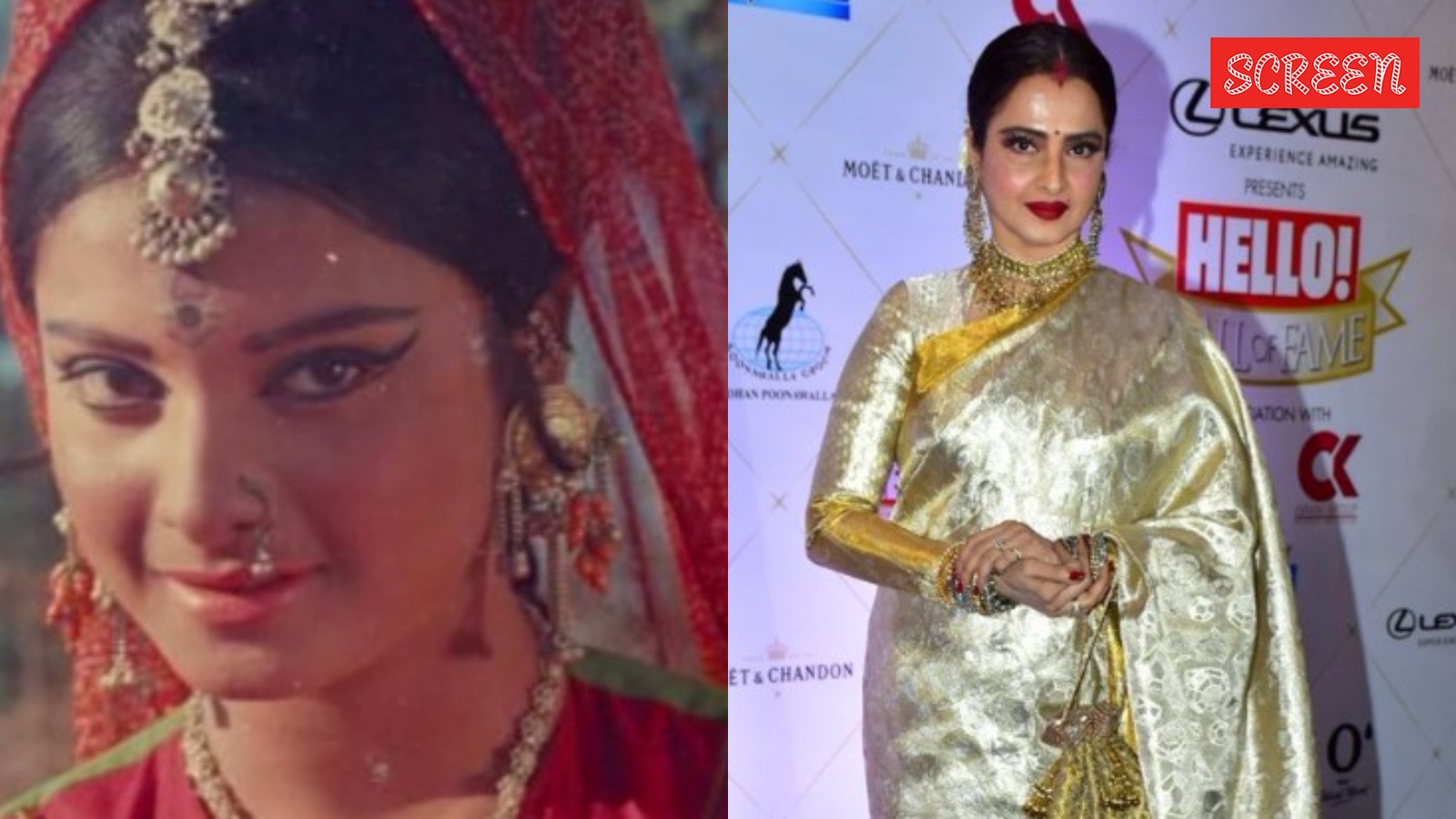
Rekha was a teenager from Madras when Sawan Bhadon came out in 1970, and Hindi cinema wasted no time telling her what was wrong with her. Too heavy. Too dark. Hindi not good enough. ‘Ugly duckling’ tag followed her from film to film.
On October 10, she turns 72. Today she can walk into a wedding in a Kanjeevaram and nobody in the room looks anywhere else.
That’s the thing about Rekha. She didn’t just reinvent herself once. Reinvention became the thing she’s known for. Across five decades she has kept changing how audiences see her, and she has never let one version settle in as the final one.
Hindi cinema has never hesitated to tell a young actress what’s wrong with her face. Sawan Bhadon put Rekha in front of an audience at an age when most girls are still figuring out what to study, and the film magazines went through her feature by feature. Every flaw was listed in public, in a language she was still learning. She could argue with the verdict, or she could make it irrelevant. She chose the second.
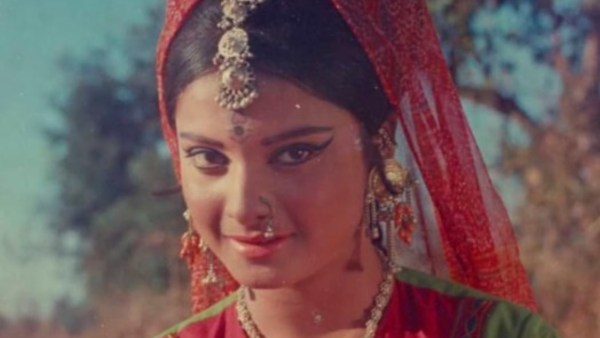 Rekha in a still from Sawan Bhadon.
What followed was one of the biggest transformations the industry has seen. She worked on her looks, her Hindi and her diction, and she learned how the camera read her. She figured out what a costume does to a character and how makeup shifts the mood of a face. Most of all, she learned to use her image rather than accept the one handed to her.
By Ghar and Muqaddar Ka Sikandar in 1978, the new Rekha had arrived, and the same industry that criticised her so readily was starting to see her appeal.
ALSO READ: Anushka Sharma, parents buy Rs 25.8 cr flats in same building; own Rs 44.1 cr property in Mumbai
Story continues below this ad
Look at Khoobsurat (1980). Her Manju is playful, restless and delightfully unconventional, dressed simply, like a heroine who actually lives in a house. It’s among the least dressed-up she has ever been on screen, and one of the most disarming.
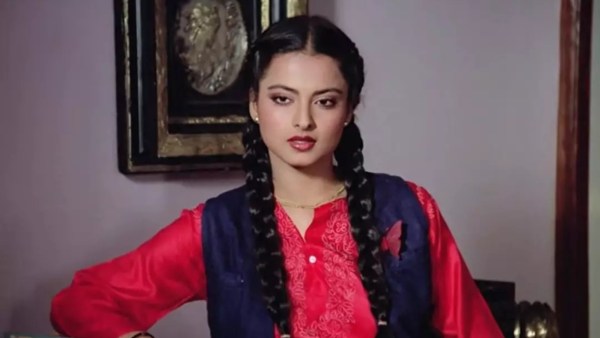 Rekha in a still from Khoobsurat.
Then came Umrao Jaan (1981), where you can’t separate the clothes from the performance. Costumes, jewellery, hair and makeup build Umrao’s world; they aren’t there to only to make her look beautiful. A glance, a small movement, the way a dupatta falls: Rekha uses these to say what the dialogue doesn’t have to. The performance is composed throughout and the National Award followed.
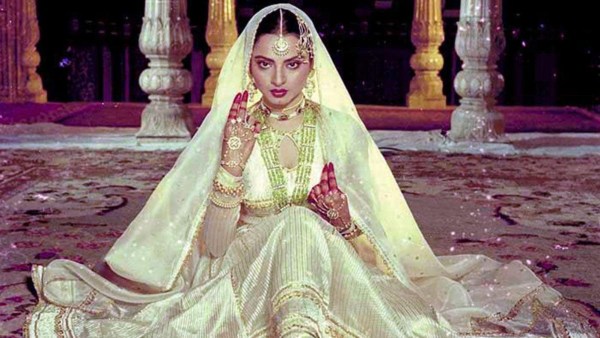 Rekha in a still from Umrao Jaan.
Ijaazat in 1987 offered almost the opposite picture. Her appearance is understated and intimate, tied closely to Sudha’s emotional life, and the clothes are part of the storytelling. You see Sudha, not Rekha. It’s a quieter kind of sophistication, and the performance is built entirely out of restraint.
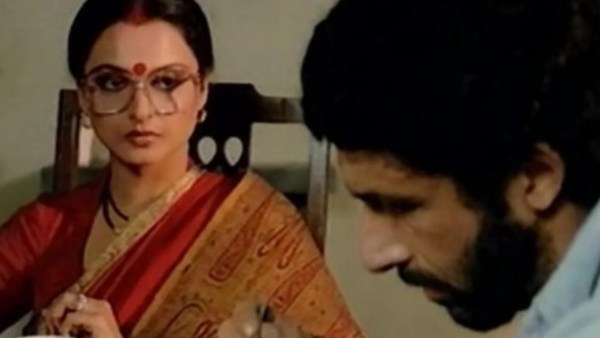 Rekha in a still from Ijaazat.
A year later came Khoon Bhari Maang, easily the loudest film of her career and the one that best captures her fascination with remaking herself. Her character is left for dead by her husband, survives, and comes back with a new face, a new wardrobe and a new plan. You could almost read it as her career in miniature: written off, remade, back.
Story continues below this ad
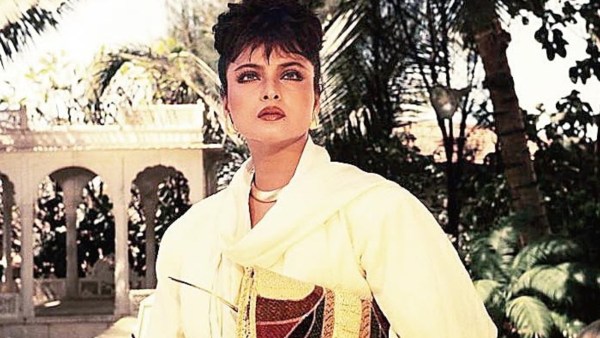 Rekha in a still from Khoon Bhari Maang.
In Khiladiyon Ka Khiladi (1996) she plays the villain Madam Maya and treats the costume trunk like a stage. Glamour stops seducing and starts threatening.
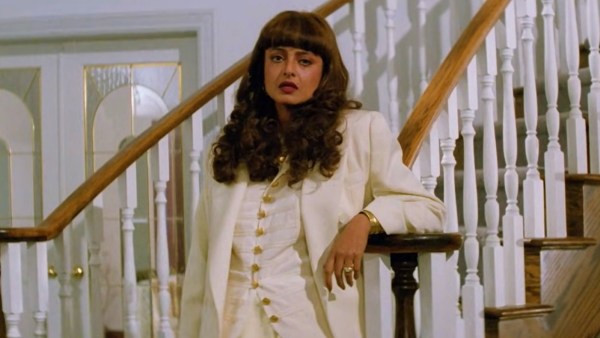 Rekha in a still from Khiladiyon Ka Khiladi.
Then, away from the sets, another Rekha took shape. The Kanjeevaram, the gold, flowers in her hair, a bold bindi, kohl-rimmed eyes, red lips, sindoor. The sari stopped being something she wore and became shorthand for her.
At award functions and public appearances, she returns to the same silk, flowers and dramatic makeup, and still owns the room. The look is tied to her.
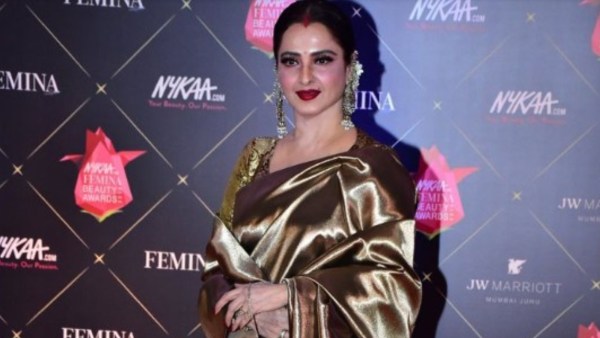 Rekha in a Kanjeevaram saree.
That was reinvention too, just without a new role. It’s a signature, and it’s a Tamil silk, worn by a girl who was once told she didn’t belong in Hindi cinema.
Story continues below this ad
None of this meant throwing away what came before. Each phase added a layer to an identity that was still taking shape. The clothes changed, the characters changed, Bollywood changed, and even the idea of stardom changed. Rekha moved with all of it without disappearing into it.
The reinvention was never a rewrite. It was an edit. And the thing about a good edit is that you stop noticing the cuts and see only the finished frame.
KioskNews shows a cleaned-up reading view extracted from the publisher’s page — the original always lives on their site, not ours.