Canadians signing up to be deliberately infected with flu virus to aid vaccine research
Canadian scientists are purposely spraying an influenza virus into the noses of human volunteers, joining other nations in controlled human infection studies that, while speeding vaccine development in preparation for future pandemics, have also raised ethical uneasiness.
Sign In or Create an Account
The experiment, one of the first of its kind in Canada, involves exposing consenting adults to a dose of a seasonal influenza virus, monitoring their symptoms and immune responses, administering antiviral drugs if necessary and keeping volunteers in special isolation “pods” for at least a week until they test negative.
The trials are designed to give researchers a better picture of how a pathogen behaves inside the human body to help fine-tune existing drugs or vaccines or develop new ones.

Get a dash of perspective along with the trending news of the day in a very readable format.
By signing up you consent to receive the above newsletter from Postmedia Network Inc.
A welcome email is on its way. If you don't see it, please check your junk folder.
The next issue of NP Posted will soon be in your inbox.
We encountered an issue signing you up. Please try again
The experiments have a long history in other parts of the world, used for decades to test potential treatments or vaccines for diseases like influence and malaria.
In 2020, when COVID was spreading rapidly, British scientists led COVID-19 human challenge trials, injecting young, healthy adults with candidate vaccines and then infecting them with SARS-CoV-2 when no proven treatments against COVID existed, raising ethical concerns over “the twin risks of exploitation and coercion.” Volunteers were paid the equivalent of C$6,500 for agreeing to be infected with COVID and then quarantined.
In Canada, Liberal MP Marcus Powlowski, a former emergency room doctor, presented a petition to Parliament, signed by several Canadian infectious diseases experts, calling on the government to announce a plan for similar COVID-19 challenge trials. The government responded that doing so would be particularly risky, given the limited treatments and unknown long-term effects of a potentially “severe and deadly” virus.
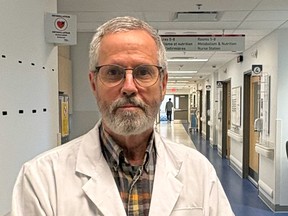
“Because SARS-CoV-2 was really new — we were discovering its biology and side effects in real time — I think there was a very reasonable hesitation on the part of many virologists, myself included, to the idea we should start using it as a challenge strain,” said Dr. Brian Ward, co-principal investigator of the influenza challenge study.
In normal vaccine studies, volunteers are vaccinated or injected with a placebo, and then sent back out into the real world to see how many get naturally exposed to the circulating virus, an approach that’s lengthy and pricey, said Ward, director of the MUHC (McGill University Health Centre) Vaccine Study Centre.
By contrast, controlled human infection studies take fewer volunteers and far less time because they don’t rely on natural infections.
But Canada doesn’t normally run them. Ward and his co-investigator, Dalhousie University’s Scott Halperin, spent two decades on the background work getting them off the ground. Halperin recently led a controlled human infection study using Bordetella pertussis, the bacterium that causes whooping cough.
Canada first needed special isolation units, the challenge viruses and the expertise. “And then you have to convince everyone around you this is OK to do,” Ward said. “Each of those steps took a lot of time.”
The new project, in collaboration with the Canadian Center for Vaccinology at Dalhousie, began in June with the first eight volunteers in Halifax; two more participants have now started the study in Montreal. The research will eventually involve 32 people, 16 at each site, all healthy adults ages 18 to 45 who have no known risk factors for severe influenza, a disease that contributes to an estimated 3,500 deaths in Canada each year.
Researchers are using an attenuated, or weakened H3N2 virus that’s diluted in glucose and saline and sprayed into the nose as an aerosol. Volunteers are being intensively studied “from the moment that we infect them,” Ward said. H3N2 is a subtype of influenza A. Influenza A viruses are on the short list of viruses that can cause global pandemics, Ward said.
Half the volunteers are getting a low dose; the other half, a higher one. One out of every group of four is getting a saline placebo. At the higher dose, it’s expected 60 to 70 per cent will end up with mild to moderate symptoms.
All remain isolated for a minimum seven days in specially designed negative-pressure rooms that keep potentially contaminated air or other particles inside the room from circulating outside the room.
People are monitored 24/7 by one or two nurses and undergo regular blood tests and nasal swabs. Ward is on call 24-hours a day. “If these people show any signs of getting into trouble, we will be on top of it immediately and start antivirals,” he said.
The experiments will help better understand how the human body responds, even within the first few hours, to influenza, a “slippery family of viruses” that, unlike measles, “mutate like crazy,” Ward said.
“One of the big problems with understanding how our human body responds to any pathogen is that it’s awfully difficult to know when somebody got infected,” Ward said.
Some volunteers exposed to flu won’t show any symptoms at all. “What did their bodies do right that shut down that possible infection before it started,” Ward said. “We may find early biomarkers of a successful response.”
The team isn’t testing a vaccine this round but hope to create a model for future vaccine challenge trials, Ward said. “How do you recruit people to do this kind of study? How do you convince your research ethics board this is an OK thing to do?”
In the event of a deadly influenza pandemic, for example, “two, three, 10, 20 different vaccines” could be tested in a challenge trial to determine which offer the most by way of individual protection and reducing community transmission, Ward said.
In the influenza infection study, “You have to have a very frank conversations with the volunteers,” Ward said. “Because every now and then — extremely rarely, but every now and then — a healthy individual gets flu and ends up in the intensive care unit, because their body happens to react over-strenuously to that particular viral challenge.”
Ten per cent of the adult world gets infected every year with influenza. “It’s not like we’re doing something that is unlikely to ever happen to you otherwise,” Ward said, but added that “we do everything we can do to mitigate” risks.
While Ward said he’s excited the trials are happening, “I wouldn’t be honest if I didn’t say I was also really nervous.
“It is a little bit on the edge to be working with these volunteers and trying to do good science and make sure we aren’t doing any harm.”
Volunteers are being remunerated commensurate for giving up seven to 10 days of their lives, Ward said, though he declined to give exact amounts.
National Post
Our website is the place for the latest breaking news, exclusive scoops, longreads and provocative commentary. Please bookmark nationalpost.com and sign up for our newsletters here.
Join the Conversation
This website uses cookies to personalize your content (including ads), and allows us to analyze our traffic. Read more about cookies here. By continuing to use our site, you agree to our Terms of Use and Privacy Policy.
KioskNews shows a cleaned-up reading view extracted from the publisher’s page — the original always lives on their site, not ours.