Canada, Singapore reaffirm China trade ties amid global push for self-sufficiency
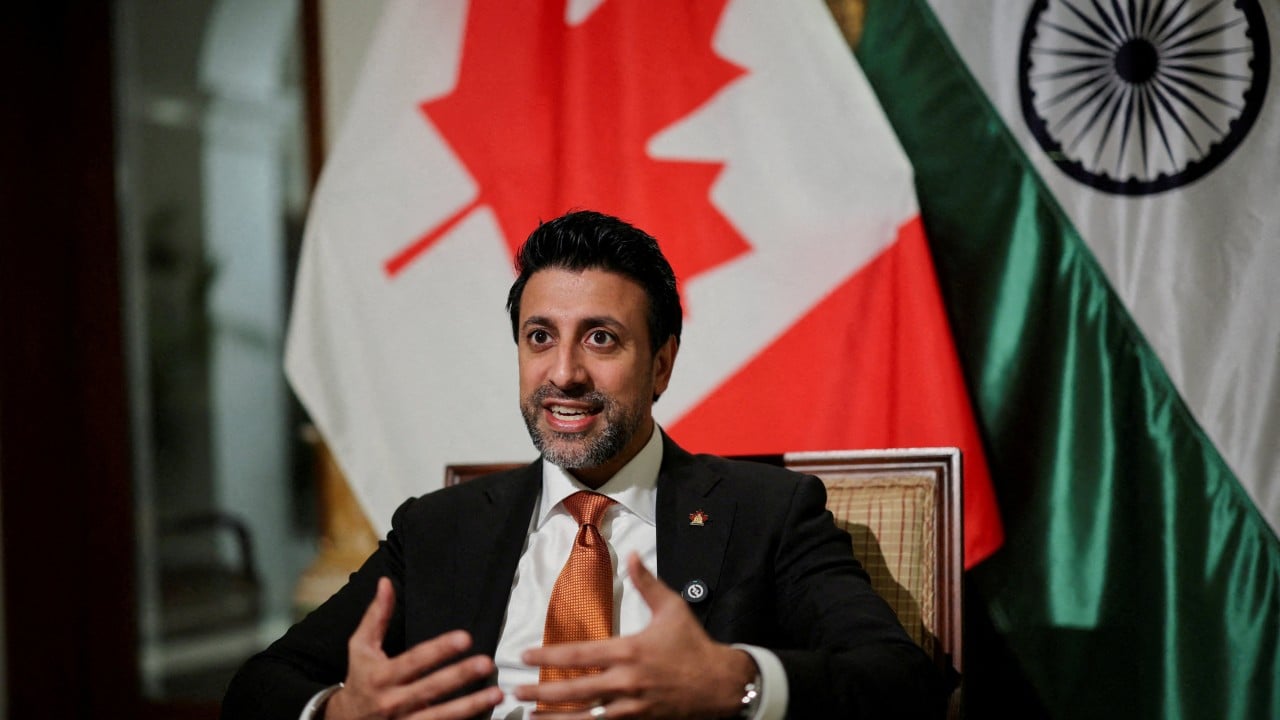
Canada and Singapore are among the countries that remain committed to strengthening trade ties with China, despite growing global fragmentation and a push by governments towards greater self-sufficiency, officials from both countries said on Wednesday at an economic forum in New Delhi.
Canada’s minister of international trade Maninder Sidhu said China was the country’s second-largest trading partner and highlighted opportunities for cooperation in areas where the two economies had complementary strengths, including China’s technology and Canada’s agricultural sectors.
“If you look at what China has in terms of energy storage technologies, that’s where Canada is very interested,” Sidhu said in a panel discussion titled “The Self-Sufficiency Scramble” at the Bloomberg New Economy Forum, held in New Delhi from Tuesday to Thursday.
“There are key areas where we have partnerships with China we continue to build on,” he said, pointing to Canada’s agricultural sector that supplied “a great deal of canola or beef”, among other products, to the Chinese market.
Singapore’s Deputy Prime Minister Gan Kim Yong, also minister for trade and industry, echoed that view, saying countries needed to maintain economic ties at a time when geopolitical tensions were increasingly dividing the global economy.
“It’s important for countries in the world to continue to engage with one another, even as the world has become increasingly fragmented,” Gan said, reaffirming the city state’s commitment to collaborating with China.
“Singapore and China will continue to have a very good working relationship. We continue to have a very strong economic cooperation in all aspects of the economy.” Gan said, adding that Singapore also collaborated strategically with other countries, such as India, in areas including semiconductors.
Their remarks underscored the difficulties of disentangling global supply chains that are deeply interconnected, even as trade disruption, geopolitical frictions and concerns over economic security push governments to reduce their dependence on foreign suppliers and seek self-sufficiency.
I don’t think technology will remain the reserve of only one or a few countries
Sunil Bharti Mittal, founder and chairman at Bharti Enterprises, an Indian multinational conglomerate headquartered in New Delhi, cautioned against overreliance on a single source – such as China – for critical supply chains.
“For a long period of time, I think the world let China become very strong in almost everything, from pharmaceuticals to the most critical components of the automobiles to electronics,” Mittal said at a separate forum panel held on Wednesday.
“Everybody is very happy that China produces high quality at low cost,” Mittal said, adding that interdependencies were becoming a “big question mark”.
Piyush Goyal, India’s commerce and industry minister, argued that technological capabilities would not remain concentrated in a handful of economies indefinitely. He said that developing alternative supply chains would require cooperation, rather than each country attempting to replicate an entire industrial ecosystem.
“I don’t think technology will remain the reserve of only one or a few countries.”
SCMP Plus is a new premium news platform that gives you an
all-inclusive edge to stay ahead on China news.
To access our exclusive content you’ll need to subscribe.
Already a subscriber?
LOG IN
Some countries could contribute talent, others specialised in equipment or components, while still others could provide the products and services needed to support commercial development, he added.
Goyal said that India was open to all countries around the world as long as the geopolitical situation did not deteriorate. Though there were past concerns related to China, he said, the two countries were currently working on developing their relations.
Singapore’s Gan added that even in an increasingly fragmented world, countries that found ways to cooperate would be better positioned to navigate potential disruptions ahead.
“If you are able to do that, you will have a better future for all of us,” he said.
KioskNews shows a cleaned-up reading view extracted from the publisher’s page — the original always lives on their site, not ours.