Longevity-first healthcare takes spotlight at Abu Dhabi Future Health Summit

Issues affecting ageing populations worldwide will form the core of discussions for policymakers and health industry leaders gathered at the Abu Dhabi Future Health Summit, with a particular emphasis on how practising prediction and prevention can help ensure life is lived to its fullest.
The United Arab Emirates (UAE) has positioned itself as a global leader in transformative healthcare policy, and Dr Asma Al Mannaei, executive director of the health life science sector at the Department of Health – Abu Dhabi, regards the summit as an opportunity to share how those policies are playing out in real time.
“Precision medicine is at the heart of it,” Al Mannaei explains, adding that the key to ensuring better health is “understanding each person’s risk through their genome, their biomarkers and their daily life, then acting early.”
The Abu Dhabi Future Health Summit is the flagship event of the Future Health platform, the UAE capital’s year-round initiative to promote global collaboration and transformative health innovation. The stated goal of the summit is to shape a future where innovation and collaboration come together “to enable longer, healthier lives for all”.
Much of the summit will be focused on the world’s ageing populations – a common denominator between contemporary societies, with the World Health Organization estimating that by 2050, there will be more than 2 billion people aged over 60 across the globe.
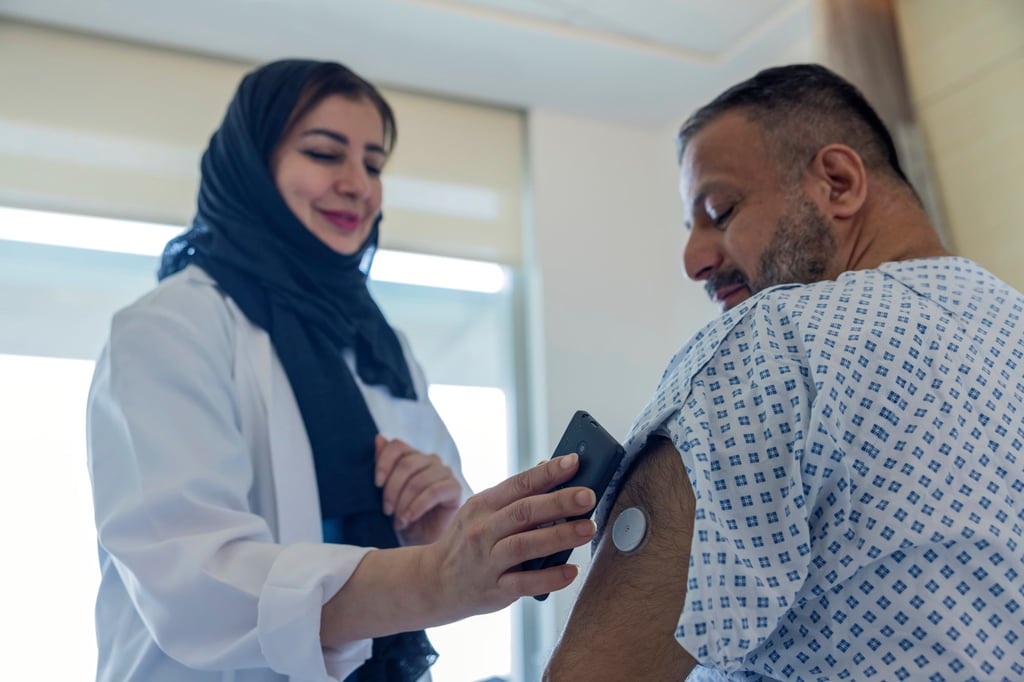
This statistic has not only drawn more attention to the issue of how to care for people as they age, but Al Mannaei also points out that it has created a need to design entire health systems focused on ensuring the advancing years are spent in as much good health as possible.
“Every health system faces the same question: will those added years be healthy years? Our answer is to invest now in prediction and prevention,” she says. “Our model has four steps: we sense, we predict, we prevent and we personalise. We sense through genomics, screening and data. We predict risk years before the symptoms appear. And we prevent through early targeted intervention.”
Among Abu Dhabi’s success stories is the Emirati Genome Programme (EGP), launched across the UAE in 2019 with a target of mapping the genetic make-up of all Emiratis. To date, more than 800,000 records have been collected.
Al Mannaei says the idea behind the programme is that knowing an individual’s genetic make-up can help establish a “foundation for precision prevention”.
Already, the EGP data has proved revelatory. For example, it revealed that within the Emirati population, there are around 100 genetic factors associated with inherited vision loss.
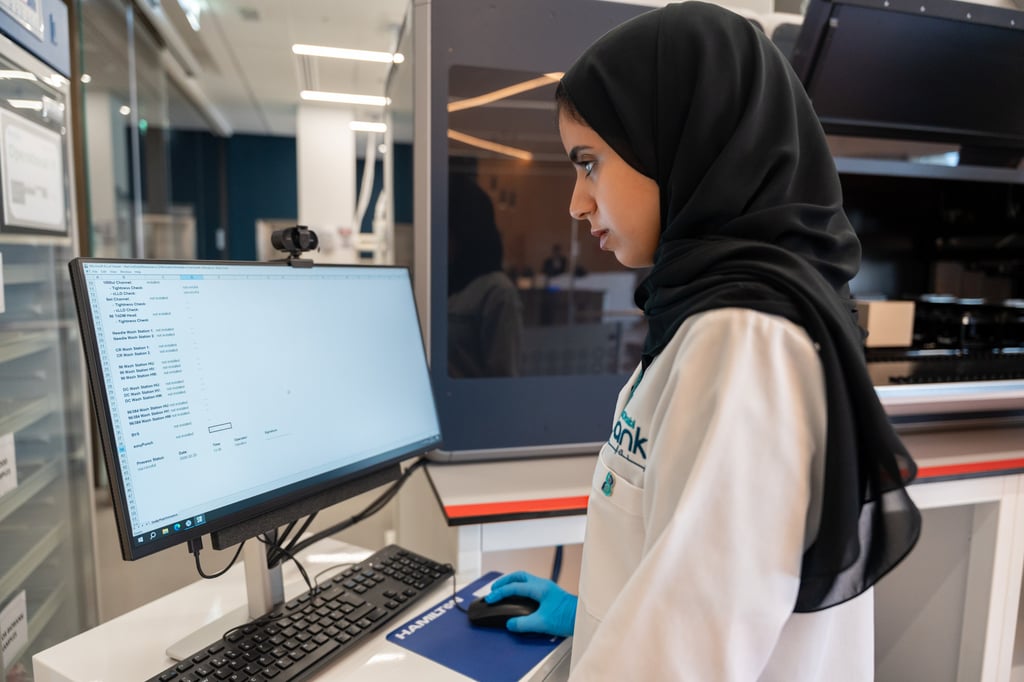
Other initiatives include Malaffi, the region’s first health information exchange that is a strategic initiative of the Department of Health – Abu Dhabi. Launched in 2019 and operated by Abu Dhabi Health Data Services, Malaffi connects more than 3,000 healthcare facilities and brings together over 4 billion records for more than 14 million patients. “It gives clinicians secure access to patients’ comprehensive health records, supporting continuity of care, patient safety and better-informed clinical decisions,” Al Mannaei says.
“In Abu Dhabi, policy, regulation, care delivery, research, technology and investment move together around one vision,” she notes. “When we built the Emirati Genome Programme, we built the governance, the data, the infrastructure and the partnership at the same time. That let discovery move into care and into the economy at speed.”
Al Mannaei adds: “I hope Abu Dhabi will be known as the place that proved a longevity-first health system works. It will be the blueprint of how health systems can sense, predict, prevent and personalise, helping people everywhere live longer, healthier and more fulfilling lives.”
Watch the video for more insights from Dr Asma Al Mannaei about Abu Dhabi’s role in advancing healthcare focused on longevity.
KioskNews shows a cleaned-up reading view extracted from the publisher’s page — the original always lives on their site, not ours.