Chennai Air Quality Turns 'Very Poor' As AQI Crosses 300 On Diwali
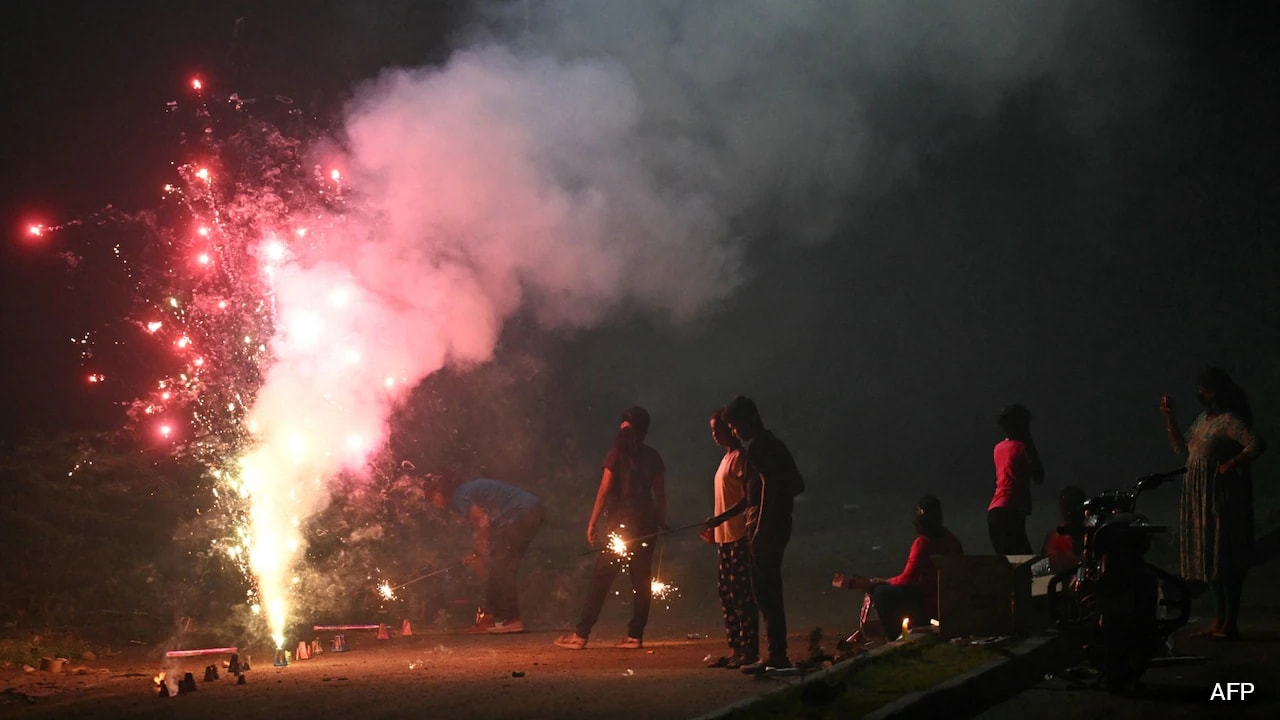
Air quality turned particularly alarming in capital Chennai on Diwali day on Sunday, pushing major commercial and residential hubs into the "Very Poor" category (AQI 301 - 400).
Valasaravakkam, a dense residential pocket in southwest Chennai, recorded the highest AQI in the city at 343, followed by Nungambakkam in central Chennai at 332, Sowcarpet - a sprawling, crowded commercial trading district in north-central Chennai - at 311, and T. Nagar, a major retail shopping hub in central-south Chennai, at 306, standing nearly seven times higher than the upper threshold of clean air.
Across the wider state of Tamil Nadu, the picture was mixed rather than uniformly alarming; while the state's average AQI ticked up to 168.97 in 2026 from 161.69 in 2025 and 143.46 in 2024 - with 25 out of 39 monitoring stations recording an increase - regional hubs presented a stark contrast between worsening pockets like Kancheepuram (250 AQI), Trichy (240 AQI), Tiruppur (223 AQI), and Thanjavur (210 AQI) and encouraging recoveries in places like Nagapattinam, where the AQI dropped dramatically to a satisfactory 71, alongside significant improvements in Cuddalore, Thoothukudi, and Krishnagiri districts.
This mounting environmental toll fuelled a fierce socio-political debate between economic livelihood and public health. In the run-up to Diwali, former BJP leader and We The Leaders founder K Annamalai had urged citizens to buy and burst crackers, emphasising that the industry directly employs 3 lakh people and indirectly supports another 5 lakh workers in Sivakasi.
Highlighting this economic angle, he stated, "When we buy firecrackers, we are helping someone put food on the table," and challenged the public with, "'I bought firecrackers for Diwali. Did you buy?'.
In stark contrast, the environmental action group Poovulagin Nanbargal condemned the blatant disregard for safety rules, warning that reports from the Pollution Control Board show an average increase in state-wide air pollution, that safety conditions were systematically flouted without needing reports to prove it, and that everyone must realize that bursting firecrackers is a "Mass Suicide Mission".
It's not just air pollution - noise levels too saw a disturbing spike across the state, with the arithmetic average Deepavali noise level rising from 75.70 dB(A) in 2025 to 76.73 dB(A) in 2026, led by capital Chennai's Valasaravakkam hitting a staggering high of 88.6 dB(A), despite extensive state awareness campaigns and strict regulatory time windows.
Despite the state government designating specific hours for bursting crackers - permitting celebrations only from 6 AM to 7 AM and 7 PM to 8 PM and launching extensive awareness campaigns, there was large-scale disregard for regulations on the ground amid poor enforcement, leading to firecrackers being fired unchecked throughout the day.
KioskNews shows a cleaned-up reading view extracted from the publisher’s page — the original always lives on their site, not ours.