If Trump wants to lower drug prices, his obvious free-riding targets are outside the US
President Donald Trump just secured nine new pricing agreements with drug manufacturers that could help reduce what Americans pay for many prescription medicines.
The deals demonstrate Trump's commitment to lowering drug prices for patients. The president's dedication – and his desire to negotiate with companies individually, rather than imposing broad mandates – is commendable. But his efforts would be better directed at the root cause of high drug prices: foreign countries free-riding on American drug innovation.
To deliver lasting price reductions while protecting U.S. leadership in biomedical innovation, the Trump administration must focus its negotiating strategy overseas – and intensify its push to make other countries pay their fair share for the medicines America develops.
TRUMP EXPANDS TRUMPRX PRESCRIPTION DRUG DISCOUNT PROGRAM TO MORE THAN 800 MEDICATIONS
For decades, wealthy foreign governments have used price controls, mandatory rebates, reimbursement delays and other policies to suppress what they pay for innovative medicines. These measures allow foreign countries to reap the benefits of new treatments while forcing Americans to bear a disproportionate share of the cost of developing them.
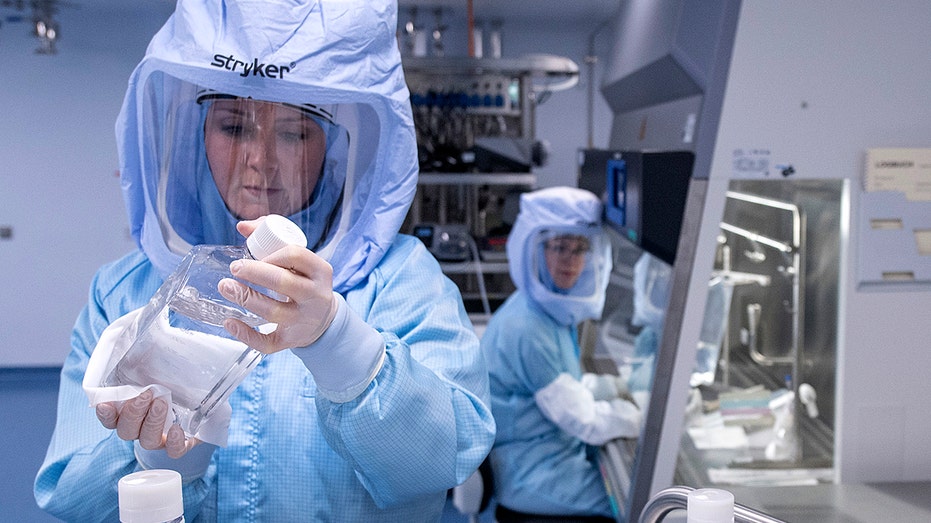
Laboratory assistants from the company BioNTech wear Stryker medical gear in a clean room at a production site in Marburg, Germany, in March 2021. (Boris Roessler/picture alliance via Getty Images)
American patients currently account for roughly three-quarters of pharmaceutical profits and over half of global research and development spending – far more than America's share of the world economy.
If U.S. leaders want to correct this imbalance, putting more pressure on drugmakers isn't the solution. Instead, the administration must focus on getting other countries to end their free-riding practices.
Forcing U.S. prices lower without increasing foreign countries' contributions risks harming both American patients and our broader biotech industry. Some members of Congress, for example, have proposed writing "most-favored-nation" drug pricing into law – permanently tying U.S. drug prices to the artificially low prices paid abroad.
ROBERT F KENNEDY JR: THE FUTURE OF MEDICINE SHOULD BE BUILT IN AMERICA
Such an approach would effectively import foreign price controls into America – reducing funding for future research and development and slowing the development of new treatments. It could also threaten jobs, undermine manufacturing investment and weaken U.S. drugmakers' ability to compete with China.
To sustain both lower prices and continued innovation here at home, other wealthy countries will need to step up and shoulder more of the costs.
3 STEPS THAT COULD STOP FRAUD AND MAKE HEALTHCARE MORE AFFORDABLE FOR ALL AMERICANS
Fortunately, the Trump administration's negotiating skills offer a way to make that happen. The same hard-charging approach it has used to negotiate recent deals with manufacturers can also be applied abroad to pressure foreign governments to reform their pricing policies.
The United Kingdom is a clear example. Last year, Trump negotiated a deal that will require Britain to increase what it pays for new medicines by 25%. As Britain contributes more toward developing new medicines, the cost burden on the United States will decrease.
MARK CUBAN SHOOTS DOWN PRESIDENTIAL BID AS HE TEAMS UP WITH TRUMP ADMIN TO CUT HEALTHCARE COSTS
The administration is also laying the groundwork for a similar agreement with Germany. In June, it launched a formal investigation into how Germany's drug price controls have harmed American commerce. This investigation will give American trade officials the leverage they need to negotiate fairer pricing policies and practices with German policymakers.
For decades, wealthy foreign governments have used price controls, mandatory rebates, reimbursement delays and other policies to suppress what they pay for innovative medicines.
The next step should be to apply this strategy to other wealthy nations. Countries like Japan, France and Switzerland use tactics similar to Germany's to pay far less than fair value for new drugs. In Japan, for example, roughly half of newly launched medicines are subject to annual price cuts.
INNOVATION IS KEY TO AMERICA STAYING A SUPERPOWER. BUT IT IS MISSING AN ESSENTIAL PIECE
According to one analysis, if other developed countries all paid U.S. prices for new prescription drugs, global pharmaceutical revenue would rise by more than $254 billion. That would provide a major influx of revenue for American drug innovators – potentially fueling a research and development boom that would create jobs across the country while delivering more and cheaper lifesaving treatments for patients.
CLICK HERE FOR MORE FOX NEWS OPINION
Trump has shown he's committed to bringing drug prices down – and that his administration has the negotiating skill and leverage needed to extract real concessions from foreign freeloaders.
CLICK HERE TO DOWNLOAD THE FOX NEWS APP
By refocusing its negotiating efforts on America's trading partners and pushing them to pay their fair share for pharmaceutical innovation, the Trump administration can help lower prices for American patients while preserving U.S. biopharma leadership.
Ambassador Jeffrey Gerrish served as the Deputy U.S. Trade Representative for Asia, Europe, the Middle East, and Industrial Competitiveness from 2018 to 2020.
KioskNews shows a cleaned-up reading view extracted from the publisher’s page — the original always lives on their site, not ours.