Xi presses Trump to do ‘the right thing’ on Taiwan. Where does that leave US arms sales?
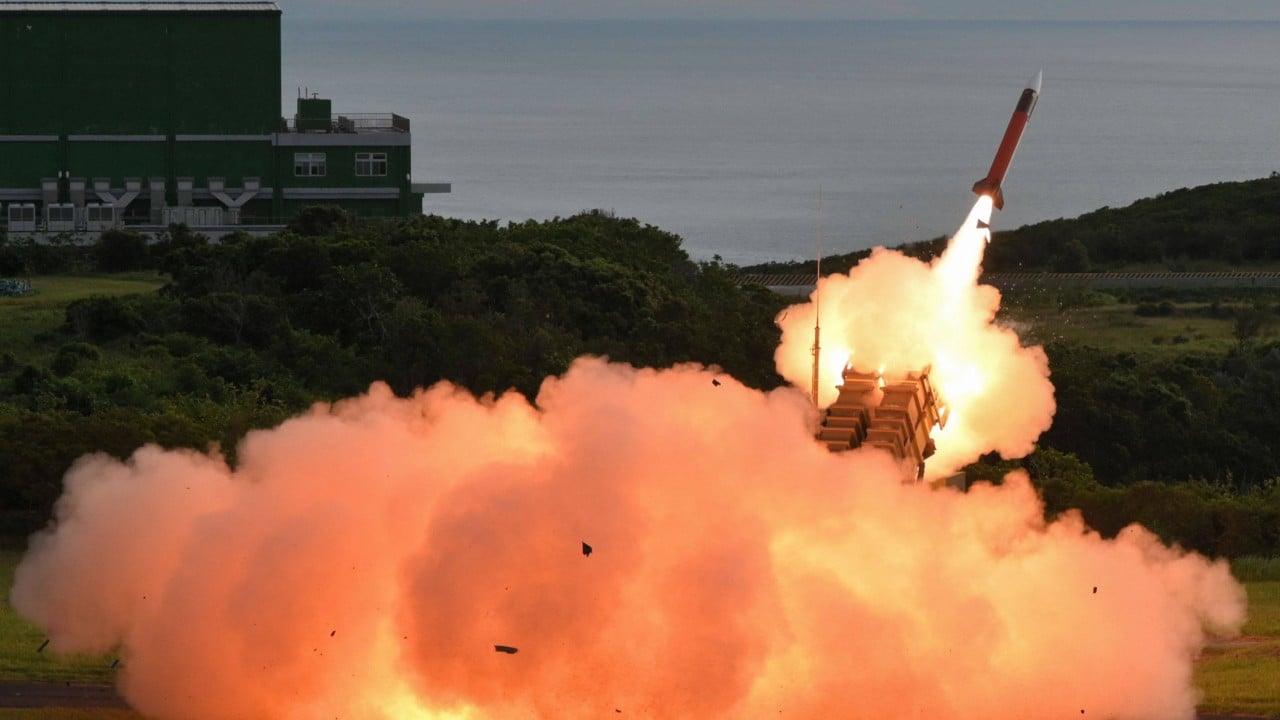
Chinese President Xi Jinping urged visiting US President Donald Trump to do “the right thing” on Taiwan this week – a remark experts said suggested a push for further restrictions on US arms sales to the island.
“The US must keep doing the right thing to avoid major setbacks in China-US relations,” Xi told Trump during their bilateral talks on Thursday at the Asia-Pacific Economic Cooperation (Apec) summit in Shenzhen, according to Beijing’s summary of the meeting.
Trump said the US did not support “Taiwan independence”, according to the same statement. The US has yet to release its own summary of the talks.
Ja Ian Chong, an associate professor of political science at the National University of Singapore, said Beijing’s statement appeared to call on Trump to “limit support for Taiwan”, which was consistent with previous requests.
“This could be a push from Xi for Trump to not approve further arms sales to Taiwan. Whether Trump wants to do so, or is able to do [so], as the new Congress comes in is an open question,” Chong said.
Under the 1979 Taiwan Relations Act (TRA), Washington is committed to supplying Taiwan with defensive weapons and maintaining the capacity to resist coercion against the island.
But the law leaves decisions on the nature and quantity of those weapons to the US Congress and president based on their assessment of Taiwan’s defence needs.
In a letter issued on Wednesday, just before Trump’s bilateral talks with Xi, nine Democratic US senators urged Trump to reaffirm the law “by sending US$14 billion in previously approved arms sales to Taiwan”. The deal was put on hold days before Trump’s May visit to Beijing.
Experts said the delay was partly due to the political sensitivity of the deal, but also because of issues with production capacity. And with the Republicans losing control of both chambers of Congress in the US midterm elections, Trump could face new pressure over his Taiwan policy.
Chong said the US would continue to sell arms to the island “given the existence of the TRA and the view that Taiwan’s ability to defend itself reduces the probability of the United States or its allies getting involved in a conflict relating to Taiwan”.
Beijing sees Taiwan as part of China to be reunited – by force if necessary. Most countries, including the United States, do not recognise Taiwan as an independent state, but Washington is opposed to any attempt to take the self-ruled island by force and is committed to supplying it with weapons.
Zhu Feng, dean of Nanjing University’s School of International Studies, noted that because the US had never stopped selling arms to the island, the prospect of Beijing persuading Washington to end the sales altogether was “virtually nonexistent”.
“What China wishes is that the types and the scale of the arms sales should be defensive weapons that have long existed, and the US can’t sell offensive weapons to Taiwan,” Zhu said.
He said Trump appeared to attach less strategic importance to Taiwan than his predecessor Joe Biden, but this did not mean there had been a fundamental change to Washington’s Taiwan policy.
Since last month, five US-made F-16V fighter jets have arrived in Taiwan as part of a US$7.76 billion package of 66 aircraft that Washington approved in August 2019.
KioskNews shows a cleaned-up reading view extracted from the publisher’s page — the original always lives on their site, not ours.