8 years, 10 billion km: Japan-Europe spacecraft enters Mercury's orbit
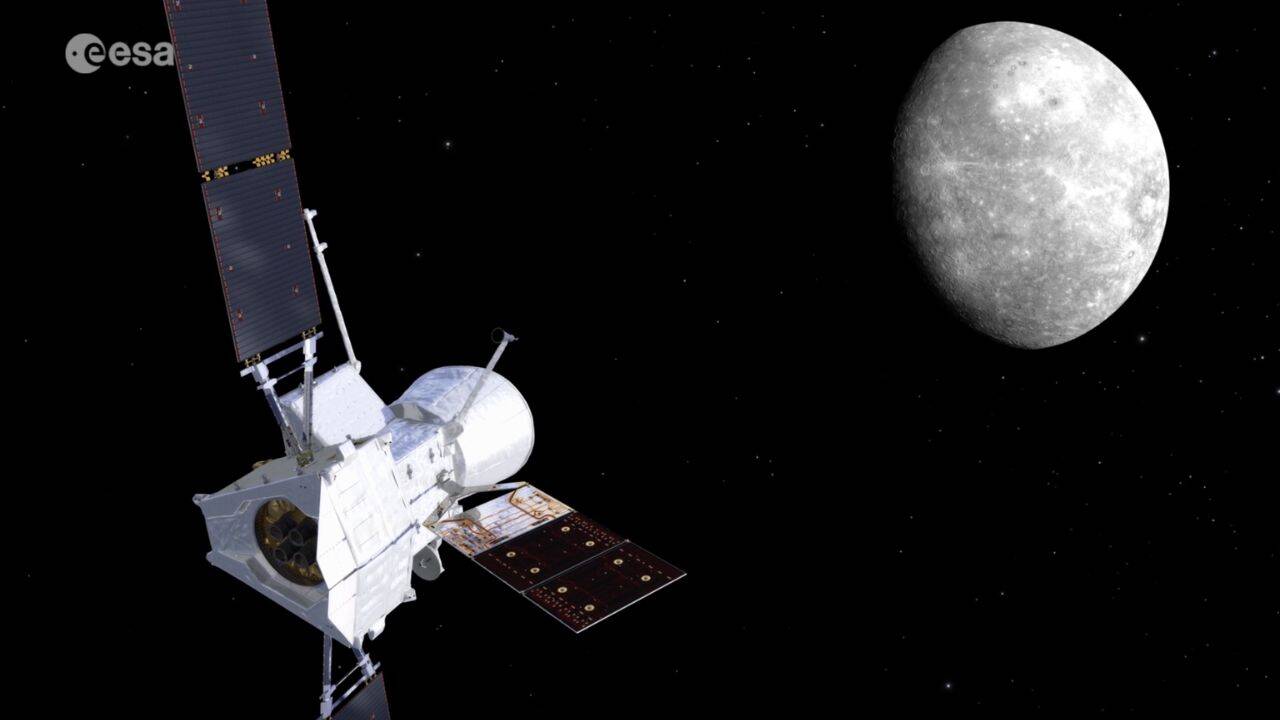
Photo credit: ESA
The Japanese-European space probe has entered orbit around planet Mercury, the European Space Agency (ESA) said on Sunday, ending an eight-year journey through space.In a post on X, ESA said the BepiColombo spacecraft "achieved orbital capture" after firing its thrusters for more than half an hour.“Early next week we'll share the next update with the upcoming steps,” the agency said.
Launched in 2018, the four-tonne spacecraft has travelled over 10 billion km to reach the planet closest to the Sun. Mercury is also the smallest and least understood planet in the Solar System.Earlier this year, ESA mission chief Santa Martinez told AFP news agency that the mission would give humanity "never-before-seen views of Mercury" and open a new chapter in understanding the Solar System.Under the mission plan, the European and Japanese components will separate on December 9 and 10 and move into their own orbits.The European orbiter will study Mercury's surface from just 480 km above it, while the Japanese orbiter will follow an elliptical path reaching up to 11,000 km from the planet to study its magnetic field.Mercury's temperatures swing between -180°C and 450°C, and the planet is regularly bombarded by intense solar radiation. NASA's Mariner 10 became the first probe to fly past it in 1974.
KioskNews shows a cleaned-up reading view extracted from the publisher’s page — the original always lives on their site, not ours.