Egypt reveals what happened behind closed doors with GERD negotiations
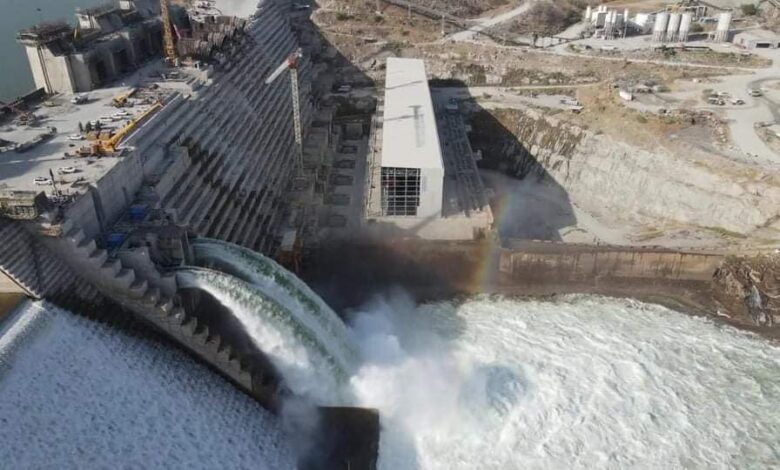
Egyptian Minister of Water Resources and Irrigation Hani Sewilam stated that Cairo has exhausted all negotiation paths in the Grand Ethiopian Renaissance Dam (GERD) dispute.
He emphasized that Egypt’s policy exercised patience and endurance, but found no response from Ethiopia that would lead to an agreement.
Speaking during a session titled “National and Citizen Security” on the third day of the Egypt Forum—in the presence of President Abdel Fattah al-Sisi—the minister added that Egypt did everything in its power to address the crisis.
This included participating in negotiations and signing the 2015 Declaration of Principles agreement, which Cairo viewed as a step to demonstrate good intentions toward Ethiopia and offer an opportunity to reach a formula for peaceful coexistence and shared interests.
Sewilam explained that Cairo hoped the Declaration of Principles would help correct the trajectory that began when the GERD project launched in 2011.
According to Sewilam, Addis Ababa failed to implement what was agreed upon in the declaration, leading to ongoing disputes over the rules for filling and operating the dam, as well as handling periods of drought and prolonged drought.
Reviewing the timeline of negotiations, Sewilam noted that Washington-hosted talks reached a balanced draft agreement approved by all three countries, designed to protect the water rights and interests of all parties, including future generations.
Ethiopia’s evasiveness
He accused Ethiopia of evading the signature before shifting the issue to other negotiation tracks that yielded no results, ultimately prompting Egypt to step away from negotiations that failed to reach a conclusion.
The US-sponsored talks, held with World Bank participation, had seen progress in drafting operational and filling rules, but did not result in a final, signed agreement among the three nations.
The primary point of contention remains the lack of a binding agreement governing dam management during drought periods, along with mechanisms for data sharing and operational coordination to ensure no significant harm is caused to downstream countries Egypt and Sudan.
The dispute dates back to 2011 when Ethiopia began constructing the GERD on the Blue Nile to generate electricity and boost domestic development.
Cairo emphasizes that it does not oppose Ethiopia’s right to development and power generation, but demands a legally binding agreement detailing filling and operation rules to safeguard its water security.
Addis Ababa maintains its right to utilize its water resources for national development.
Sewilam further noted that addressing the Nile issue should not be limited solely to the dispute with Ethiopia.
He highlighted that the Nile Basin includes 11 nations, and that Egypt’s relations with other basin countries have seen significant progress during President Sisi’s tenure.
Nile Basin Cooperative Framework Agreement
Sewilam addressed the Nile Basin Cooperative Framework Agreement (known as the Entebbe Agreement), stating that all basin countries except one agreed to reopen and discuss the agreement, asserting that solutions are attainable if political will and sincere intentions are present.
The Entebbe Agreement stems from regional efforts to create a new legal framework for cooperation and benefit-sharing among basin states.
Controversy remains over Egypt and Sudan’s position on certain provisions—particularly those concerning existing water rights and uses—making comprehensive consensus among basin countries an ongoing challenge.
Sewilam concluded by emphasizing that other Nile Basin countries do not face a water crisis as severe as Egypt’s.
Cairo suffers from acute water scarcity due to limited resources relative to growing needs, relying heavily on the Nile River for its core water security amid rising pressures from population growth, agricultural expansion, and climate change.
KioskNews shows a cleaned-up reading view extracted from the publisher’s page — the original always lives on their site, not ours.