The best books to read in October: new paperbacks from Zadie Smith, Thomas Pynchon and Francis Spufford
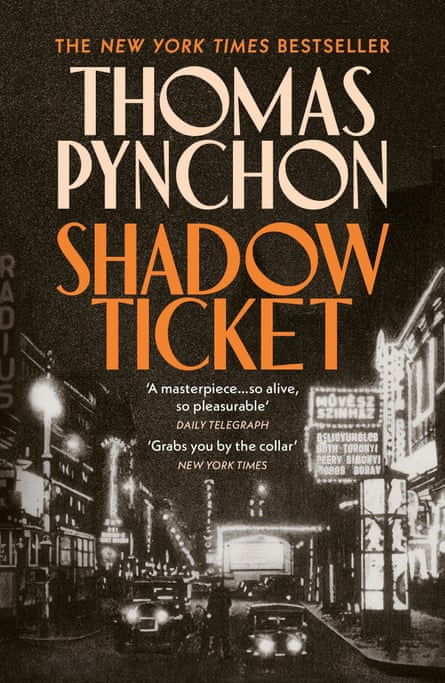
Everything is connected in Shadow Ticket, Thomas Pynchon’s fleet-footed noir fiction about a lindy-hopping detective in prohibition-era Wisconsin. The homemade bomb connects to the runaway cheese heiress, the cheese heiress to the federal agents, and the feds to the pro‑Nazi leagues at the bowling lanes outside town. Early-30s Milwaukee, in turn, is connected to powder-keg central Europe, where paramilitary groups have pitched camp on the Hungaro-Croatian border and guest speakers wax lyrical about “our immense fascist future”. Most likely it connects to the current moment as well, albeit wryly and slyly, with a nonchalant swing. That’s the implied final move of this merry dance of a book: the point where the past links its hands with the present.
Shadow Ticket is a Pynchon novel – the 88-year-old’s first in 12 years; his ninth overall – and so it naturally connects to the man’s back catalogue, too, and its abiding fascination with conspiracy, chaos and the churn of American pop culture. Specifically it relates back to his two previous works – Inherent Vice and Bleeding Edge – in that the story comes tailored as a dime-store whodunnit, complete with red herrings, plot twists and reams of hard-boiled dialogue. But classifications, like people, are never entirely to be trusted. Pynchon inhabits the genre like a hermit crab inside a mollusc shell, periodically peeking out from the gloom to remind us that he’s there. Xan Brooks
£9.89 (RRP £10.99) – purchase at the Guardian bookshop
Fiction
Nonesuch
Francis Spufford
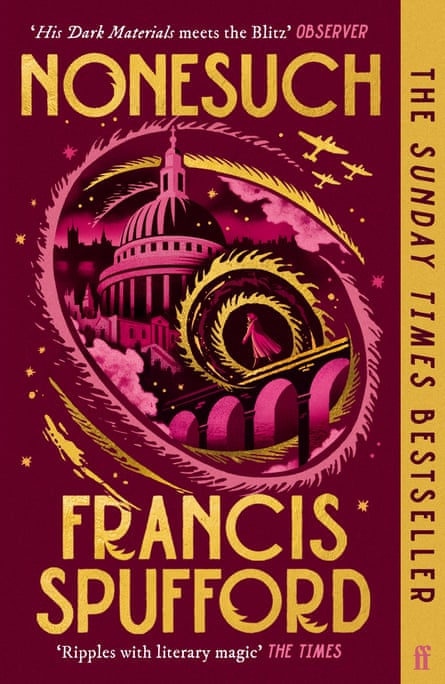
Spufford’s fourth work of fiction in a genre-spanning oeuvre, Nonesuch is a historical fantasy set during the second world war, every paragraph of which is packed with authorial zest. The novel opens in London, August 1939: war has been declared, but hasn’t yet made its reality felt in the city’s streets, and Iris Hawkins, an ambitious office clerk, makes her way through the sun-baked West End in a slinky dress. One half of a disastrous date later, she’s being whisked away to a DIY surrealist film club in bohemian Bloomsbury – not her scene at all – and two extremely fateful introductions: the first to Geoffrey Hale, a sweetly apprehensive BBC television engineer; and the second to the object of Geoffrey’s guileless infatuation, one Lady Lalage Cunningham, an icy aristocratic beauty with amazing hair and worrisome political sympathies. Cue chaos. Nonesuch follows the bolshy Iris from her seedy summer’s night through a regrettable Hampstead hook-up, and, eventually, neck-deep into a time-travelling plot by “magical fascist lunatics” to assassinate Winston Churchill. The novel is a pleasing pasticcio of romance, occultism, non-Euclidean geometry and airborne adventure across the blitz-stricken rooftops of London. It is difficult to imagine it would hold together quite so well in other hands than Spufford’s. AK Blakemore
£8.99 (RRP £9.99) – purchase at the Guardian bookshop
Fiction
Beasts of the Sea
Iida Turpeinen
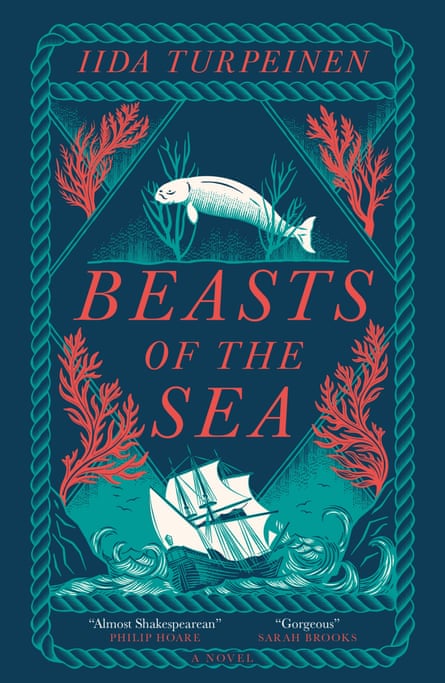
In November 1741 Georg Wilhelm Steller, “theologian, naturalist, and curious man”, was shipwrecked on an island between Alaska and Russia. There he found, floating in the shallow waters, a vast sirenian, Hydrodamalis gigas, nine feet long and soon to be known as Steller’s sea cow. Having made it through the winter, largely by eating the sea cows, the following August Steller and the remaining survivors of the Great Northern Expedition left the island. Within 30 years, Steller’s sea cow was hunted to extinction.
Having described these events, Finnish author Iida Turpeinen’s debut novel goes on to describe the lives of other historical figures, each of whom are touched in some way by the sea cow, now reduced to bones. There is Hampus Furuhjelm, governor of Alaska, in search of a complete skeleton, and his sister Constance, who finds peace and intellectual autonomy among her taxidermy collection. Later, there’s Hilda Olson, a scientific illustrator, and John Grönvall, specialist in the reconstruction of birds’ eggs, who is tasked with preparing a sea cow’s relics for exhibition.
Turpeinen writes in a flowing present tense, moving seamlessly from one character to another, drawing us gently but firmly onwards. Emotional detail is astutely rendered. The result is a book that is almost hypnotically readable; it’s been much garlanded in Finland and it’s easy to see why. Jessie Greengrass
£9.89 (RRP £10.99) – purchase at the Guardian bookshop
Fiction
Other People’s Fun
Harriet Lane
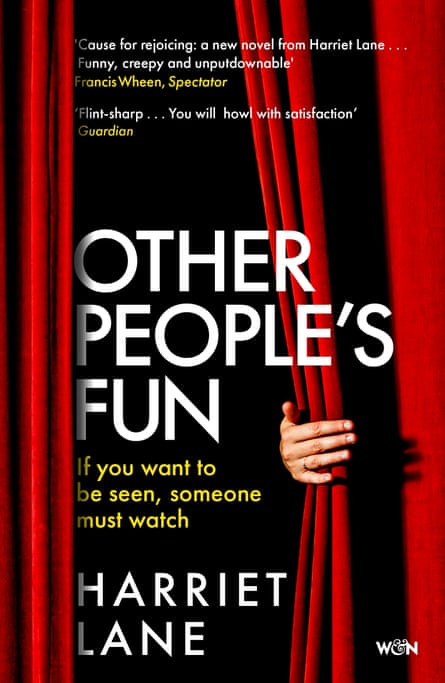
Ruth, the narrator of Harriet Lane’s third novel, Other People’s Fun, is corroded by envy. Alone, her marriage over, her daughter grown and her freelance work as dull as it is low paid, she is that most dangerous of characters: an overlooked middle-aged woman with nothing to lose. When she bumps into beautiful, stupid and entitled Sookie at a school reunion, she reconnects with her teenage self “and all her violent desires”. Having flown under the radar as a pupil, noticed by Sookie only because she lent her her essays, she has perfect recall of her own petty humiliations, now amplified by the fact that she can stalk her contemporaries’ “best lives” on social media, while almost none of them remember her.
The best comedy is sharpened by pain, and what Lane has pinpointed in her flint-sharp novel is something that has a highly modern resonance as the world of the haves and have-nots becomes increasingly polarised and toxic. When Ruth gets her revenge, it is as nasty as it is total. You will, I fear, howl with satisfaction. Amanda Craig
£9.89 (RRP £10.99) – purchase at the Guardian bookshop
Fiction
Absence
Issa Quincy
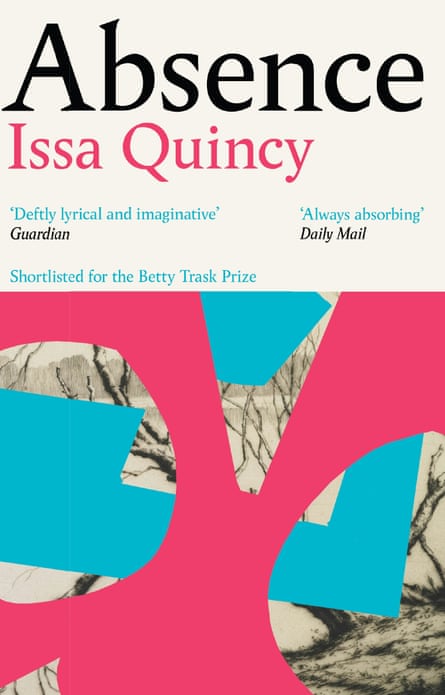
In Quincy’s novel, the narrator is charmed by a poem first read to him as a child by his mother, which then follows him through his life. He’s stirred by memories and emotions as he is confronted by letters and photographs, phantoms and secrets, all of which make up a life that has been affected by generations of profound familial tragedy. Quincy’s prose is deftly lyrical and imaginative; I’ve had the pleasure of hearing him read from Absence at a literary salon in London and it was entrancing. He observes the fragility of memory, and what remains after our encounters, however fleeting, with people, say a schoolteacher or an estranged aunt; you might think of him as a counterpart to the novelists Rachel Cusk and Teju Cole. Jason Okundaye
-
Absence is published by Granta
Short stories
Short stories
The Land of Sweet Forever
Harper Lee
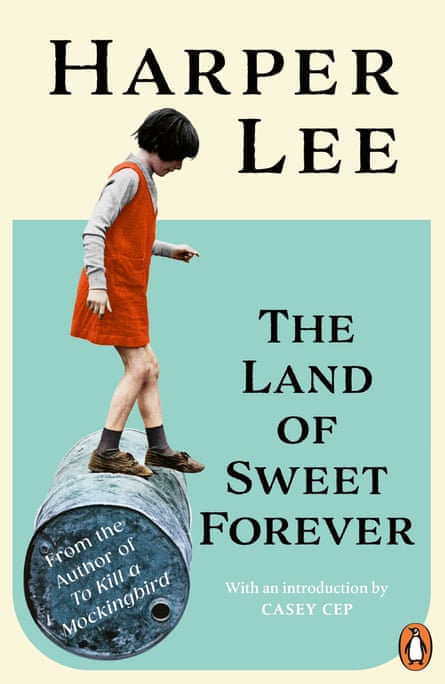
The Land of Sweet Forever is a collection of Lee’s unpublished short stories and previously uncollected essays. However, like most such books, it has little to offer to those who aren’t diehard fans.
The short stories, written in Lee’s youth, are all badly underdeveloped. Most fail to work even as vignettes. One centres on trying to find a place to unload a truck in Manhattan; another on a temporary change to the way the doxology is sung in a Methodist church. A slender piece about the quirks of New York movie audiences is categorised as a story, but feels more like a newspaper sketch. The young Lee seems to have little sense of what a story is.
On the positive side, there is already wit and charisma in the voice. One narrator, returning to her southern home town, recognises “a tall young man whose face belonged to the Wade family, but whose body showed extensive Talbert influence. He was Talbert Wade, of course.” This may be slight, but it’s elegantly done. There are also hints of iconoclastic anger struggling to get out, especially in The Water Tower, where a 12-year-old Mississippi girl erroneously thinks she is pregnant. Understanding that being an unwed mother would wreck the lives of her whole family, she decides the only way to save them is to destroy her shameful body.
If we regard this book as literature, it is an unqualified failure. But it’s more properly seen – and will surely be read – for the light it sheds on Lee’s life. As such, it’s obliquely fascinating, largely because it radiates repression. Often there’s a sense that we’re seeing the side of Harper Lee that wasn’t exceptional, but representative of a generation of women who were mostly muzzled. Lee writes in The Cat’s Meow (perhaps the strongest story in the collection): “I suppose a lot of people like me have mastered the first lesson of living at home these days: if you don’t agree with what you hear, place your tongue between your teeth and bite hard.” We feel those painfully gritted teeth on every page of this book. In a time of rising censorship, it’s salutary to be reminded that an author as important as Harper Lee came so close to being entirely silenced. Sandra Newman
£8.99 (RRP £9.99) – purchase at the Guardian bookshop
Essays
Essays
Dead and Alive
Zadie Smith
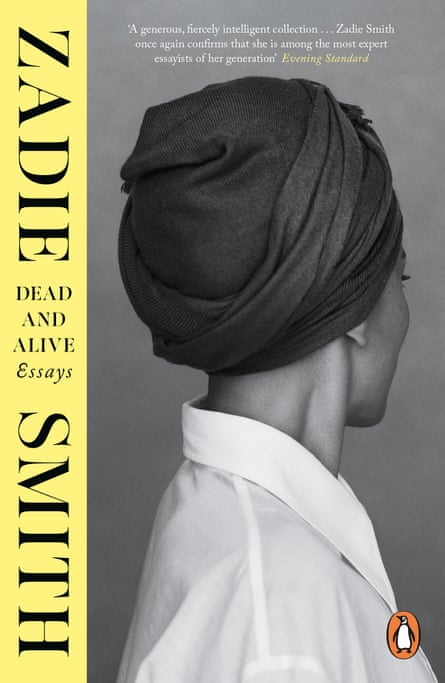
Dead and Alive bundles various odds and ends from the past nine years: speeches, opinion pieces, criticism and eulogies for departed literary heroes – Philip Roth, Martin Amis, Hilary Mantel.
In Some Notes on Mediated Time – one of three completely new essays in the collection – Smith recalls how the “dreamy, slo-mo world” of her 1980s childhood gave way, within a generation, to the “anxious, permanent now” of social media. If you lived through that transition, you don’t have to be very old to feel ancient. When this estrangement is compounded by the ordinary anxieties of ageing, cultural commentary becomes inflected with self-pity. Smith’s identification with the protagonist of Todd Field’s Tár, a once revered conductor who finds herself shunned by the younger cohort, takes on existential proportions: “Our backs hurt, the kids don’t like Bach any more – and the seas are rising!”
Smith steers a sensible middle course on the vexed debate around “cultural appropriation” in fiction. There is more to people than their identity – “we can, sometimes, forget the mystery that lies at the heart of all selfhood”. The point is well made in a thoughtful piece on James Baldwin and the craft of writing, originally a lecture delivered to creative writing students over Zoom during the pandemic. Smith reminds her students that the essence of Baldwin’s brilliance was his ability to process politics through personal experience: he “submitted to his consciousness first and then re-examined what that might mean for his conscience”. This is sound advice, and Smith’s positions on the politics of creativity are beyond reproach, albeit commonsensical – amounting, essentially, to a caution against overcorrection and incuriosity.
When it comes to actual politics, she is less assured. Her New Yorker op-ed on the war in Gaza, published in May 2024, was widely interpreted as unhelpfully equivocal, and seemed to conflate anti-war protesters with antisemites. She has since added her signature to an open letter acknowledging Israel’s actions as genocidal. The New Yorker piece, reprinted here with a new preamble hailing the protesters as “heroic”, is an intriguing artefact: the prose is mealy mouthed, heavy on the passive voice – all the more conspicuous since Smith’s writing is normally so clear and crisp. Houman Barekat
£10.79 (RRP £11.99) – purchase at the Guardian bookshop
Memoir
Memoir
Fly, Wild Swans
Jung Chang
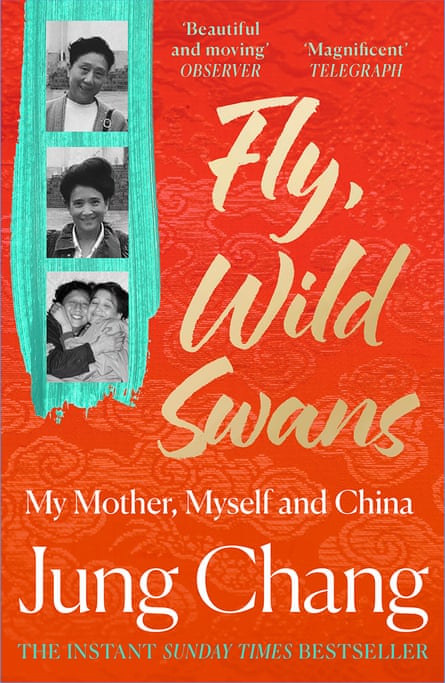
Remarkable success notoriously brings its own problems. Wild Swans, first published in 1991 and written by Jung Chang with the help of her husband, Irish-born historian and writer Jon Halliday, had a global impact few authors dare to dream of. It told the story of three generations of women in 20th-century China – Chang’s grandmother, her mother and herself – and became one of the most popular nonfiction books in history, selling more than 13m copies in 37 languages and collecting a fistful of awards and commendations. For any author, following that would be a challenge. Now, Fly, Wild Swans returns to the story, picking it up after Chang’s own departure from China in 1978, and revisiting episodes from the earlier work with added detail.
Few can match Chang’s ability to bring Chinese history and politics to life through deeply felt personal narrative, and few have shaped western understanding of China as broadly. Nearly 35 years on from the book that made her name, this story of suffering and success has the air of a closing chapter, a reckoning with both her achievements and the cost of the path she chose. Isabel Hilton
£9.89 (RRP £10.99) – purchase at the Guardian bookshop
Memoir
Wings
Paul McCartney
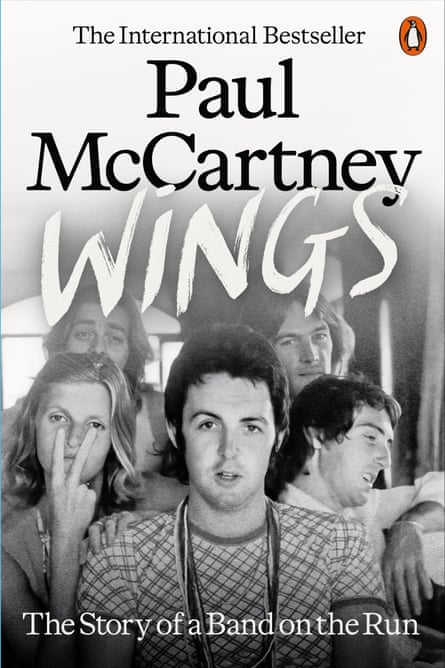
After splitting up, The Beatles faced an unprecedented challenge: how to be an ex-Beatle? McCartney yearned to play before audiences again, which he hadn’t since the Beatles stopped touring in 1966. But he couldn’t face doing it solo, the spotlight trained on him alone. So he asked Linda to help him put together a new group. This authorised, illustrated oral history, edited by cultural historian Ted Widmer, tells the story of one of the most successful bands of the 1970s – and one of the strangest.
It’s based on interviews (given for a new documentary on the band) with McCartney and former band members, as well as archive material. Widmer does an expert job of stitching this into a compelling narrative that includes cultural context – like what else was in the charts at the time – and plenty of photographs, many previously unseen. The result is a portal into a more eccentric age of pop, a fable about the tension between celebrity and creativity, and a story with elements of Spinal Tap and Wacky Races. Ian Leslie
KioskNews shows a cleaned-up reading view extracted from the publisher’s page — the original always lives on their site, not ours.