Gen-Z Protests "Integral To Democracy": BJP's Ravi Shankar Prasad At NDTV Anveksha Summit In Nepal
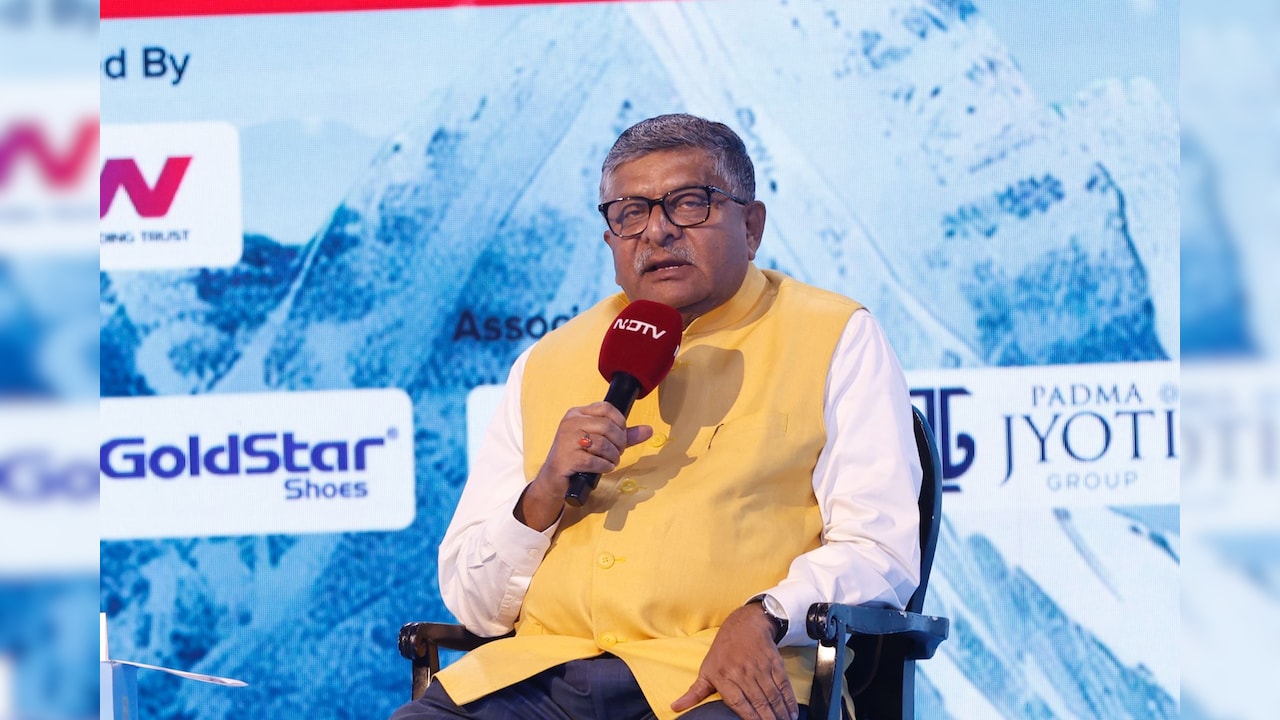
Senior BJP leader and former Union minister Ravi Shankar Prasad said on Thursday that youth protest, be it in Nepal or India, is a natural feature of democratic societies and that the test for a country lies in how it responds to it, in an interview to NDTV in Kathmandu on the future of India-Nepal relations.
"Some degree of young protest is always integral to a democracy. But the maturity of the country depends upon how you handle it. That is very important," Prasad said at NDTV World Anvishka Summit.
Pressed on why youth-led movements had erupted across the subcontinent in different circumstances, Prasad said the phenomenon was organic but that outcomes depended on institutional capacity.
"If there is something wrong - either actually wrong or perceived to be wrong - [youth] will react. But the point is, is there a proper institutional mechanism to address the concern?" he said.
He drew a contrast with Pakistan-occupied Kashmir and Balochistan. "There are a lot of Gen-Zs there, and there are huge protests. They are being killed with impunity... How you address their concerns is always the benchmark of a stable future. And ultimately, it comes from democracy. It comes from stability. It comes from being understanding of their concerns."
He said India or Nepal dealt with such issues in a different manner, the latter having seen a change of regime after Gen-Z-led protests. "You cannot compare what is happening in Bangladesh and particularly in Pakistan with India or in Nepal," he said.
He said Nepal, before the present government came to power, had seen a lot of defections and political instability.
Asked whether the "Gen Z" label was overstated, given that student and youth agitations have long been a feature of politics, Prasad said technology had changed things. "I always trust the maturity of younger people... Trust them; they will give results."
On India-Nepal Ties
On engaging a younger Nepali generation and their ties to India, he pointed to religious tourism and enterprise. "If we set up a proper rail link, which I think must be between Ayodhya and Janakpur, you will see the kind of tourism potential it has," he said, noting that many young people from the Madhesh area of Nepal had sent gifts to Ayodhya for the consecration of that temple. "We need to move with the aspirations of young people, whether in India or in Nepal," he said.
He added, "So long as Pashupati (temple) is there in Nepal and Kashi Vishwanath is there in India, this relationship is going to endure."
#NDTVWorldAnviksha | "We treat Nepal with equality as a friendly country, respecting their sovereignty": BJP MP Ravi Shankar Prasad (@rsprasad) #NDTVAnviksha #IdeasAcrossBorders #IndiaNepalDialogue | @VishnuNDTV pic.twitter.com/A8kCQk2wuw
— NDTV (@ndtv) August 27, 2026
Asked whether India had a record of a "big brotherly" attitude towards Nepal, not specific to any one government, Prasad said the approach had changed. "I want to make it very clear from the NDTV platform today in Kathmandu - and I compliment NDTV for inviting me - we don't eye any 'big brother' status," he said. "We treat Nepal with all equality as a friendly country, respecting their sovereignty and also respecting a common urge to share a future."
He said Indian politics was known for its "mercurial divide", but that "when it comes to the issue of Nepal, there is consensus".
He also referred to the massive flood that hit Nepal earlier this week. "The best thing we have done now, in dealing with the present tragedy, is just let the people of Nepal decide how we can assist them; it's not as if we are forcing anything on anybody. That should be the approach," he said.
Prasad said he had considered not travelling to Kathmandu given the circumstances, but was urged to do so by the Foreign Secretary. "Yesterday, I was in two minds whether I should come or not. Then I talked to the Foreign Secretary and he said, 'Sir, you must go and convey in unmistakable terms India stands firmly with Nepal in this hour of grief.' And he also told me that India's assistance is already on the way."
He said Indian armed forces personnel were repairing bridges and that medical assistance and a National Disaster Response Force team were in Nepal. Recalling the 2015 earthquake, when he was communications minister, Prasad said his first instinct had been connectivity.
While complimenting the new government in Nepal, which he said had been "elected with a massive majority", Prasad said: "Never forget one thing: Indians always have a groundswell of support for the democratic urges of Nepal, let's not name anyone."
Agnipath, Gurkha Recruitment
Prasad noted that Nepalis have fought for India in wars, when asked about restrictions affecting the recruitment of Nepali soldiers into the Gorkha regiments under the Agnipath scheme. "I think no issue between Nepal and India is not capable of solution. We have seen many problems, and we have resolved them. We'll find a way out for that as well," he said on the issue.
He described a personal attachment to the Gurkha soldiers. "I never miss a January 26 Republic Day parade in Delhi. Whenever the Gurkha brigade marches, my feet start tapping with them."
Asked about the dangers India faces from Pakistan while pursuing friendly relations elsewhere in the subcontinent, Prasad said, "Using terrorism as an instrument of compulsive foreign policy is not right, and all those who have encouraged that become a victim of that."
"Pakistan does not learn a lesson at all because Pakistan is not a democracy," he added, quipping that while MA Jinnah had demanded and formed Pakistan, the country had now become "General-stan", a land ruled by army generals.
He said Pakistani people at large wanted good relations with India, but "the generals use terrorism as an instrument of state policy".
Shared Culture
On the focus of ties with Nepal, Prasad said the largest area of future cooperation between the two countries should be climate management in the hills. "I think we have a lot to learn from Nepal, and Nepal also has to learn from India." He described the Himalayas as a sacred heritage for both countries. On the current disaster, Prasad said, "So many sanyasis have meditated on the holy precincts of the Himalayas over the last thousands of years. At times, their souls also say 'enough is enough'... Don't overexploit. Do undertake optimum use, but don't overexploit." He noted that rivers rising in Nepal travel to his home state of Bihar.
Prasad said cultural relationships would remain the base of India-Nepal ties, citing the Buddhist circuit and the Ramayana circuit "from Kedarnath to Badrinath to Muktinath to Pashupati to Somnath to Rameshwaram", the celebration of Chhath in Bihar and the Madhesh region, and the shared worship of Devi, Parvati and Kali.
On whether the future of the relationship rested on cultural connect or economic engagement, he said: "You cannot conceive of the Indo-Nepali relationship based upon conventional nuances of foreign policy and diplomacy. Culture, civilisation, festivals, food habits, language, and worship will always form an important ingredient for that. But having said that, what is important is to build upon that for sound economic progress."
KioskNews shows a cleaned-up reading view extracted from the publisher’s page — the original always lives on their site, not ours.