What is El Niño, what causes it and can we reduce the risks?

This year’s huge El Niño, which comes less than two years since the last one, has already broken temperature records. To understand what is happening, and why, the Guardian interviewed Prof Mat Collins, a climate scientist at the University of Exeter, the author of some of the world’s most important climate reports and an expert on the dynamics of the El Niño southern oscillation.
What is El Niño?
It is a natural climate pattern that affects large parts of the world, often bringing higher temperatures, more droughts and floods. This occurs when the normally cool, dry east Pacific becomes warmer and wetter, shifting rainfall patterns in the tropical Pacific and with other impacts far beyond that. It usually occurs every three to seven years, but is very erratic. The last one was in 2023-24.
What’s the best way to describe the relationship between El Niños and human-caused global heating?
The easiest way to think about this is that they are two separate things that layer on top of each other. So if you’ve already got drought conditions as a result of global warming, then an El Niño is going to exacerbate that. The harder question is how they interact with each other. With our models, we can use hundreds of years of simulations to work that out but we lack the data to do that from the observational record, although some palaeoclimate reconstructions suggest the present day frequency of El Niño is quite unusual.
How strong is this year’s El Niño? Some are calling it a ‘godzilla’ or ‘super El Niño’
It has already broken records and could be on course to be the strongest in a thousand years. The sea surface temperature of the El Niño region of the Pacific has already reached the previous 2015 high of 3C above average, which is almost unthinkable. And it still hasn’t peaked so we won’t know how much higher it will get until the end of the year.
But measuring the size in comparison with previous El Niños is difficult because the baseline of sea surface temperatures in the eastern tropical Pacific is steadily rising due to global warming.
So there are two things happening – human-driven climate change and the natural variability of El Niño – and it is not easy to say how much each is contributing to the record high ocean temperatures. But together, they make extremes more likely.
Currently temperatures in the eastern Pacific are on course to be 4C above the average, which is far beyond anything seen before. If that trend continues, we could see an incredible El Niño event.
Which areas of the world will be most affected?
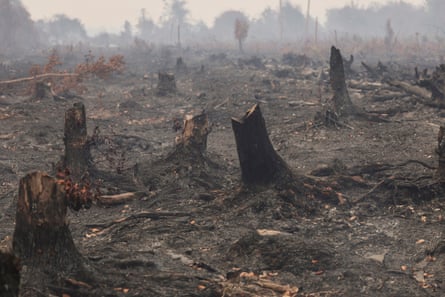
Around the peak of the El Niño, there are likely to be more wildfires in Indonesia and drought in the Amazon rainforest. The Indian monsoon has already been weakened because of El Niño. Temperatures are likely to be higher around the Pacific Rim and as far away as the UK. Meteorologists suggest the UK will see a wetter winter and autumn and possibly a drier, colder spring. I’m not certain about that because weather in the UK is just so variable.
Were the recent high temperatures in the UK and the wildfires in Europe, Canada and the US also worsened by El Niño?
I don’t think so because they came so soon after the onset of the El Niño and there is normally a lag. Those conditions are more likely to be a signal of global warming, combined with persistent anticyclonic circulation patterns that cause weather systems to be settled (or stuck) for long periods. On top of climate change that makes record heat more likely.
Several scientific papers, including by you, suggest there is a possibility that human-caused climate change is making El Niños more frequent and intense. Isn’t it frustrating that there is still no smoking gun that can prove that with 100% certainty?
That’s just science. One paper we published suggested the signal will emerge first in terms of rainfall patterns. So I think that we may have a clearer picture in the next decade.
James Hansen, arguably the world’s most influential climate scientist of the past 50 years, argues that human-driven climate change is likely behind the abnormal strength of this El Niño. What’s your take on that?
It’s a plausible hypothesis but hard to prove.
Will warmer Pacific ocean surface temperatures guarantee fiercer El Niños?
Climate change makes it more likely El Niños will be fiercer, but that is still not certain. That’s because the impact of an El Niño depends on the temperature difference with other oceans, such as the Atlantic and the Indian. The rainfall goes where the warmest water is found. If that warmth is distributed, then so will be the rainfall. If that warmth is concentrated in one ocean, then the rainfall will shift around so it is more intense in that basin.
May this year’s huge El Niño be a sign that the world’s oceans are – to use a non-scientific term – vomiting heat into the atmosphere because they are reaching the limit of their ability to absorb excess energy?
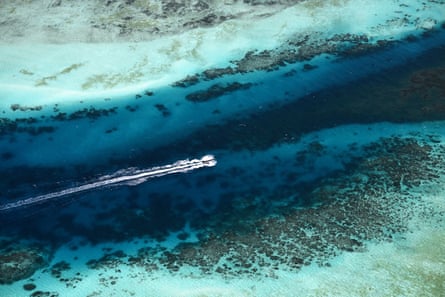
Well, that’s kind of what happens during an El Niño, which is a transfer of heat from the ocean to the atmosphere. But it’s just part of a cycle. It’s not as if the ocean has reached some limit and then can’t hold any more. I guess there’s still plenty of cold water in the world that we can heat up so I don’t know if there’s a physical limit.
What would be your hunch about whether El Niños are going to get more powerful in the future?
I certainly think the impacts are going to be greater and if we are to believe our models, then the rainfall response is also going to be bigger. There will be bigger and more impactful El Niños over the coming decades.
How can we reduce the risks?
Knowledge can help. If we go back to the 1982-83 El Niño, people really did not know what was happening. Back then, one of my colleagues got a message from someone on a ship in the east Pacific saying the temperature of the water was off the scale. He had never seen anything like that before. Nobody understood then. But now we’ve got a forecast system which can confidently predict these things six to nine months ahead. So you can prepare. You can tell farmers in Latin America to plant different crops. You can warn governments in south-east Asia to think about their infrastructure and to strengthen defences against wildfires.
Ultimately, the main response should be to reduce greenhouse gases, but perhaps there are also options to do weird and wonderful geoengineering – for example to change the properties of clouds in the eastern Pacific which may influence the scale and timing of El Niño events. One paper suggests you could terminate a big event by creating lots of clouds, which would cool the surface of the ocean in the east Pacific.
Would such geoengineering help or could it make things worse?
It is not yet clear because the heat comes from the deep ocean. So even if you manage to prevent an event in one year, it may come back the next.
On an emotional level, how do you feel at the prospect of even more impactful El Niños in the future?
It’s worrying. El Niño causes huge disruptions to agriculture and the global economy. This is very bad for people, particularly in poorer countries who are already suffering the consequences of climate change and now they get an El Niño event on top of that. Luckily, we have good predictions now and it is important to maintain that capability, for example collecting real-time data from the Pacific Ocean. Then we can be forewarned.
KioskNews shows a cleaned-up reading view extracted from the publisher’s page — the original always lives on their site, not ours.