Cars off roads, commuters make a beeline for Metro: Delhi-NCR’s new rush-hour reality
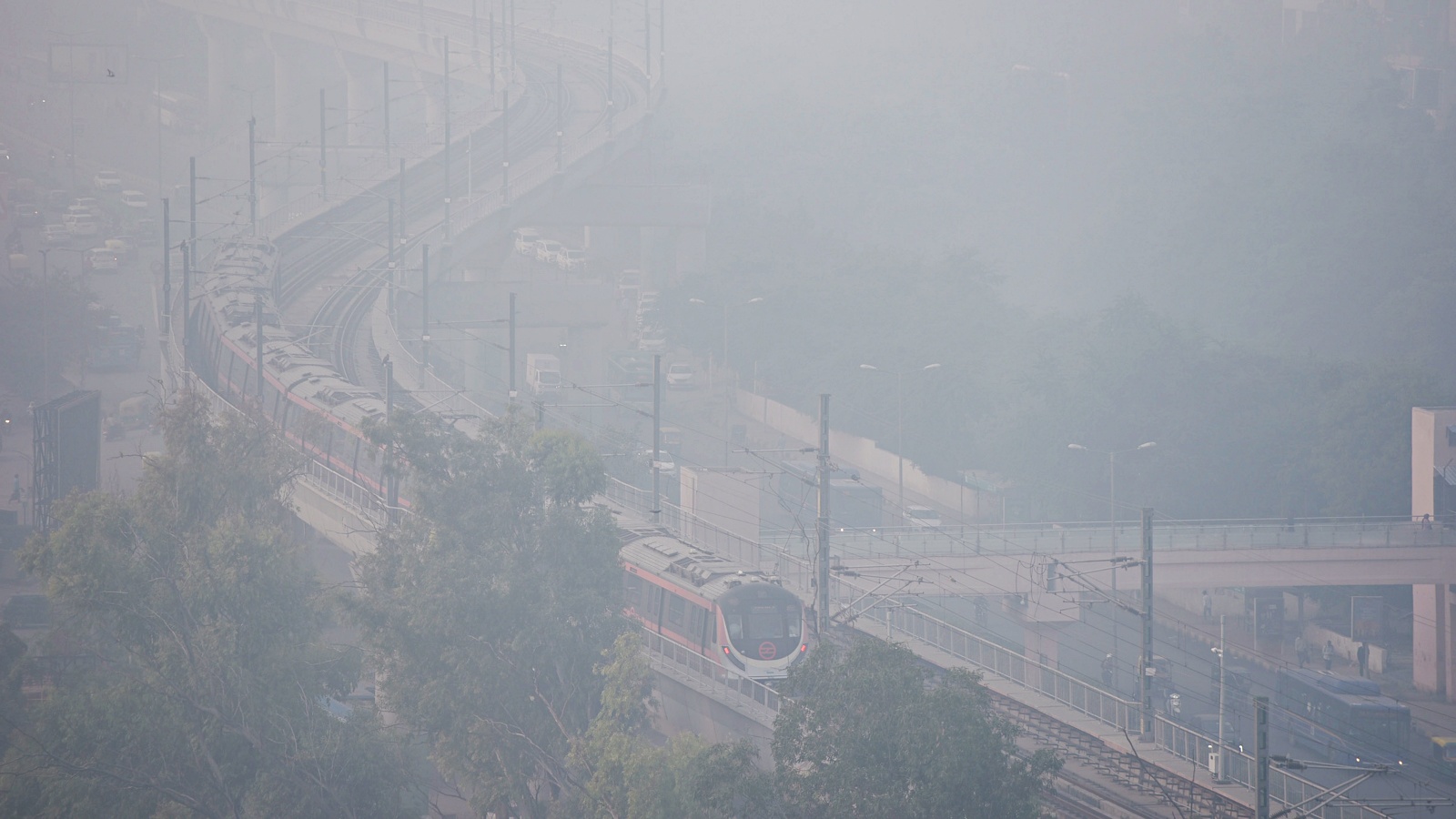
A crowded Metro, longer journeys and the occasional struggle to find space for a bag – for many commuters in Delhi-NCR, the journey to work and back home has become a little more complicated since restrictions on vehicles not complaint with BS-VI emission standards entering the Capital kicked in.
Twenty-three-year-old law associate Aditya Garg is among those making the switch. “The Metro is so crowded. It get tired even before I reach office,” he says.
Like lakhs of people who live and work in the National Capital Region, Garg has had to turn to public transport after the restrictions came into effect on November 1. Under Delhi’s Winter Action Plan, petrol and diesel vehicles registered outside Delhi that do not meet BS-VI emission standards have been barred from entering the city.
Earlier, Garg drove his Swift Dzire from his home in Faridabad to his office in Delhi’s Defence Colony. Now, his father uses the BS-IV complaint car, while Garg takes the Metro. “Since the last few days, I have been getting on at Sarai Kale Khan-Nizamuddin station and getting off at Lajpat Nagar,” he said.
The switch has not brought him significant savings. He spends around Rs 50 on an autorickshaw to the station, Rs 43 on the Metro and another Rs 60 on an autorickshaw to his office. His round-trip expenditure is around Rs 300, roughly what he would spend on his car’s fuel during the journey.
The difference, however, is in the time and comfort. “I reach in just half an hour in my car compared to 50-55 minutes in the Metro and autorickshaw, and obviously, my car is more comfortable,” he says.
His experience comes amid a sharp rise in Metro ridership. Passenger boardings touched 80.54 lakh on Monday, the first working day after the restrictions kicked in. This was an increase of 8.3 lakh from the the previous Monday, when the figure was 72.24 lakh.
Story continues below this ad
The Yellow and Blue lines together accounted for more than half the total passenger boardings on Monday. The Yellow Line, which connects Samaypur Badli in Delhi to Millennium City Centre in Gurugram, recorded 21.27 lakh boardings. The Blue Line, which connects Dwarka to Noida and Vaishali, recorded 21.23 lakh across its two branches.
But not everyone is convinced that the restrictions will make a meaningful difference to pollution levels.
“Are these bans even improving anything? I don’t think so. It seems like the farm fires are causing this pollution,” says 27-year-old engineer Ansh Dutta.
Working for a multinational company in Gurugram, Dutta has changed his office timings to avoid peak-hour travel. “I try to go to my office around 11 am and return after 8 pm,” he says.
Story continues below this ad
Earlier, he took around an hour to reach his workplace in his Haryana-registered car. Now, he walks to Malviya Nagar Metro station, takes the Yellow Line, changes at Sikanderpur and gets off at Sector 54 Chowk on the Rapid Metro network before taking an autorickshaw to his office. The door-to-door journey takes roughly the same time, if not longer.
For some, the restrictions have also meant higher commuting costs.
“I used to take a cab from my house in Green Park to my office in Noida, which used to cost around Rs 400-450. Now, cabs are charging around Rs 500,” engineer Shubham Gupta (33) says.
He has instead started walking for about 30 minutes to R K Puram Metro station before travelling to Okhla Bird Sanctuary, the station closest to his office.
Story continues below this ad
Not everyone, however, is inconvenienced.
Social impact consultant Mridula Sharma (23), a Gurgaon resident, is happy to take the Metro. “This is the first time I am taking the Metro… I didn’t know it was clean and comfortable… I hope the Gurgaon Metro also gets built quickly,” she says.
Sharma earlier drove from her home in South City 1 in Gurugram to her office near South Extension in Delhi. She now boards the Metro at Millennium City Centre, changes at Dilli Haat-INA and gets off at South Extension station.
For musician Arjun Pratap Chauhan (24), however, the Metro is far from convenient.
Story continues below this ad
He travels with his musical equipment like a guitar, a pedal and a speaker. “I used to carry all these in my car. But these are difficult to carry in the Metro, and the security personnel keep troubling me every time I get the equipment checked,” says Chauhan, who travels from Delhi’s Satya Niketan to a studio in Gurugram’s Sushant Lok.
His Haryana-registered car, like many others, can no longer enter the Capital.
KioskNews shows a cleaned-up reading view extracted from the publisher’s page — the original always lives on their site, not ours.