New Economy will turn imports into opportunities for Ghanaian production – Ato Forson
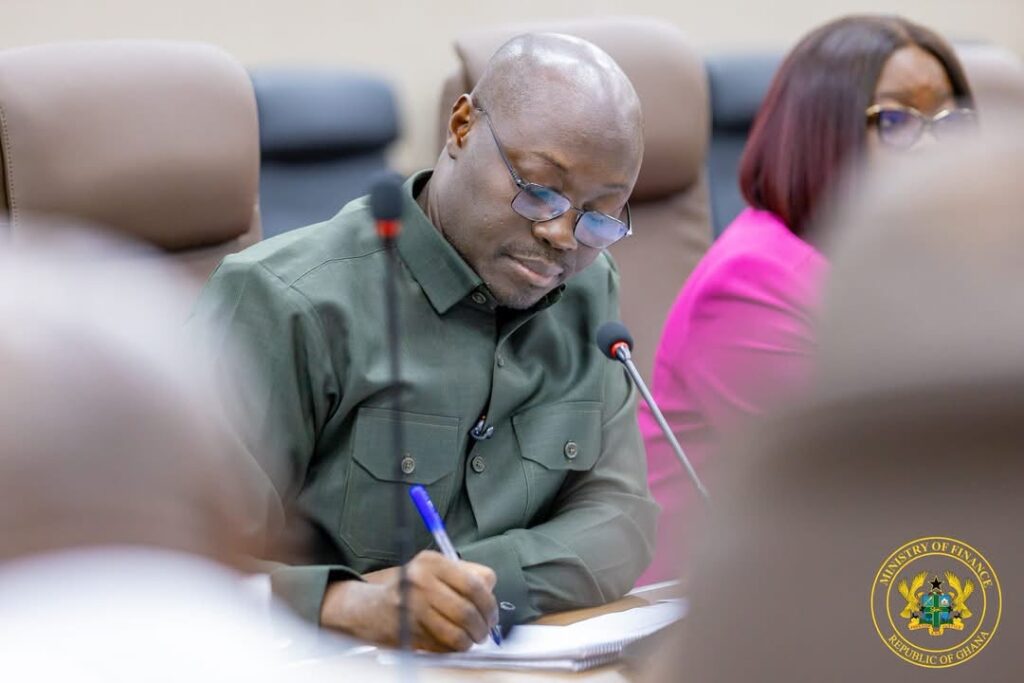
Finance Minister Dr Cassiel Ato Forson says the government’s New Economy programme will seek to strengthen local production, reduce reliance on imported goods and create more employment by directing investment towards productive sectors.
He said the strategy would encourage Ghana to look beyond the cost of importing goods and instead examine the potential for producing them locally, particularly in areas where the country has the capacity to develop competitive industries.
“Every import is an opportunity to ask: why can’t we make it in Ghana?” Dr Forson said, stressing that the government’s objective was to build an economy in which increased domestic production translates into jobs and stronger economic activity.
The programme, which is expected to be outlined in the 2027 Budget, is expected to deploy about US$1.6 billion, equivalent to roughly one per cent of GDP, towards strategic areas of the economy.
It forms part of the broader New Economy agenda, which government says is intended to move Ghana beyond macroeconomic stabilisation towards production, job creation and wealth generation.
Priority areas identified under the framework include commercial agriculture, mining value addition, energy and transport infrastructure.
Proposed investments in gas-to-power and gas-to-fertiliser projects are expected to support energy security and industrial activity, while projects such as the Western Railway Line could also feature in the infrastructure component.
Dr Forson said the approach reflects a deliberate shift towards sectors with the potential to expand economic activity and employment, while creating opportunities for the private sector to invest and grow.
He said the government wants businesses to expand production, increase exports and create more jobs as the next phase of the economic programme takes shape.
Speaking during a meeting with the leadership of the Association of Ghana Industries and leading captains of industry, Dr Forson said the government’s mission was to ensure that more of what Ghanaians consume could be produced domestically.
“Our mission is to produce more of what we consume and create more jobs here at home,” he said. “That is the promise of the New Economy: Ghana producing. Ghanaians working. Prosperity growing!”
DISCLAIMER: The Views, Comments, Opinions, Contributions and Statements made by Readers and Contributors on this platform do not necessarily represent the views or policy of Multimedia Group Limited.
Tags:
DISCLAIMER: The Views, Comments, Opinions, Contributions and Statements made by Readers and Contributors on this platform do not necessarily represent the views or policy of Multimedia Group Limited.
KioskNews shows a cleaned-up reading view extracted from the publisher’s page — the original always lives on their site, not ours.