Paul Bettany VisionQuest Interview: Marvel, Ultron & Vision's Future

When ScreenRant reminds Paul Bettany that he's been playing Vision for 11 years, he jokes, "I apologize." It's hard for me to believe it's been that long, either. My career in this industry, and ScreenRant's history, are intrinsically linked to the beginnings of the Marvel Cinematic Universe in the summer of 2008.
Bettany was there from the outset, lending his voice to J.A.R.V.I.S., Tony Stark's AI assistant in 2008's Iron Man, the movie that started it all. Of course, back then, the MCU's audience only knew Bettany as a voice. It would be another seven years before he appeared on screen as Vision.
I still remember visiting the set of Avengers: Age of Ultron in 2014 and seeing Bettany in costume as Vision for the first time. We were standing in a massive set that recreated the top floors of Stark Tower, Avengers tower as it became at this point in the timeline, and below in a lounging area overlooking the city stood Vision interacting with Thor, and it was one of the most striking sights I'd ever seen on a Marvel set. After years of hearing him as J.A.R.V.I.S., suddenly seeing Bettany standing there as an entirely new character was something special. He was Vision. He is Vision.

Now, 18 years after his MCU debut and 11 years after Vision's introduction, Bettany is leading his own Marvel series with VisionQuest. A lot has happened since that day on the Age of Ultron set. Vision has been an Avenger, fallen in love, died, and returned in a very different form. And if we're lucky, there's still more to come.
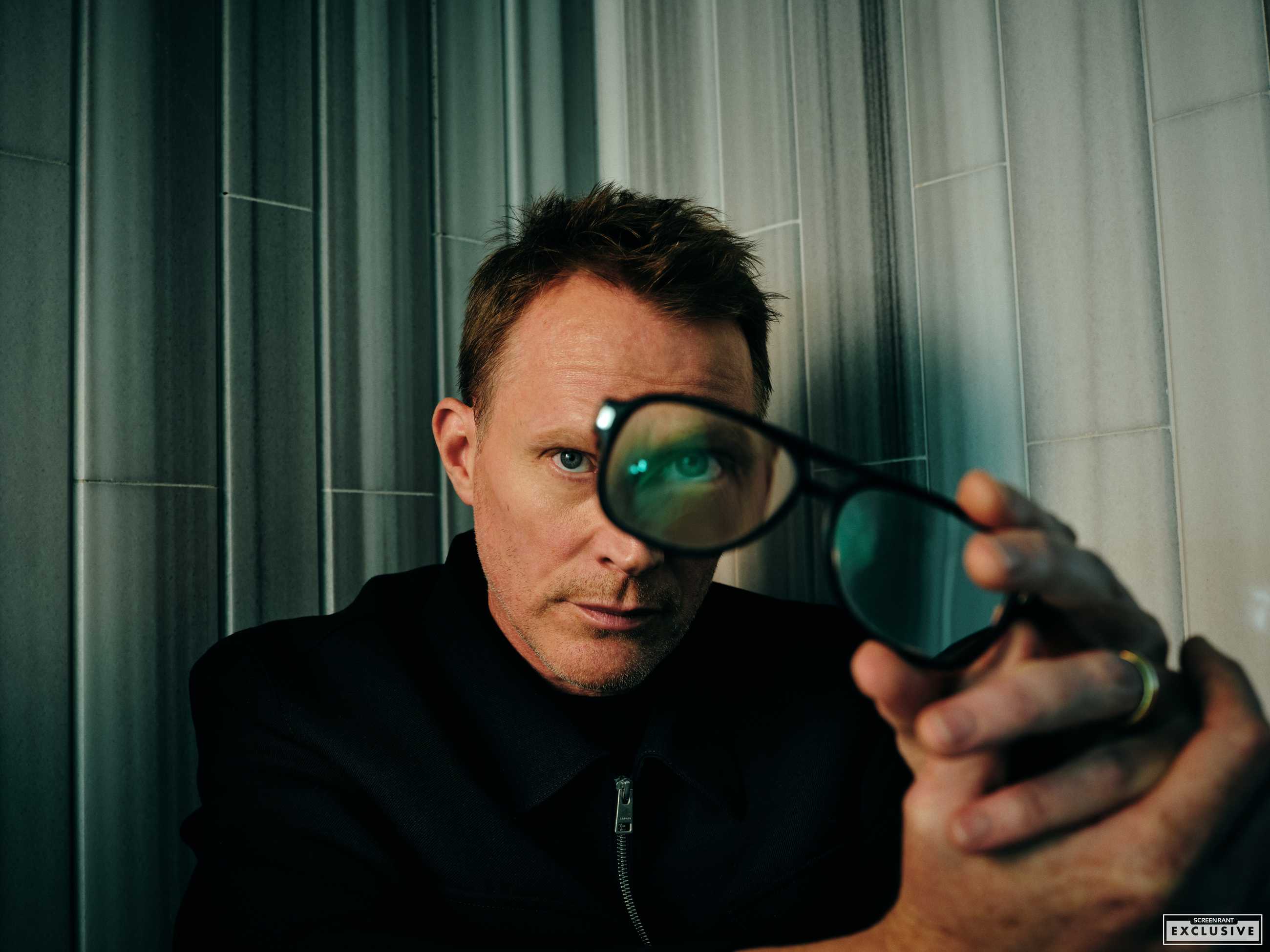
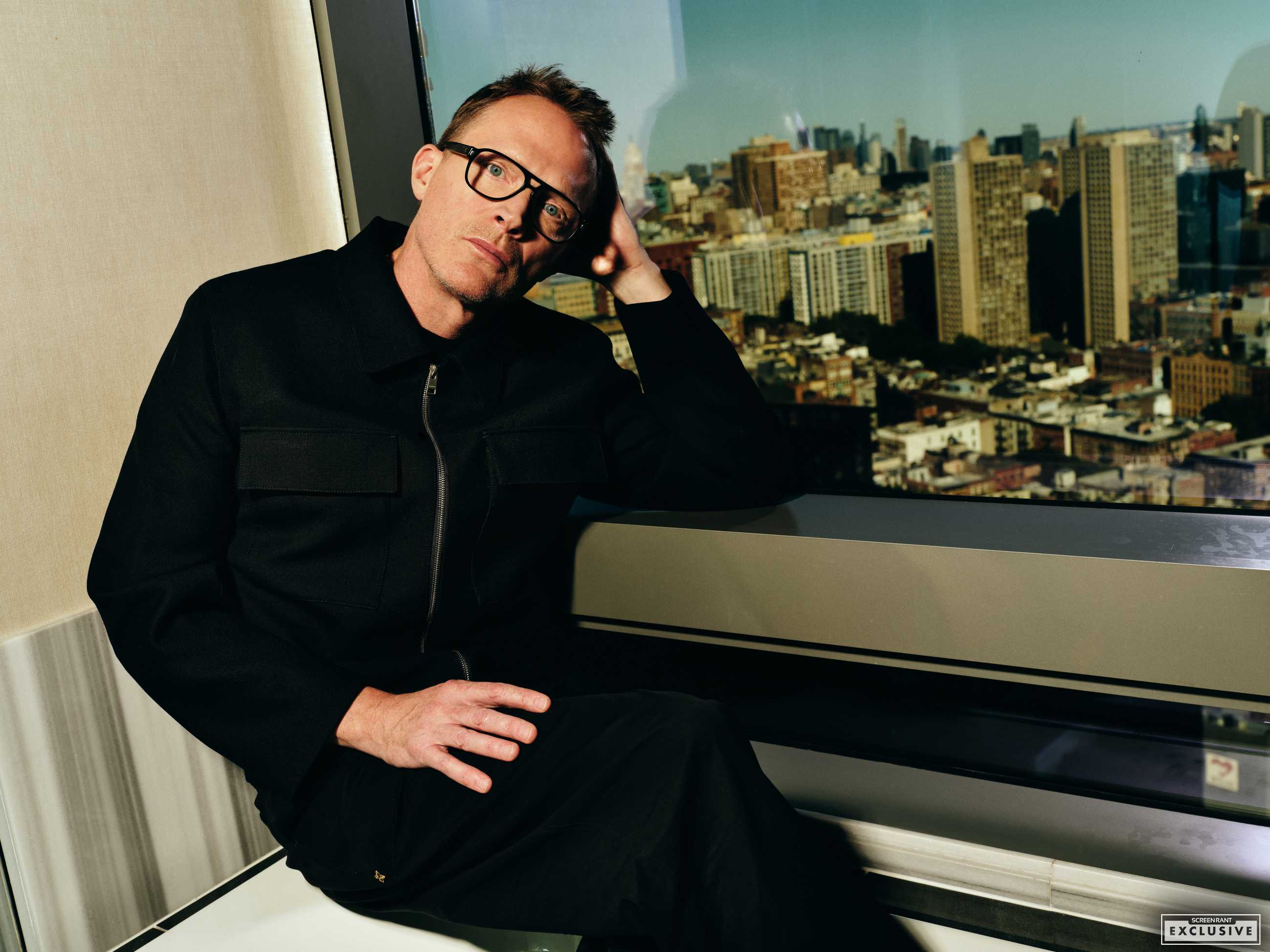
For this cover story, Bettany also took part in an exclusive photo shoot with photographer Stephanie Diani. In interviews with ScreenRant's Liam Crowley, Bettany and VisionQuest showrunner Terry Matalas discussed their approach to the character, what brought James Spader's Ultron back into the picture, and how the new Marvel Studios series for Disney+ builds on everything that came before it.
Paul Bettany Has Become Vision's Advocate At Marvel Studios
Asked how VisionQuest approaches the character's history without ignoring what the original Vision experienced, Bettany doesn't see the Vision audiences are meeting as an entirely different person.
"Oh no. I think fundamentally he is the same person. I would argue that the contract that the character Vision has made with his audience is unbreakable, which is he must always be in a state of change. He is always trying to discover himself. I think this is important because the people that I've noticed that are the fans of Vision are young people who are going through exactly the same thing. They have a differing array, a sort of baffling array of choices that they can make about who they are. Vision must always be doing that. So yes, and we meet Vision at the beginning of this show and he has had all of his memories restored to him by Hex Vision, but he is unable or, who knows, perhaps unwilling to allow feelings to attach to those memories. It is at once very different, but also redolent of all of those different versions of Vision."
ScreenRant: At this level of tenure with the character, do you feel protective over Vision?
"Yes. Yes, I really do. I think that you have to... It's one of the things I learned, I think about being in these huge franchises, you are the advocate for your character. And what's also interesting is that right from the... I think it's tempting to think about Marvel as this kind of infernal machine that churns out product. And then the experience of working for them is not like that at all. And in actual fact, it's kind of quite boutique. There's Kevin and there's Louis Desposito and it's a small core group of people making these films. And they have always been interested in the input of the actors involved. And that was surprising to me and has always remained the same. It's always been... I've had an incredibly collaborative, creative experience working for Kevin."

Showrunner Terry Matalas came to Marvel after his work on Star Trek: Picard. We've spoken with Matalas many times during and after Picard's third season, and his love for Star Trek has always been obvious. As it turns out, Marvel Studios president Kevin Feige shares that love too, and their first meeting took place after Feige watched that wonderful third and final season of Picard.
"Yeah. He had seen Picard season 3, and I went into Marvel for a general meeting with him, and we ended up spending the entire hour talking about Star Trek. I was very nervous because, obviously, I loved the MCU and wanted him to know that. As time started to run out, I said, 'Well, wait, wait. I love you all 3000, and I want to talk.' He goes, 'We'll come back, and we'll do more of this.'
"I remember driving off the Disney lot, and I had this shit-eating grin on my face because it was such a fun meeting. But then I was like, 'Oh man, what if they never call again?' And then, literally the next week, we kept talking. It's been a dream come true to be a part of the Marvel franchise like this."
When Matalas eventually sat down with Bettany to discuss VisionQuest, he was conscious of just how long the actor had been part of the MCU.
"We immediately got along just fine. We had lunch and shared a couple of pints, and I said, 'Well, here's what I'm thinking.' And we immediately were on the same page about where we wanted to take this character.
"That's rare to be in such sync with somebody who's been in the MCU from the very beginning, so I was very nervous about screwing that up. But ultimately, you just have to be yourself and be passionate. We were very lucky - and the same goes with Spader - that we all had a tone. We all had a story that we wanted to tell, and we were able to do that with linked arms."
Reuniting With James Spader Helped Define VisionQuest
Near the end of Avengers: Age of Ultron, Vision and Ultron have a quiet conversation about humanity before Vision seemingly destroys the last of his creator. It's the scene that gave us some of Vision's most memorable lines. ScreenRant asked Bettany about shooting that scene with James Spader, and his memories include a few details that might surprise fans.
"Yeah. Yeah. Firstly, it's a really well written scene. Secondly, we weren't in a forest. We were in this car park. And thirdly, we shot it really quickly at the end of the day. I was really surprised at how well it turned out. It was immediate working with James Spader. I had so much respect for him as an actor, and it was immediate how well we liked each other and felt comfortable with each other. And to get to do this with him again has been such a pleasure. There is a lot of our job that is hanging around on sets waiting for things to happen. And James Spader is one of the greatest hangs in the world. He's got great stories. He's deliciously funny, and I loved every minute of it."
The idea to reunite them came out of Bettany's earliest conversations with Matalas about VisionQuest. Bettany was interested in combining two approaches to stories about artificial beings. One was the familiar Pinocchio story ("I want to be a real boy," Bettany quotes) and the other was closer to Frankenstein and replicants, exploring questions about creation, identity, and purpose.
"And the other is Replicants, I guess. It's Frankenstein. It's 'who am I? What is my purpose? What was I made for? Who made me? How do I fit in?' And I thought to mash those two things together would be great. And so he went away and started thinking about it and then called me up and said, 'What about we get Spader back?' and I went, 'That's it!' because now we can do this sort of father-son and son. Grandfather, father, son. That was when I knew we were onto something special because I hadn't seen that before."
Matalas tells the story of how Spader's return came together, from pitching the idea to Kevin Feige to meeting with the actor in New York.
"Well, I didn't really have another idea for the show. We knew there was going to be this story with Vision and Tommy, and we knew that was a father-and-son story, but who was he really talking about this with? I just immediately thought of Spader.
"I thought James was just inspired casting. I remember sitting in the movie theater, and I didn't know James Spader was going to play Ultron. But I remember hearing the voice and seeing his signature headcock, and I was like, 'That's Spader. That's genius.' The thought of continuing that story between the two of them? I love that final scene in Age of Ultron between them. I could have let that go on for two hours.
"I was like, 'Well, what if that's the show?' I knew I would tune in, but I didn't know who else would. And so I pitched it to Kevin, and he was like, 'If you can convince James, then let's do it.' So, I flew to New York to talk to him - and I'll never tell him this, but I was terrified, because I had spent so much time talking about this in a pre-writer's room. We had mapped out a really exciting story, but I didn't know if James wanted to come back to this robot. I didn't really know where it was.
"And then, we immediately hit it off. I told him the whole thing, and he agreed to it right there at lunch. He was like, 'I want to do this.' And thank God, because if not, I would have had to go back to the drawing board and come up with something completely different. And I have no idea what that would've been."
Spader's return also means more philosophical exchanges between Vision and Ultron, something we had to ask Bettany about.
"Oh, there are a bunch of them. For me, it kind of forms the spine of the show. The idea of the AIs that live inside the Mindspace is that Vision who is having this quite... Living a very quiet life working in a pub in Scotland. It happens to be the pub that he and Wanda used to frequent. And he goes about his day having these interactions with human beings, and then at night he goes into his Mindspace where these AIs are that have differing personalities that help him navigate the data that he has collected that day. And one of them is the psychopathic Ultron, and he's both a father figure and also a sort of psychotic therapist, and it is in large part the spine of the show."
There's also the question of how Ultron could still exist after the events of Age of Ultron. Bettany believes the explanation fits Vision's character, particularly his curiosity about the being responsible for creating him.
"Doesn't it make sense? When people have said, 'Why wouldn't he have just deleted Ultron?' And I think it's so characterful. It tells you so much about Vision that he didn't, that when he destroyed the corporal form of Ultron, the last corporal form of Ultron, he uploaded him and put him behind a firewall in his head because he's curious and because Ultron is fascinating. And so it really makes sense to me. And I don't know how, where Terry came up with the idea, but it was a really good one."
VisionQuest Gives Paul Bettany Another Chance To Explore What Makes Vision Human

Matalas was already a huge fan of WandaVision before joining Marvel. He remembers watching episodes twice and going online to see what other fans had noticed. For him, the "north star" of the pitch was, "that this was going to be a story about a hero going through an identity crisis," and one of the biggest questions:
How much of the old Vision is he, and how much is he something new?
Asked what he and Bettany agreed on when developing the character, Matalas explains the emotional questions behind VisionQuest.
"The idea was always to tell this story about a character going through an identity crisis. He's someone who created a distance between painful memories he had and put himself in a state of denial, saying, 'That wasn't me. That wasn't me.' And really, that felt like a metaphor for what we all do when we avoid pain.
"We want to avoid pain and trauma, and that solidified our vision of the character, which was that this is somebody who is capable of turning his feelings off. Turning them on means that he's got to be a real boy, and being a real boy hurts."
Bettany discusses the themes of family and inherited trauma through the show's science fiction premise, while explaining why he thinks these subjects work within a Marvel production.
"Yes. It's sort of about digitally corrupted files passing down from OS to OS, but in our world, we're able to play them as these sort of human interactions. I think what Marvel does really well, I think Marvel does really well when it takes massive swings. I think what it does really well is talk about big things whilst providing action and lasers and fighting and all of that stuff. In this show, it's really about a show of acceptance of who you are and what has happened to you, and that through being honest with yourself and accepting yourself and the things that have happened to you, you can gain strength and that family is forever, and he is only able to enter those final battles with the strength that is provided him by his family and the acceptance of who he is."
When ScreenRant brings up Vision's famous WandaVision line, "What is grief, if not love, persevering?", Bettany shares the story of how the dialogue came together and why it still stands out to him.
"I think it's really hard to top that one because it's so quintessentially who Vision is. It's an incredibly thoughtful and kind thing to say and simple thing to say to a woman who is grieving. I knew it was an important line even before we had the line written properly. I kept pushing back and Jac Schaeffer had flagged it that it wasn't quite right yet. A lot of people worked really hard to hone that phrase. In actual fact, it was Jac Schaeffer's assistant who was walking in with coffees who said, 'Persevering.' Everybody just knew right then that we had it. I knew that it was going to carry a lot of weight because it's also the moment she begins to be able to accept her loss. I think it would be hard for me to top that one."
Paul Bettany Is Setting The Tone Behind The Scenes On VisionQuest
During ScreenRant's May 2025 visit to the VisionQuest set at Pinewood Studios, writer Lewis Glazebrook got to tour two of the show's biggest practical sets: the streets of Madripoor and the Mindspace, a house constructed to represent the world inside Vision's mind where Vision's AI family resides.
The Mindspace was particularly unusual. Stair railings didn't quite connect, chairs were built halfway into walls, and sunflowers, oranges, and lemons appeared throughout the house. The kitchen was stocked with fake brands like Visto gravy, Vision Pringles and Firewall hot sauce. Even the refrigerator was filled with products featuring computer and battery imagery.
Production designer Will Hughes-Jones and his team had borrowed some of the visual mistakes associated with AI-generated images, but the physical sets were made by human artists and craftspeople. Matalas confirmed during the visit that generative AI hadn't been used to create the show's designs.
VisionQuest is arriving at a time when AI is a part of everyday conversation. Bettany points out that Marvel has been exploring both the possibilities and dangers of artificial intelligence since Age of Ultron, while J.A.R.V.I.S., who dates back further, offered a considerably more optimistic vision of the technology.
"I think Marvel has been pretty prescient about that. I think they have always, since Age of Ultron, there has been sort of a positive prediction of AI and also a really chaotic bad version of AI that wants to subjugate or rob agency of human beings at least. But I don't think it makes a moral judgment on it. I mean, really Jarvis is a very optimistic look at what AI could be."
For Matalas, trying to predict where AI technology is headed wasn't the point. He was more interested in the relationship between humanity and the intelligence we've created.
"What it was about is parents. If you look at that metaphor, we are very much the parents of AI. AI is our creation, and it's going to be up to us to raise it well, to shepherd this new intelligence into the world - whether that means caring or guardrails."
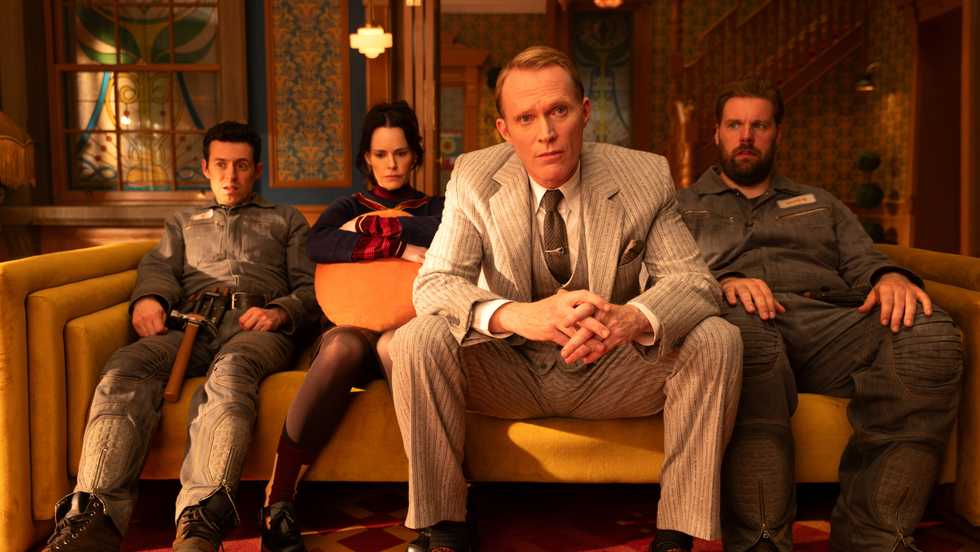
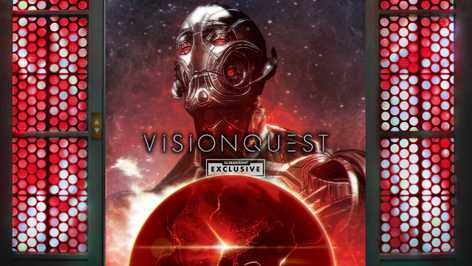
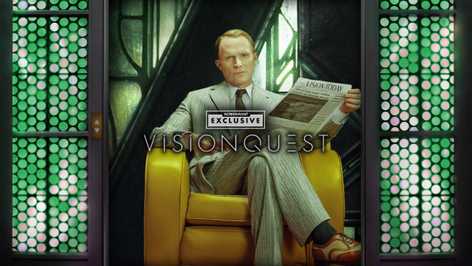
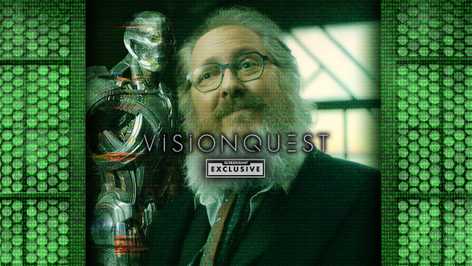
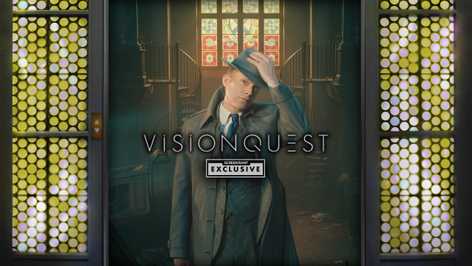
The Mindspace wasn't the only place the production team got creative. Just take a closer look at the hidden details of the costumes of VisionQuest. Costume designer Sarah Young revealed that Vision's pinstripe suit incorporated computer code into its stitching, while other outfits referenced the shapes and colors of the characters' robotic forms. We asked Bettany about the pinstripe suit and the work that went into the show's visual design. He used the opportunity to talk about the artists responsible for those details, and the kind of set he wants to work on.
"Yes. I think there are so many Easter eggs in this show, carrying on in the same vein as WandaVision, which had lots. And it is amazing when you give really great artists like our costume designer and our set designer the freedom to be inventive and creative themselves, the amount of stuff that is... And the props guys, the amount of stuff that is just self-generated by them.
"And I feel very much... One of the great privileges of making VisionQuest is that as number one on the call sheet, you get to set the tone of the set. And I like sets that are full of joy and are fearless and respectful of everybody's input because I believe one of the reasons... I mean, frankly, I just like sets like that. I work better on them and I assume other people do. When people feel that their work is respected and appreciated and that they are given the time to do good work, it seems to me that they come with the very best. And so there are so many Easter eggs in there that had nothing to do with Terry or I or the writers coming up with them. There are other individual crew members coming up with ideas and enacting them."
What's Next For Vision After VisionQuest?

VisionQuest is the third installment in the trilogy that began with WandaVision and continued with Agatha All Along. Marvel Studios is advertising it as such, and Matalas describes it as "definitely a conclusion to Vision's story," but both he and Bettany are interested in what might come afterward.
Bettany has previously described VisionQuest as a potential springboard for Vision's MCU future, and Matalas would welcome the opportunity to keep working with Marvel.
"I can't really talk about too many things. I would love nothing more than to keep playing in the sandbox. Vision and Ultron and the Maximoff family are part of my DNA now. They're part of my beating heart. But there are other characters who are super meaningful to me in the MCU as well, so I would love nothing more than to continue to work with Marvel. It is and continues to be an incredible collaboration with everyone over there."
ScreenRant even pitched Matalas on the possibility of adapting Avengers: The Children's Crusade, the Marvel Comics storyline involving the Young Avengers and Scarlet Witch.
"Look, that's up to the Marvel guy. I would love nothing more than to do something like that," he responds.
Asked about potentially telling more of Wanda's story, Matalas is enthusiastic, although he makes clear that nothing is currently planned.
"Well, I would love that. As long as the rest of the family could come along, and that may include Ultron. Again, there's nothing [in the works], but I would love it."
As for Bettany, ScreenRant asked whether he already has ideas about where Vision could go following the new series.
"I mean, I have ideas of what I would love to do. These are decisions made a few steps higher than my pay grade."

- Release Date
- October 14, 2026
- Network
- Disney+
- Showrunner
- Terry Matalas
- Directors
- Christopher J. Byrne, Gandja Monteiro, Terry Matalas, Vincenzo Natali
- Writers
- Terry Matalas, Cindy Appel, Nicole Falsetti
KioskNews shows a cleaned-up reading view extracted from the publisher’s page — the original always lives on their site, not ours.