Why you probably shouldn't put security cameras behind a window
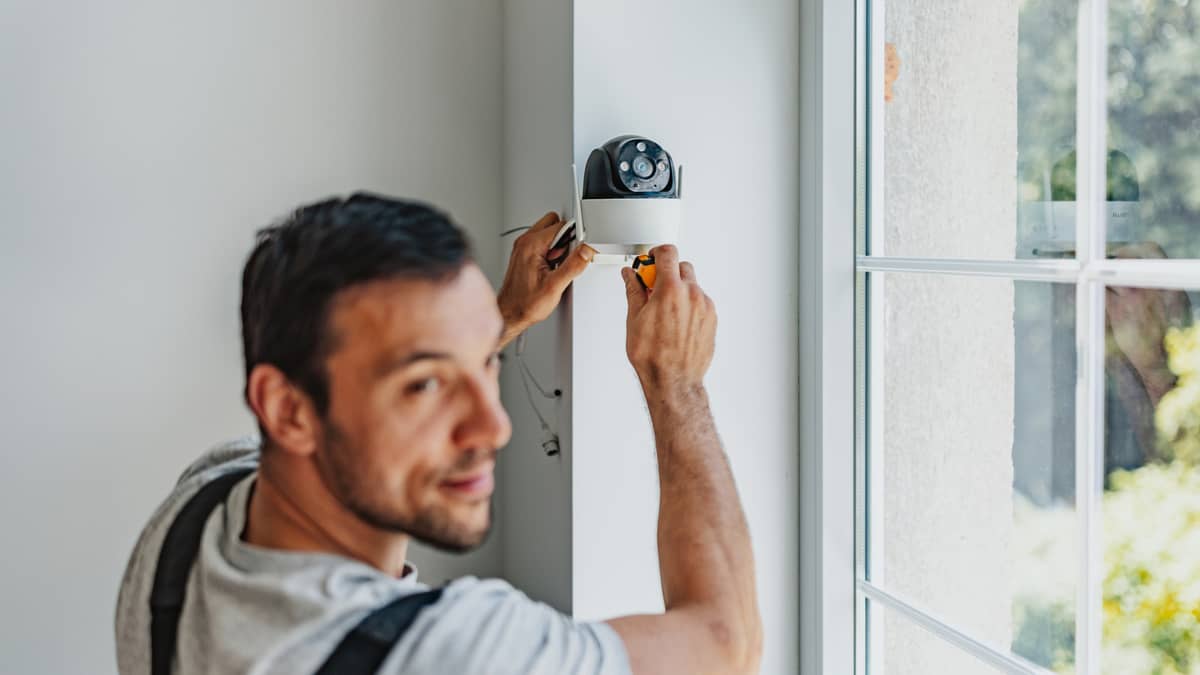
Despite the ease of installation, there are a few things to consider.
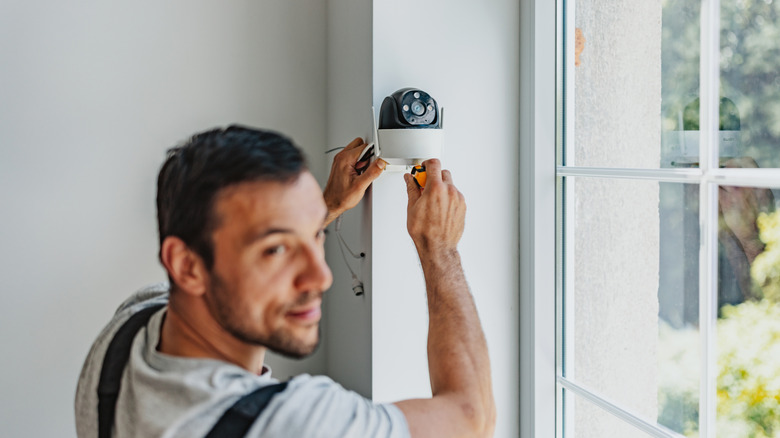
Hirurg/Getty Images
As we've noted before, it's essential to maximize your security cameras' efficiency. Unlike many smart home products, a security system isn't just about convenience or comfort — under severe circumstances, a gap in your defenses could legitimately result in vandalism, theft, injury or death.
Placing cameras in front of your windows does offer some benefits. You're sheltering them from the elements, so any model is usable, regardless of whether the weather is freezing cold or blisteringly hot. It's also easier to install or recharge indoor cameras, and of course an intruder can't smash or tamper with your gear unless they've already broken in.
Ultimately, though, it's wiser to resort to dedicated outdoor cameras if you care about what's going on in your yard or walkways. It's a question of optics and coverage, and poor placement can render an indoor camera useless. Thankfully, there is a potential compromise in the form of stick-on cameras.
Why most security cameras don't work well behind windows
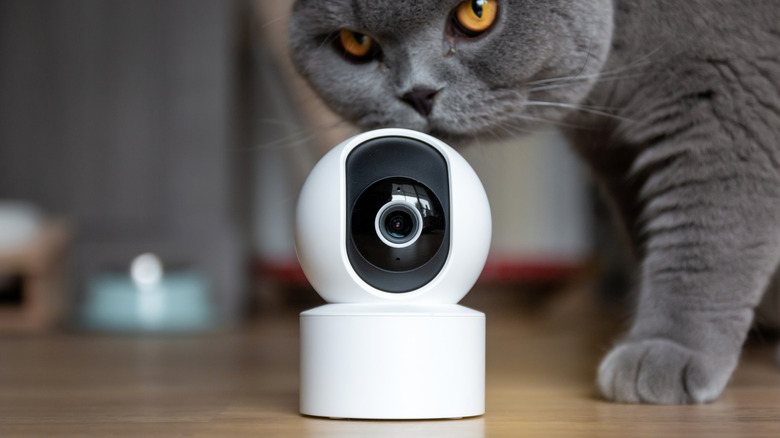
Sombat Muycheen/Shutterstock
The biggest issues are likely to be grime and reflections. If you're next to a window right now, take a moment to focus not on what's outside, but on the glass itself. If you see any dirt or glare at all, imagine that showing up in your camera feed, even potentially confusing autofocus or object recognition systems. Grime can be wiped away with a bottle of window cleaner — but it may be impossible to eliminate reflections.
There's more. Rain, snow, ice or condensation can block your view outright. And at night, a window will interfere with any infrared technology your camera might be using, since much of the light from IR sensors will bounce right back at the lens. It's not much different from trying to shoot a flash photo in a mirror.
Let's talk about angles, too. Just by virtue of geometry, a camera located inside your home is probably going to have a narrower field of view than one outside. That's not necessarily a problem, but it can create coverage gaps. Moreover, if you sit a camera on a windowsill — which can be pretty tempting — you're getting a lower perspective that won't see as far.
Is there a way to make window-based cameras work?
Some companies make cameras designed specifically for windows, sticking directly to the glass to reduce grime and glare. They're also easy to install at high positions, since no drilling is involved. They don't necessarily solve the field-of-view issues we talked about, however. Once a camera is in place, it could be difficult to relocate unless it relies on suction rather than adhesive. Our tip: Test live feeds on your phone before committing to placement.
Suppose a freestanding indoor camera seems like the only viable option for whatever reason; there are things you can do to improve the situation. First, clean your window as thoroughly as possible. Next, relocate any object that could generate reflections, especially light sources like lamps. If that's not an option, experiment with different camera positions, preferably as close to the glass as possible to mimic stick-on models. Lastly, turn off room lights whenever you can.
As you may have gathered, though, that still may leave you with subpar security for the reasons we outlined earlier. If you want to monitor the outdoors, you should at least invest in stick-on cameras, and it could be wiser to save up for purpose-built outdoor gear.
KioskNews shows a cleaned-up reading view extracted from the publisher’s page — the original always lives on their site, not ours.