Avoiding the ‘F word’: Australia and Turkey dance around fossil fuels at COP31 summit
One phrase has been glaringly absent from this year’s COP31 climate summit.
Fossil fuels are not mentioned in the COP31 priority areas. Key speeches from the leaders of Australia and Turkey (Türkiye), co-hosts of the conference, have largely failed to address the emissions-shaped elephant in the room.
That’s despite mounting pressure from environmental groups, Pacific nations and COP30 host nation Brazil to abandon coal, oil and gas and slash global emissions.
So why does this matter? And what does it mean for climate action worldwide?
Read more: ‘Plenty of reasons for hope’: what 30 years of climate talks have achieved
A strange absence
In their opening speeches, neither Turkish President Recep Tayyip Erdoğan nor Australian Prime Minister Anthony Albanese mentioned fossil fuels.
At the official commencement of COP31, the Australian president of negotiations and environment minister, Chris Bowen, twice uttered the words fossil fuels. Neither reference was tied to specific goals for a global fossil fuel phase out or weaning Australia, one of the world’s largest exporters of coal and gas, off them. In his opening remarks, Turkey’s environment minister Murat Kurum didn’t mention them at all.
This reluctance to spotlight fossil fuels is also reflected in the priority areas, or main aims, of COP31 that were agreed by the co-host nations.
The headline goal is the “35-by-35” target to produce 35% of the world’s energy from electricity, increasingly using renewables, by 2035. Other priorities include halving the growth of global waste and cutting energy consumption in the building sector.
Yet, nowhere in sight is a plan or timeline to eliminate fossil fuels.
Read more: Global carbon emissions may have peaked in 2026 – but only time will tell
Why the reluctance?
Negotiators may point to previous COPs, where the very mention of fossil fuels has sparked contention. At COP30 in Brazil, major oil producers Russia and Saudi Arabia fought hard to ensure fossil fuels did not feature in the final agreed text. In comparison, the 2035 electrification goal may be more likely to achieve consensus.
But there’s a simpler explanation for this fossil fuel avoidance: any discussion of these fuels would undermine the credibility of the co-host nations as climate leaders, given their common reliance on coal, oil and gas.
Australia is the world’s third-largest exporter of fossil fuels, behind only Russia and the United States. These offshore emissions bring Australia’s total emissions close to 5% of the global footprint. What’s more, Australia continued approving new fossil fuel mining projects, even after its role at COP31 was confirmed.
Turkey is not a fossil fuel exporter but remains a major consumer of them, particularly coal. On the eve of COP31 talks, Turkish President Erdogan was criticised for celebrating the discovery of two significant new oil fields.
Read more: Dug up in Australia, burned around the world – exporting fossil fuels undermines climate targets
Not totally off the table
Abandoning fossil fuels clearly isn’t a priority of this year’s hosting team. But this doesn’t necessarily extend to other nations attending COP31.
In the lead-up to COP31, civil society and environmental groups, including Greenpeace and Amnesty, voiced their disappointment that fossil fuels were largely left out of the official agenda. While recognising the headline goals as worthy aims, some organisations criticised the agenda as being not ambitious enough, given the scale of the climate crisis.
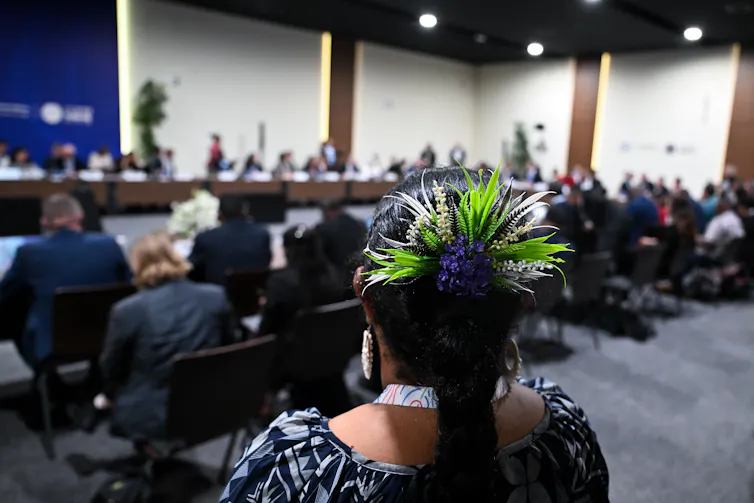
Pacific countries have also pushed hard for an end to fossil fuels, notably through a fossil fuel treaty that would establish concrete plans and timelines. These small island nations have also declared Australia’s approval of new fossil fuel projects as “immoral and unacceptable”. This criticism is particularly telling, given Australia made its co-hosting bid with the aim of spotlighting the climate vulnerability of its Pacific neighbours.
Brazil has also emerged as a vocal critic of this year’s co-hosts. After leading the preceding COP30 conference, Brazil formally presented its global roadmap for transitioning away from fossil fuels to several high-profile UN leaders, making a splash on the second day of COP31 negotiations. The roadmap is a practical guide offering targets, timetables and other considerations to help countries shift away from fossil fuels. After speaking to the challenge of climate change, newly re-elected President Luiz Inácio Lula da Silva urged his COP31 audience to turn the roadmap into concrete action.

Read more: Australia’s climate minister is about to walk a diplomatic tightrope at COP31
Why does this matter?
This debate over whether to call out the world’s reliance on fossil fuels is problematic, not least because it points to a failure of global climate cooperation.
The science is clear: greenhouse gas emissions from coal, oil and gas are driving climate change. With the world on track to “overshoot” the Paris Agreement target of 1.5°C, reducing and ultimately eliminating fossil fuel use must be a priority.
But there is still hope. While fossil fuels may be a source of discomfort for Australia and Turkey, this debate could spur global climate action in other ways.
Introducing the global roadmap, for instance, could make the comparatively modest 35-by-35 electrification goal more appealing, particularly to countries that remain reluctant to phase out fossil fuels. This “decarbonisation by stealth” approach could help lower global emissions. However, some nations may support the electrification goal but still resist calls to get that electricity from renewables. In that sense, failing to directly target fossil fuels may lead to partial or imperfect climate action.
Nevertheless, expect the “F word” – fossil fuels – to remain centre stage during the second week of COP31 and future climate summits. We simply can’t afford to keep kicking this dirty can down the road.
Read more: Yes, the COP climate talks are far from perfect. But they still hold the power for change
KioskNews shows a cleaned-up reading view extracted from the publisher’s page — the original always lives on their site, not ours.