Trash to treasure: Made Here turns waste into art at Ibagiw 2026

Already have Rappler+?
to listen to groundbreaking journalism.
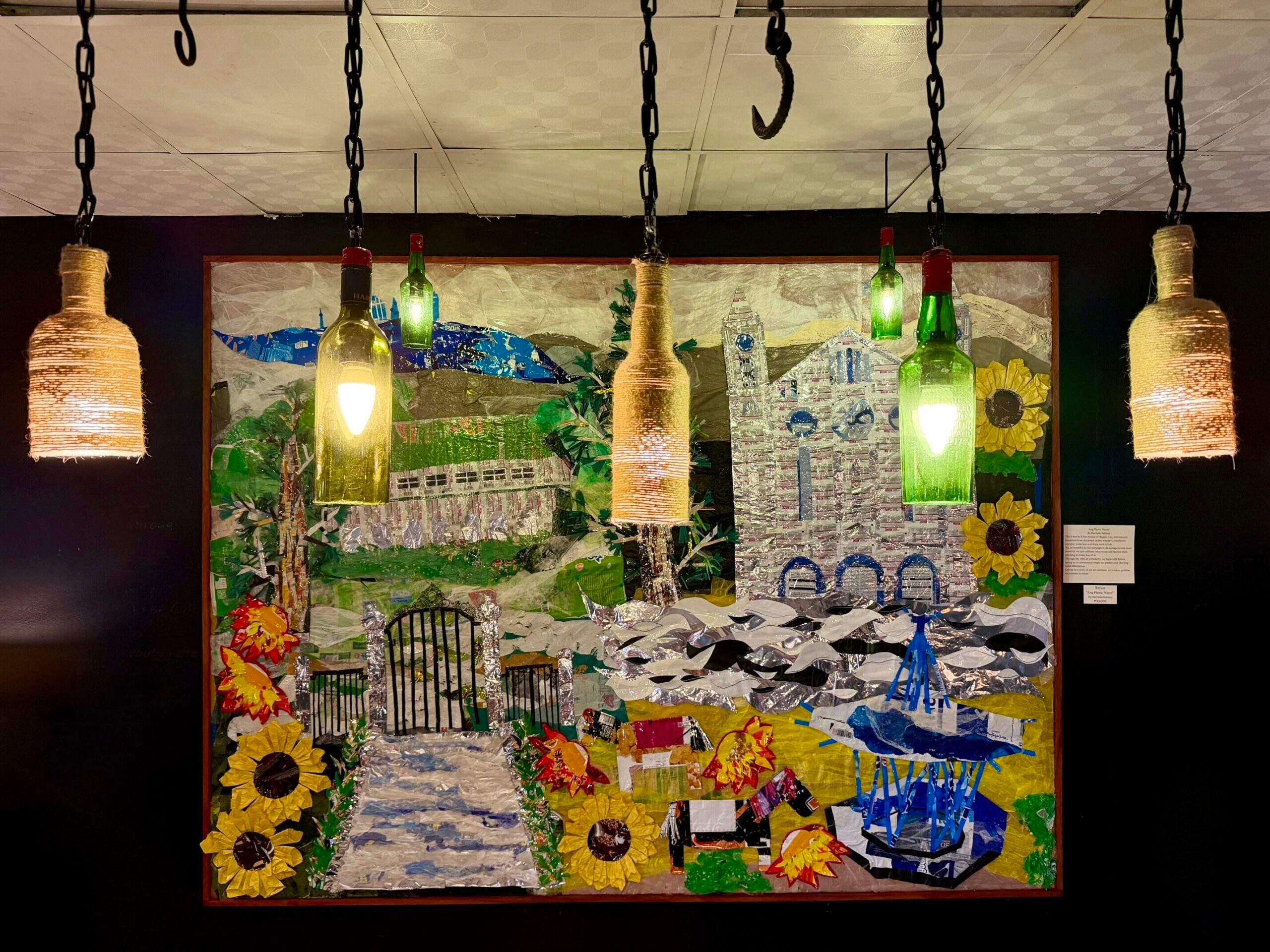
UPCYCLING. Discarded glass bottles find new purpose as hanging lamps by Made Here Artesanos, illuminating Rochelle Bakisan’s 'Ang Plastic Naten!,' a mosaic of Baguio City made from discarded sachet wrappers.
Mia Magdalena Fokno/Rappler
From sachet mosaics to furniture made from salvaged materials, Baguio artists give waste a second life while making creativity pay
AT A GLANCE
- The Made Here exhibit in Baguio City transforms discarded materials into functional art, aligning with the theme of RIKUS: A Creative Circular Baguio.
- Artists Dulthe Carlo Munar and Rochelle Bakisan showcase innovative pieces, including a mosaic made from sachet wrappers that highlights environmental issues related to plastic waste.
- The initiative aims to promote circularity by creating opportunities for artists to sell their work, encouraging sustainability through the repurposing of materials into useful household items.
This is AI-generated. Read the article for full context. Report any errors.
BAGUIO CITY, Philippines — What do discarded sachets, old horseshoes, empty bottles, and scrap metal have in common?
In the hands of Baguio’s creative minds, they become art. Better yet, art you can actually use.
At the basement of the Baguio Cultural and Convention Center, the Made Here exhibit is putting an inventive spin on Ibagiw 2026’s theme, RIKUS: A Creative Circular Baguio, by turning materials destined for disposal into artworks, furniture, and functional household pieces.
The exhibit brings together architect and artist Dulthe Carlo Munar, mixed media artist Rochelle Bakisan, and Made Here Artesanos, the in-house creative team behind the initiative of Wright Park Hotel.
For hotel general manager Ompong Palma, joining Ibagiw was a natural next step.
“We were already doing it,” Palma said, referring to the hotel’s circularity initiative that began in June. When the invitation came, the team decided to expand the concept and bring the Made Here experience to the festival.
When plastic becomes a Baguio landmark
Among the exhibit’s eye-catching pieces is Bakisan’s Ang Plastic Naten!, a six-foot by eight-foot mosaic assembled entirely from discarded sachet wrappers.
The artwork recreates familiar Baguio landmarks, including the Baguio Cathedral, surrounded by colorful flowers and greenery.
But there is a catch to its beauty. The materials that make the cityscape possible are also part of the environmental problem it addresses.
The artwork encourages viewers to refuse unnecessary single-use plastics rather than simply finding new uses for them.

Born and raised in Baguio, Bakisan draws inspiration from Cordillera culture while experimenting with unconventional materials, including coffee, soil, and natural pigments.
She also conducts art workshops, advocates environmental causes, and transforms used denim and clothing into bags and crafts through her small business, Boslay Arts and Crafts.
Her message is that art does not always require expensive materials. Sometimes, it begins with what people already have.
Where engineering meets imagination
Munar brings a different kind of ingenuity to the exhibit.
A registered architect and longtime artist, he combines wood, metal, and mechanical elements to create pieces that blur the boundaries between sculpture, design, and engineering.
Munar began exhibiting his work in 1980 while pursuing an academic career. After retiring from teaching in 2022, he devoted himself to art full-time, exploring movable wooden sculptures and other experimental forms.
His creative approach fits comfortably alongside the functional pieces produced by Made Here Artesanos.
Throughout the exhibit, discarded materials find unexpected purposes. Horseshoes become wall hooks, bottles form illuminated furniture, and salvaged wood and metal are turned into lamps and other household objects.
Some pieces look industrial, others playful. All invite visitors to reconsider what deserves to be thrown away.
Art that earns its keep
Palma believes upcycling should go beyond producing beautiful objects.
“What we’re looking for is functionality,” he explained.
He wants the initiative to create opportunities for artists and craftspeople whose products can find buyers, generate income, and sustain their creative work.
“When we say circularity, it’s a circle,” Palma said, emphasizing that repurposing materials should give them a genuinely useful new life.

The team is also inviting other artists working with discarded materials to present their ideas and explore possible collaborations.
And unlike exhibits where visitors can only admire the displays, the pieces at Made Here are available for purchase.
It is an interesting proposition for Baguio’s creative economy. A discarded object becomes a product, an artist earns from the work, and a buyer takes home something with both purpose and personality.
After all, sustainability is easier to appreciate when it comes with good design and something useful for the house.
Made Here is open until November 26 at the basement of the Baguio Cultural and Convention Center, giving Ibagiw visitors an opportunity to meet the makers, explore their creations, and perhaps take home something that has already lived one life and is ready for another. – Rappler.com
KioskNews shows a cleaned-up reading view extracted from the publisher’s page — the original always lives on their site, not ours.