GOVERNANCE FAILURES: NSFAS ‘has failed its mandate and left students paying the price’
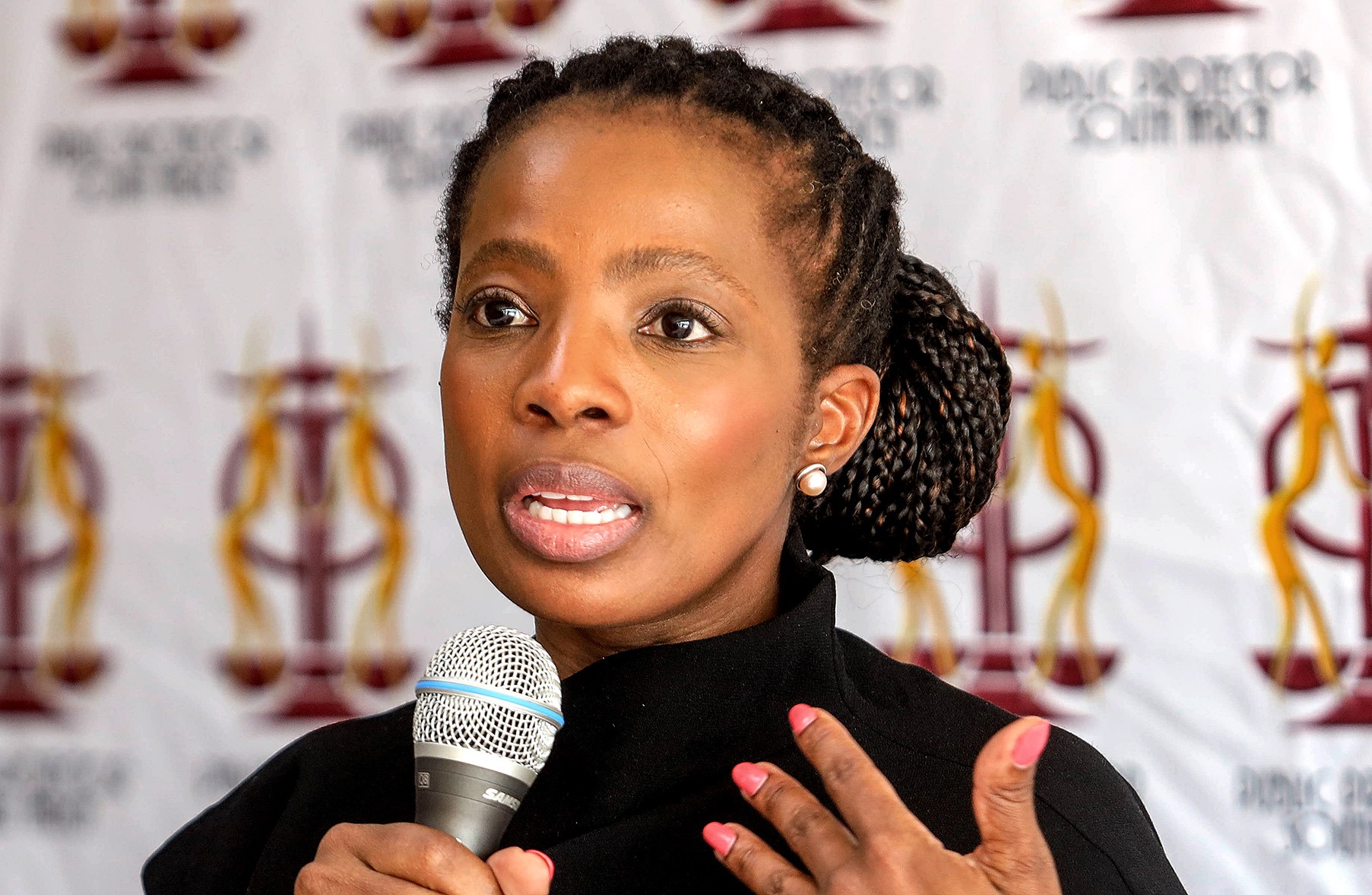
The Public Protector says the National Student Financial Aid Scheme (NSFAS) has failed to fulfil its mandate, after more than 40,000 students at 76 higher education institutions were improperly funded to an estimated value of R5.1-billion. More than R2-billion has been recovered.
In a media briefing, releasing a Section 7(9) notice on Tuesday, 18 August, Public Protector Advocate Kholeka Gcaleka has recommended that within 90 days of the final report, the Higher Education Ministry and vice-chancellors must reform institutional debt recovery policies so that academic certificates are no longer withheld from graduates seeking employment. The NSFAS Board must deliver a comprehensive digital modernisation plan within 30 days to establish direct system interfaces with universities, home affairs and SARS.
The state’s primary vehicle for helping poor and working-class students access higher education has been hit by persistent governance and administrative failures.
Gcaleka said her investigation had uncovered systemic deficiencies in the administration, governance, funding, coordination and oversight of student financial aid. The investigation implicated not only NSFAS, but also the Department of Higher Education and Training (DHET) and other role players.
“The issues are systemic in nature and are of great public interest and importance to the people of South Africa,” Gcaleka said, explaining her decision to release the notice before the implicated parties had submitted their representations.
Reason behind the investigation
/file/attachments/orphans/UCTstudentsprotestinginfrontoftheSarahBatmanbuildingburningandblockingtheentrancenearM3Rondeboschoverfinancialexclusion16February2026Imagesuppliedby_927940.jpg "UCT students protesting in front of the Sarah Batman building, burning and blocking the entrance near M3 Rondebosch over financial exclusion. 16 February 2026.(Photo: Supplied / Khanya Mndende)")
Gcaleka mentioned that the investigation began with complaints from students about administrative deficiencies affecting their access to financial aid and, consequently, higher education. Soon, the investigation revealed recurring failures across the system, including inadequate access to tuition funding, delays in allowances, accommodation challenges and inefficiencies in the administration of financial aid.
“It became apparent that the issues raised were not isolated incidents affecting individual students or institutions, but reflected recurring patterns of administrative failure,” said Gcaleka.
The Public Protector’s investigation was further informed by NSFAS’ governance instability, including a disclaimer audit opinion on its 2024/25 financial statements, the dissolution of its board and its subsequent placement under administration. It also considered findings by the Special Investigating Unit that more than 40,000 students across 76 higher education institutions had been improperly funded to an estimated value of R5.1-billion, with recoveries exceeding R2-billion.
Daily Maverick has reported that the scheme and the department have been grilled by MPs over issues of governance, including the delay in paying universities.
A near-permanent state of crisis
The most damning finding concerns NSFAS’ apparent inability to achieve institutional stability despite repeated interventions, changes in leadership, board dissolutions and administrations.
/file/attachments/orphans/Sune-NSFAS-CEO-MAIN_188256.jpg "Andile Nongogo has been fired as CEO of the National Student Financial Aid Scheme. (Photo: Supplied)")
“The investigation traced persistent instability at the executive and board level, including the suspension and subsequent termination of former CEO Andile Nongogo, prolonged reliance on acting executives, the dissolution of the board in 2024 and further governance difficulties after a new board was appointed in 2025. The evidence gathered depicts NSFAS as an institution affected by persistent governance instability, administrative weakness and inadequate systems,” Gcaleka said.
/file/attachments/orphans/NFAS_MANAMELA_613137.jpg "Illustrative image: Hlengani Mathebula (Photo: Gallo Images / Rapport / Deon Raath) | Minister of Higher Education Buti Manamela (Photo: Gallo Images/OJ Koloti)
<br>")
NSFAS has been placed under administration three times in the past eight years, in 2018, 2024 and again in 2026. The latest administration has led to a court order for Minister of Higher Education and Training, Buti Manamela, to reinstate the seven board members who took him to court over the decision to dissolve the board.
The Public Protector also cited an independent review that concluded that the entity had functioned in a “near-permanent state of crisis”.
That instability has translated directly into failures affecting students, including delays in funding confirmations, allowances, appeals and the settlement of tuition accounts, sometimes resulting in qualifications being withheld. The investigation found that NSFAS functionaries had failed to administer the entity’s services adequately, contrary to constitutional principles requiring accountable, fair and equitable public administration.
“Earlier interventions did not produce sustained institutional stability,” Gcaleka said, pointing to a cycle of governance interventions that had repeatedly failed to resolve the underlying problems.
Hungry, homeless and unable to graduate
The investigation found that delays in funding decisions, appeal outcomes and allowance payments had caused direct and foreseeable harm to students.
Those delays resulted in food insecurity, accommodation instability and exposure to unsafe living conditions, while also undermining students’ ability to participate meaningfully in higher education.
“These delays caused direct and foreseeable prejudice, including food insecurity, accommodation instability and exposure to unsafe living conditions,” Gcaleka said.
The Public Protector found that where eligible students were not funded timeously because of NSFAS’ internal systems and administrative deficiencies, the scheme was acting contrary to its obligations under the NSFAS Act. The failures also conflicted with Section 237 of the Constitution, which requires constitutional obligations to be performed diligently and without delay.
“NSFAS’ failures were not merely technical or internal,” Gcaleka said. “[They] materially affected students’ dignity, welfare and ability to participate in higher education.”
Communication with students was also found to be wanting. NSFAS reported that it was unable to resolve 80% of queries received through its contact centre because they had to be escalated to internal units. The Public Protector found that the entity’s limited accessibility, including its centralised Cape Town walk-in service and ineffective query-resolution arrangements, undermined the Batho Pele principle of access and the constitutional obligation to progressively make further education accessible.
The inability to establish accessible and responsive administrative mechanisms capable of providing students with effective assistance was, Gcaleka found, in conflict with constitutional requirements for responsive public administration.
R601,000 in unpaid tuition
Another major failure identified was NSFAS’ inability to complete the Close-Out Project, which was intended to reconcile financial information between the scheme and tertiary institutions.
The project began in 2021 and remains incomplete. The Public Protector found material weaknesses in NSFAS’ reconciliation processes and broader management of financial information, including failures to maintain effective financial and risk management systems as required by the Public Finance Management Act.
In 12 complaints examined by the Public Protector, students were collectively owed R601,000 in unpaid tuition. Despite completing their studies, they were unable to obtain their certificates because of the outstanding amounts. Only after intervention by the Public Protector were their accounts settled.
“The delayed payments resulted in avoidable prejudice, including the withholding of qualifications after students had completed their studies,” Gcaleka said. DM
KioskNews shows a cleaned-up reading view extracted from the publisher’s page — the original always lives on their site, not ours.